Berkshire Museum To Present What’s The Story
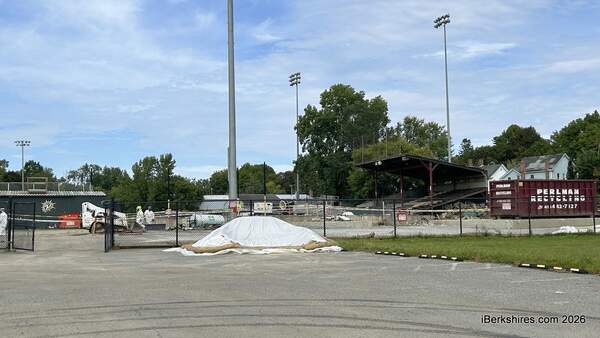
PITTSFIELD – The Berkshire Museum will highlight its diverse collection the special exhibition What’s the Story, April 26-June 1, 2008. The exhibition will explore how artists—and museums tell stories. Approximately 40 works of art from the 16th-century to the present, as well as selected historical artifacts and natural science, will illustrate storytelling, ranging from Biblical, historical, and mythological tales to people and folklore of the Berkshires.Berkshire landmarks depicted include the Pittsfield Elm, Waconah Park, Ice Glen, and Windsor Dam. Artists represented include Leonard Baskin, Benjamin West, Edward Moran, Adriaen Isenbrandt, Norman Rockwell, Bessie Borris, Ammi Phillips, Marsden Hartley, Suzy Frelinghuysen, and William Adolphe Bouguereau. The exhibition also highlights recent acquisitions of work by Keith Haring, Jules Olitski, Peter Garfield, and Morgan Bulkely. What’s the Story is sponsored by TD Banknorth.
“As we celebrate the reopening of the Berkshire Museum this spring, we wanted to highlight the diversity of the art collection and bring out some familiar favorites and some things that haven’t been on view,” said Stuart A. Chase, executive director of the Berkshire Musuem. “Not only does What’s the Story highlight famous artists like Rockwell and Bouguereau, but it also gives us the opportunity to tell stories that only the Berkshire Museum can tell, like the legendary elephant.”
Among the more unusual objects included in What’s the Story is a slice of an elephant tusk carved with the story of an elephant that fell through a bridge in Adams in the 1850s as it was being walked through the Berkshires, and soon after died of its injuries in a barn in Lenox. The story is also evoked by the 2005 photograph Fall in New England by Jeremy Hobbs. The digitally manipulated print depicts an imaginary vista in the Berkshires in autumn; in one meadow is an elephant in a paddock.
The first section of the exhibition focuses on traditional telling of well-known stories. Featured works include Daniel Interpreting to Belshazzar the Handwriting on the Wall by Benjamin West (1738-1820); Flight Into Egypt and Adam and Eve by Adriaen Isenbrandt (active 1510-1551); Apollo and Marsyas attributed to Giovanni Antonio Burrini (1656-1727); Henrik Hudson Entering New York Harbor, September 11, 1609, by Edward Moran; and the print Icarus by Leonard Baskin. Two paintings by Norman Rockwell—Shuffleton’s Barbershop and Shaftsbury Blacksmith Shop—evoke stories of rural America.
Another section tells the story of the large elm tree that once stood in Pittsfield’s Park Square. The Pittsfield Elm, the site of many gatherings, was cut down in 1864. A pot, bowl, goblet, and tables that were made from the elm will on on view, along with a selection of Pittsfield Elm Ware. Pittsfield Elm Ware was a pattern of Blue Staffordshire Pottery dating to 1828. Designed by James Clews, the pottery depicts Park Square and the Elm, as well as a Pittsfield woman known in her day as “Crazy Sue” Dunham. A portrait of Sue Dunham by George Williams is also included.
Portraits of other Berkshire County residents on view include Caroline H. William Barnes and Seth Austin Barnes by famed American itinerant artist Ammi Phillips, and Sarah Higginson Begley by Bessie Boris. Views of the Berkshires include Twilight Diamond by Richard Lasner; Ice Glen Springtime by Marin Greene; Windsor Dam by Bartlett Hendricks; View of Great Barrington by A.H. Wenzler; and Scene on the Housatonic by Arthur Parton.
Also included are examples of the traveling exhibit boxes that former Berkshire Museum director Laura Bragg created in the 1930s. These boxes were intended to bring museum education directly into the schools.
The Berkshire Museum is located at 39 South Street on Route 7 in Downtown Pittsfield. The galleries and aquarium are open Monday through Saturday, 10 a.m. to 5 p.m., and Sundays noon to 5 p.m. Admission is $10 for adults, $5 for children ages 3-18. Members and children 2 and under are admitted free. For more information, contact the Berkshire Museum at (413) 443-7171, ext. 10, or visit www.berkshiremuseum.org