Earth Day: 2008 Is Year of the Frog
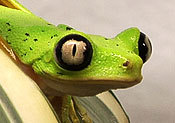 |
| Lemur leaf frog (Phyllomedusa lemur) |
At first, scientists were unsure why the frogs were disappearing. A stream would be flourishing with frogs and other amphibians, and then just a few months later they were gone. As rates of amphibian decline rapidly increased, a crisis began to unfold.
According to Amphibian Ark, a nonprofit coalition that rescues and protects threatened amphibian species, Earth is facing one of the most significant mass extinctions since the disappearance of dinosaurs. Scientists believe that one-third to one-half of the planet's 6,000 amphibian species — which have thrived for 360 million years — are in danger of extinction.
Why are so many species in danger? While habitat destruction is a serious threat, the most immediate cause of amphibian decline is a parasitic fungus called amphibian chytrid, a disease that is deadly to hundreds of species and has quickly spread from Africa across the rest of the planet.
Chytrid fungus is currently unstoppable and untreatable in the wild, where it can kill 80 percent of amphibians within months. The World Conservation Union calls it the worst infectious disease ever recorded among vertebrates.
The world's leading conservationists have joined together to form the Amphibian Ark to rescue the most endangered amphibian species that cannot be saved in the wild. The Amphibian Ark program will rescue priority endangered species and place them in "protective custody" in dedicated biosecure facilities at zoos, aquariums, and other institutions around the world for safekeeping, breeding, and ultimate repatriation — helping to ensure the long-term survival of amphibians.
Why Are Frogs Important?
Amphibians are indicators of environmental health and a vital part of the ecosystem. They play an important role in nature as both predator and prey, and they eat pest insects, benefiting agricultural health around the world and minimizing the spread of disease, including malaria. They also play an important role in human health. The skin of amphibians has substances that protect them from certain microbes and viruses, offering possible medical cures for a variety of human diseases, including AIDS.
2008 is The Year of the Frog
Non-profit coalition Amphibian Ark is kicking off the new year with a campaign called 2008 Year of the Frog to raise public awareness and funds to help avert the pending amphibian extinction crisis.
<L2>Clorox has joined this fight, helping to raise awareness and, most important, donating Clorox Regular Bleach to aid in the halt of the spread of chytrid fungus. The bleach, an Environmental Protection Agency-registered fungicide, is one of the most important tools in Amphibian Ark's fight to save the frogs.
Frogs are treated with anti-fungal medicine and anything else that has contact with water during amphibian rescue is treated with a bleach solution, from boots and clothing to instruments and transport containers, to be sure researchers are not spreading the fungus to new, uncontaminated areas. When zoos and aquariums bring frogs that cannot be saved in the wild into protective custody, their enclosures are treated with a bleach solution daily for the first weeks to be sure they remain fungus-free.
Three Things You Can Do
Amphibians are a critical part of a healthy natural world. It will take everyone's help to save these animals and protect them for future generations. The three tips below can be implemented at home to help you do your part to protect the environment — and amphibians.
1) Donate. Amphibian Ark is accepting donations and asking for global support to protect these important animals. Every person can play a role in the Year of the Frog.
2) Educate your family. Explaining to kids how amphibians and other animals play an important role in the Earth's delicate ecosystem is crucial. Teaching kids about the environment and the balance of nature will help them grow into responsible global citizens.
3) Restore natural areas in your community. Wildlife can often rebound, if given the opportunity. Volunteer to clean up wetlands and other areas in your community to help keep natural spaces near you healthy and pollution-free.
For more information on the amphibian crisis and how you can help, go to savethefrog.com.