| |
Daily DigestMeetings The Drury High School Council meets Tuesday, Jan 13, at 6:30 in the conference room. Agenda items include AYP, school grant, laptop initiative and PowerSchool updates. |
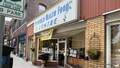
 Steve Decker cleans up in front of BankNorth on Wednesday.
|
More Snow
The Berkshires received several inches of snow this morning, but not enough to close schools, unlike yesterday's sleety mess. Temperatures will drop into the 20s this afternoon. A few more snow showers are expected through the weekend.
We have reports that the roads are very slippery to take care in the evening commute. |
Duff'em If You've Got'em
North Adams Regional Hospital went smoke-free Monday — so did all its sister sites, from Sweet Brook to Northern Berkshire Family Practice to the Women's Exchange. No ashtrays, no smoking: No butts about it. |
| Need to contact iBerkshires? Here's how. |
Like to Write?
iBerkshires accepts submissions about local events, news and opinion pieces. There are openings for freelance work, too, for qualified candidates. E-mail tdaniels@iberkshires.com to find out more. |
Wanted: Eagle Eyes
MassWildlife's annual eagle count runs Dec. 31 to Jan. 14. Anyone sighting one of the regal birds in Massachusetts is asked to participate.
Send date, time, location and town of eagle sightings, number of birds, whether juvenile or adult and observer's contact information to Mass.wildlife@state.ma.us. |
RegionWhat's PlayingSales FliersColumnists | Independent Investor
|
Obama TransitionOther StuffMars Rovers Mark 5 Years
Spirit and Opportunity have been trekking the red planet for half a decade. Spirit hit the 5-year mark on Sunday; Opportunity will on Jan. 24. |
Related Stories |
| |
Sweeping Energy Legislation Heads to Governor's Desk - June 26, 2008
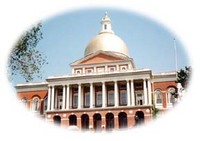
BOSTON — The House unanimously passed a sweeping energy act, 154-0, on Thursday that will expand energy efficiency and renewable energy efforts.
The Senate passed the legislation on Tuesday; the bill now goes to Gov. Deval Patrick for his signature.
"This legislation promotes the critical need for energy efficiency while expanding the development of alternative fuels, other emerging technologies and alternative methods of energy service," said state Sen. Benjamin B. Downing, D-Pittsfield, in a press release. "In addition to broadening our state's energy policy, this measure creates a long-term plan to reduce our dependence on fossil fuels and is critical to economic development and environmental stewardship."
The measure, called the Green Communities Act, was spearheaded by Speaker Salvatore DiMasi and was supported by Senate President Therese Murray, the governor and leading lawmakers on the energy committee.
In a statement praising the bill's passage, Environment Northeast, a non-profit research and policy organization addressing climate change, said it makes the state a national leader in energy policy.
"With this bill, Massachusetts has hitched its wagon to the energy efficiency express," said Daniel Sosland, executive director. "A move that will save consumers billions of dollars, combat the climate crisis, and grow a clean, green energy economy."
One of the bill's key provisions is a requirement for the state's electric and gas utilities to invest first in energy efficiency before turning to more costly power plant generation. This provision will greatly expand state energy efficiency programs, allowing more homeowners and businesses to take advantage of incentives for lighting upgrades, additional insulation and more efficient appliances and equipment, reducing their bills in a time of ever rising prices.
Specifically for cities and towns, the legislation directs the Department of Energy Resources' new Division of Green Communities to establish a green communities program. This will give municipalities the opportunity to take advantage of loans and grants provided by the state to finance the cost of energy efficiency improvements and renewable and alternative energy projects.
By maximizing investments in efficiency, Massachusetts could save consumers billions of dollars over the next decade, while keeping those dollars in the local economy, helping businesses grow, and creating new jobs for workers on all rungs of the job ladder. The Division of Energy Resources estimates that every $125 million invested in efficiency programs yields $500 million in savings, creates 2,000 non-utility jobs, and generates hundreds of million of dollars in economic growth.
Massachusetts currently spends around $6 billion on conventional electric supply — about 40 times more than it spends on efficiency resources even though supply costs nearly four times as much, according to Environment Northeast. To help right this imbalance, the bill allocates at least 80 percent of auction revenues from the sale of emissions allowances under the Regional Greenhouse Gas Initiative to help fund increased investments in energy efficiency programs.
The Green Communities Act also:
- Directs the state to replace state-owned and operated vehicles with more fuel-efficient vehicles.
- Directs the secretary of energy and environmental Affairs to establish a program whereby homeowners or tenants can purchase renewable energy products for the home with no up-front payment, and pay them off monthly on their utility bill.
- Establishes a five-year pilot program, requiring distribution companies to enter into cost-effective renewable energy contracts, over 10 to 15 years.
- Codifies the Office of the Ratepayer Advocate under the attorney general to intervene in proceedings on behalf of Massachusetts ratepayers.
- Encourages net metering to promote on-site generation through financial incentives.
- Establishes a commission to examine the environmental and economic impact of instituting a green building plan for the state.
A detailed summary of the energy bill compiled by Environment Northeast can be found here. To download the legislation, go here. |

IT'S TIME TO TAKE STRONG ACTION ON FUEL. Email your representative in congress and push the issue: https://forms.house.gov/wyr/welcome.shtml
The best thing we can do is get the government off their drug trip and grow a crop that works. Don't let them lie to you, there is plenty of farm land. We have over 100 million total farm acres in the USA and only use about half. The half that's not being planted is more than enough to grow ALL our fuel. Not only that but the government is still paying farmers not to plant. Watch the video titled "HEMP FUEL Can Supply All Our Energy Needs" and read the article titled "Marijuana Facts The Government Does Not Want You To Know" on the website referenced at the bottom of this post.
----------------
Hemp requires no pesticides, no herbicides, and only moderate amounts of fertilizer.
Source: MARIJUANA AND HEMP THE UNTOLD STORY
---------------
Hemp can produce several different kinds of fuel. In the 1800's and 1900's hempseed oil was the primary source of fuel in the United States and was commonly used for lamps and other oil energy needs. The diesel engine was originally designed to run on hemp oil because Rudolf Diesel assumed that it would be the most common fuel. Hemp is also the most efficient plant for the production of methanol. It is estimated that, in one form or another, hemp grown in the United States could provide up to ninety percent of the nation's entire energy needs.
Source: Schaffer Library of Drug Policy
------------
Hemp is 4 times more efficient than corn as biofuel. Hemp pellets can be used to produce clean electricity.
... so powerful it could replace every type of fossil fuel energy product (oil, coal, and natural gas).
... This plant is the earth's number one biomass resource or fastest growing annual plant for agriculture on a worldwide basis, producing up to 14 tons per acre. This is the only biomass source available that is capable of producing all the energy needs of the U.S. and the world...
Hemp will produce cleaner air and reduce greenhouse gases. When biomass fuel burns, it produces CO2 (the major cause of the greenhouse effect), the same as fossil fuel; but during the growth cycle of the plant, photosynthesis removes as much CO2 from the air as burning the biomass adds, so hemp actually cleans the atmosphere. After the first cycle there is no further loading to the atmosphere...
Source: USA Hemp Museum
------------------
JOIN THE EMAIL LIST, WATCH THE FUEL VIDEOS:
Internet Explorer: http://jsknow.angelfire.com/home
Other Browsers: http://jsknow.angelfire.com/index.html
| | from: jsknow | on: 06-27-2008 |
|
|
Enter your email address below to receive our FREE iBerkshires.com Newsletter
|