image description

North Adams Slashes $300K From Budget

By Tammy DanielsiBerkshires Staff
Print Story | Email Story
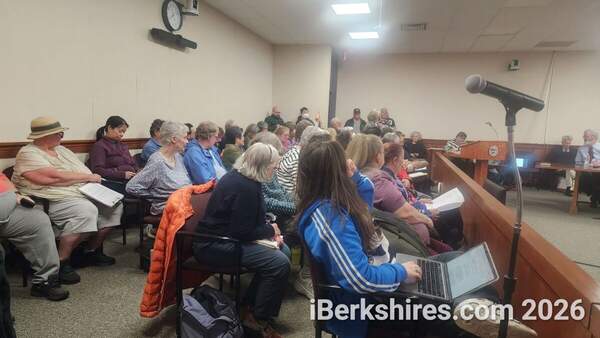
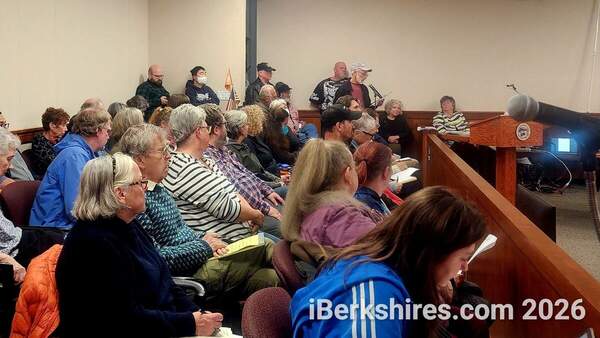
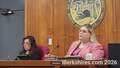
Mayor John Barrett III explains cuts to this year's budget to the City Council.
NORTH ADAMS, Mass. — The City Council slashed some $300,000 from this year's budget on Tuesday night, with warnings to prepared for more.

"This is cut to the bone, but we haven't cut into the bone ... yet," said Mayor John Barrett III in describing the reductions made across departments. But he warned the councilors on presenting the cuts, "I believe I will be back again."

The reductions won't cost current jobs but it will mean the loss of positions, said the mayor. Other cuts will come through supplies and training. For example, the public safety and public services departments will be cut $30,000 to $35,000; the mayor's office is losing $1,000 in expenses.

Further expense reductions are being reviewed, such as privatizing grass cutting, but there isn't much more to cut in terms of personnel, he said, because of how small departments have become over the years.

The city is being hit like others around the nation as the economy crumbles; Gov. Deval Patrick recently enacted a billion in state cuts across the board because of falling revenue. While those cuts out of the state's $28 billion budget didn't include local aid, the pinch is still being felt here because it slashed grants.

The school system has already taken a $100,000 hit, said Barrett, because it lost grants that supplemented salaries. (The school system was not included in the round of cuts Barrett presented Tuesday night.)

Barrett said further cuts, if Patrick is supplied the so-called 9C powers he's requested from the Legislature, would have a million-dollar impact on the city's $35 million budget. Some of the cuts he requested were in preparation of that possibility.

The mayor estimated that revenues will be down 4 percent; earlier this month, he said excise taxes alone could be off $100,000 or more because people aren't buying cars. (Williamstown Town Manager Peter Fohlin warned of a possible downturn in excise revenue at the Selectmen's meeting on Monday.)

While the city has had some good news — locking in heating oil the other day for a (shockingly) low $2.54 a gallon — it's at loggerheads with the teachers' and police union over insurance and salary negotiations.

The mayor told the council that the city had put on the table the same rates the nonunion employees had been offered and has rejected the unions' desire to join the state's Group Insurance Commission, at least for this year.

Instead, the city offered the unions an opportunity to try different health insurance options, mostly Blue Cross Blue Shield, with lower rates and high co-pays for a six-month period to try them out.

The unions, Barrett said, had then filed a grievance saying the city was violating a negotiating agreement and Freedom of Information Act requests for information on the city's self-insured program and claims.

The mayor has been battling the unions over the GIC option for several months, saying it isn't clear the city would save any money and noting the unions want the city to jump its co-pay coverage from 70 to 85 percent.

Several of the councilors have been intriqued by the idea of joining the GIC, which was opened to municipalities as part of the governor's Municipal Partnership Act.

Councilor Michael Bloom asked if it would be beneficial to at least adopt a law allowing the unions to negotiate together on the insurance, as required by the state, as a way of being prepared. The mayor rejected that idea: "I want a deal before I come into this council."

"Why wouldn't I do it if there was a great savings?" said Barrett. "There is no great savings. ... I'm not going to finance it on the backs of the taxpayers."

He speculated that the retirees hadn't been completely filled in on the GIC's effect on their coverage. "I think if the rank and file knew what was going on they'd be shocked, utterly shocked."

The mayor expected to have more cuts when he came back before the council for the city's tax classification. He estimated that the average taxpayer could see a $30 to $40 increase in property tax this year.

In other business:
  • The council welcomed a delegation from its Italian Sister City of Tremosine
  • Councilor Lisa Blackmer read a council resolution recommending a no vote on Question 1 that was approved by the council unanimously. (Councilor Ronald Boucher was absent.)
  • Councilor Gailanne Cariddi read a resolution stating the city of North Adams welcomes "immigrants and their contributions to our city" and supports solutions to "strengthening our immigration system." The resolution was prompted by the Welcoming Massachusetts campaign, which seeks to highlight the contributions of legal immigrants. The resolution passed 7-1, with Councilor Clark Billings voting no. It will be passed on to the county's congressional delegation.

If you would like to contribute information on this article, contact us at info@iberkshires.com.

Why the Massachusetts Art Community Is Worth Continued Investment

By James BirgeGuest Column
How do we quantify the value of art on society and culture? Even eye-popping figures, like the $100 million estimate for the jewels stolen from the Louvre, or the record auction last fall that saw a piece by Gustav Klimt sell for more than $236 million can't fully account for the value of the history, stories, and emotions behind the creations themselves. But beyond that, there is a measurable financial, cultural and social benefit of the arts that is often taken for granted. 

Closer to home, arts and cultural production in the Commonwealth of Massachusetts totals nearly $30 billion annually, representing more than 4 percent of the state's economic output, according to the Mass Cultural Council. All told, more than 130,000 jobs are spread across the commonwealth creating a vibrant and thriving artistic community for us all to enjoy. 

Despite the obvious impact, these figures are under threat. A recent survey by MassCreative compiled recent federal cuts to the National Endowment for the Arts, the National Endowment for the Humanities and the Institute of Museum and Library Services and identified 63 grants canceled and $4.2 million in grant funding rescinded across New England so far this year. 

The dollars, of course, are important. But they also only scratch the surface on what they bring to the community. Today, we risk losing part of the culture and identity many now take for granted. 

While others choose to look past these less tangible, but just as vital benefits, we're doing the opposite. Massachusetts College of Liberal Arts is all in to ensure the next generation retains their access to works of art, while also being empowered to create themselves. 

Last fall, MCLA officially broke ground on the new Campagna Kleefeld Center for Creativity in the Arts, which will serve as a new hub for the campus and the local community for arts programming. When complete in fall of 2027, our students will benefit, but so will all of Berkshire County and artists in the surrounding area. 

This exciting new facility is just one of the many forthcomings our region can enjoy in the coming years. Just a few miles away, anticipation builds for the Fall 2027 anticipated opening for the Williams College Museum of Art. Years in the making, the museum likewise grows from an enduring commitment to the arts, both in curriculum and in practice. Exciting times are also underway for the Clark Art Institute with the construction of a new facility to house a collection of 331 works of art, including paintings, sculptures, drawings and other works. Their wing is scheduled for completion in 2028. And listeners will no doubt enjoy the sounds and melodies from Mass MoCA Records, the latest endeavor to foster creativity and artistic pursuits through music launched in October as well. Of course, many are also awaiting the reopening of the Berkshire Museum anticipated this summer, after a tremendous renovation process to rejuvenate the experience for visitors. 

So much time, energy, and yes, dollars, have already been invested in taking these facilities from ideas and sketches and making them reality. But they represent much more than new buildings. They represent new opportunities to cultivate and accelerate the thriving arts community in Massachusetts and the northern Berkshires. 

Art, regardless of the medium, is a reflection of who we are, where we've been, and what we aspire to be. It can be inspired by hopes or fears and chronicle collective triumphs as well as tribulations. The goal of art is not only to document history, but to inspire those positioned to change it and to feel something new or even to provoke us to revisit our own assumptions or misconceptions. 

As unfathomable of a number as $30 billion can seem, boiling down the impact to any number inherently discounts the unknowable downstream effects our graduates will bring to the community and the broader world after they leave our institutions. Likewise, rescinding $4.2 million now removes a huge chunk of that growth potential.  

Justification for making these investments today when simply boiled down to dollars and cents still places us on solid ground strictly from a financial perspective that forgoes all of the intangible, but no less valuable, benefits as well.  

The arts are still worth our support. And our community will be richer for it. 

James Birge, PhD, is president of Massachusetts College of Liberal Arts in North Adams.  


View Full Story

More North Adams Stories