That's Life: O, Christmas Tree
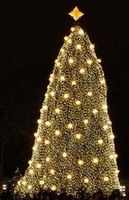 |
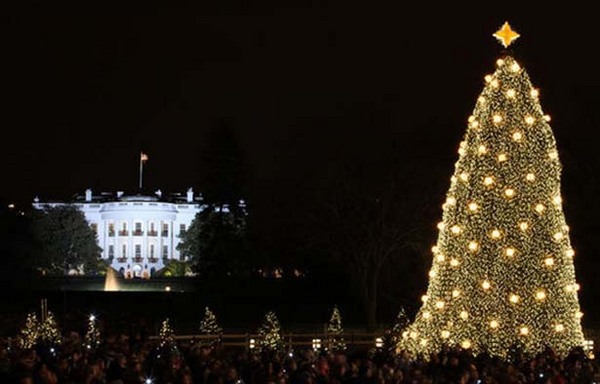
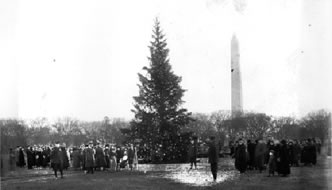
Television was in its infancy when a national Christmas tree was erected on the White House ellipse for the first time during Calvin Coolidge's presidency (1923-1929). With a flick of a switch, President Coolidge set aglow the 2,300 lights on the 48-foot tree, a gift from his home state of Vermont.
The national Christmas tree remained dark following the assassination of President Kennedy, and during the hostage crisis in Iran.
Here in the Berkshires, townsfolk brave cold weather to be present when pine trees growing in town squares (or trucked in from nearby yards) are illuminated in celebration of the holiday season.
And in homes across America, fresh fir trees are set up and bedecked with ornaments, candy canes and strings of lights. Some people, however, prefer manufactured Christmas trees as they do not shed needles and can be stored from year to year.
 National Park Service
.jpg) President Coolidge lights the first National Christmas Tree, from his native Vermont, in 1923. President Coolidge lights the first National Christmas Tree, from his native Vermont, in 1923.President Bush lights up 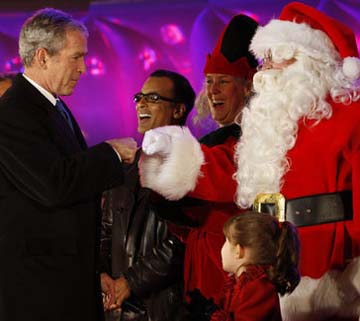 |
The Christmas tree tradition, according to one legend, took root the night the baby who would be called Jesus was born. All the flora and fauna brought gifts to the newborn, trees putting their fruit at His feet. But a little fir tree did not approach the baby as he was ashamed because he had nothing to give. Feeling sorry for the little fir tree, an angel sent a cluster of stars to rest on its branches. Jesus smiled when he saw the little tree and commanded that all fir trees be illuminated to please children.
Another story tells of Martin Luther, a German priest and philosopher, illuminating a Christmas tree for the first time in 1550. A resident of Strasbough, Germany, noted in a journal that people who brought evergreen trees into their homes to commemorate the birth of the Christ child decorated them with paper roses, apples, wafers and gold foil.
In the 19th century, young ladies handcrafted snowflakes and angels to hang on Christmas trees, and those with a talent for creating scrumptious sweets contributed candies and cookies. Since children liked to sample those sweets, a tree would look different from day to day.
It is believed that the Christmas tree tradition traveled to the United States during the American Revolution, brought by Hessian soldiers. And by the beginning of the 20th century, Christmas trees were set up in 80 percent of American homes.
Of the 35 million to 60 million evergreen trees sold in the United States, the most popular species are Scotch pine, Douglas fir, white pine and sable fir.
Some families like to tag a Christmas tree long before they address holiday cards, and then return later in the season to chop down the tree and cart it home.
Recently, at a shopping center, I noticed there were two trees tied to the roof of a vehicle, and I wondered if they would be displayed in the same home, one on the porch and one in the living room. A friend of mine who lives in Springfield does that, and I admire her energy.
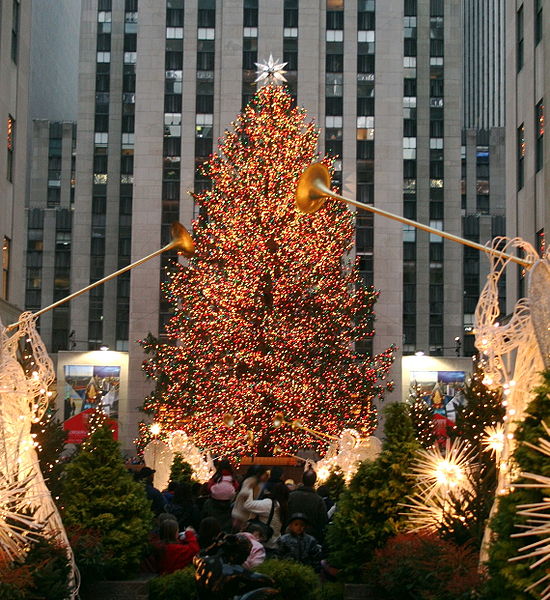 Rockefeller Center's 2006 Christmas tree |
How wonderful it would be if the Christmas spirit dwelled within us throughout the year! Then we would always greet everyone we happen to meet with a cheery "Hello," look in on our elderly neighbors, contribute to charities that help those in need, and instead of giving into fear of the future, we would count our blessings.