North Adams School Officials Lay Out Plans for Middle School
 |
NORTH ADAMS, Mass. — Parents quizzed school officials for nearly two hours on Wednesday night over the wisdom of closing Conte Middle School and splitting its grades between the elementary and high schools.
A prime concern was that the disruption of the three grades would have a negative effect on the children's social and academic progress.
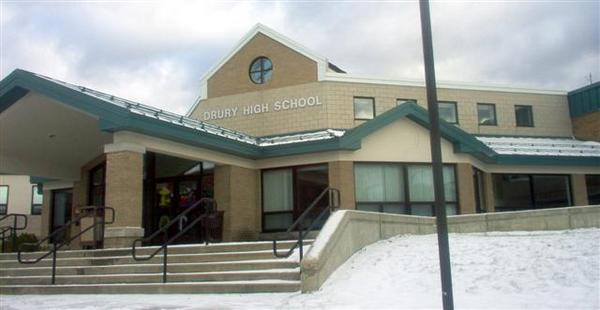
The plan is to send sixth and seventh grades will go back to the elementary schools and eighth-graders to Drury High School based on space availability. School officials pledged that the students would continue to have opportunities, such as dances and academic activities, which would bring them together.
"Conte Middle School is the best building because it provides what we can't at an elementary school, not programming not academics — social responsibility," said Sue Candiloro, a parent and Greylock Elementary teacher, who added that Conte had provided her daughter with a strong social circle that followed her to high school. "[Greylock] can't offer that social diversity."
She worried that keeping the children in the smaller elementary schools wouldn't nurture their independence; some parents worried that eighth-graders weren't prepared for the high school atmosphere.
Those concerns were echoed by others in the packed cafeteria at Greylock, the first of two sessions planned to gather input from the community.
Financial Woes
The decision to close Conte has been under discussion for nearly two years but fast-tracked last month because of the financial crisis affecting the state and city.
Mayor John Barrett III told parents some $2.3 million in savings had to be found in the city budget — $1.2 million to $1.4 million from the school budget.
The schools hadn't been touched in 25 years while budget cuts has slashed away at other departments, leaving City Hall "like a ghost town." "We have cut everywhere else, this is the only place we can go," he said.
Other communities are having a far tougher time — laying off teachers and charging for school bus rides — but he warned that the city's financial situation could get worse.
The aging Conte, once Drury High School, needs a million or more in roof repairs alone. School officials have said it didn't make sense to pour more money into the building at the same time the population was declining. (The mayor said the building will be sold, not torn down.)
"I'm thankful that we have a building we can close because without that, we would have 35 people we'd have to lose," said Superintendent of Schools James Montepare.
The middle school concept was instituted in 1975 after the new Drury High School was constructed off South Church Street. The city's junior highs were demolished and Grades 6-8 brought to what was then the North Adams Middle School.
Joseph Rogge, a former superintendent who was principal of Conte, said the middle school grew out of studies in the 1960s that focused on the so-called "emerging adolescent."
"It doesn't matter where the building is, the important thing ... is that the kids are first," he said. "The middle school is a concept, not a building."
Montepare assured questioning parents that the programming would remain in place. In fact, the laptop initiative would be extended to Grades 5 through 8.
"The sixth grade is a great class, they'll do well wherever they go," he said, and there will be more opportunities for eighth-graders since they will be able to participate in sports, drama and other activities.
The influx of middle schoolers shouldn't be difficult for the three elementaries and high school to absorb, said school officials. Sullivan and Greylock will have less than 300 pupils; Brayton about 450. Drury will section off a hallway for eigth-graders to largely separate them from the high school students.
Plan A and Plan A
Turning Brayton into the middle school and separating the other schools by grade would disrupt all the grades and add more buses, said Montepare, and force expensive handicapped-accessibility improvements. Only Brayton is fully compliant with the Americans With Disabilities Act and handicapped children are enrolled there.
The cost of that plan would wipe out any immediate savings — $400,000 in Conte's operational costs and another $120,000 or so in busing costs.
The mayor said the city would pursue stimulus funding for adding onto or renovating the schools to better accommodate the middle schoolers. But for now he said, "we have Plan A and Plan A."
Parents raised issues ranging from how the current sixth-graders will respond to returning to their old schools to programming to space.
The schools would be somewhat pressed but with the projected decline in population, their enrollment will be back to current levels within four years, said Montepare. Total enrollment has dropped from 1,900 to 1,6000 and is expected to decline another 300 more.
Barbara Dowling, a Greylock employee whose children had gone through the school system, reminded the group that twice as many children once attended the school.
Montepare said there were still details to work out and that the communities input was important. "This is a work in progress."
"I think the most positive thing tonight is the turnout," said one woman. "I just really encourage you to have meetings as you move forward ... so that you can continue to get feedback."
The next meeting is Wednesday, March 4, at 7 p.m. at Sullivan School.