Clarksburg Sewer Delinquents Urged to Pay Up

By Tammy DanielsiBerkshires Staff
Print Story | Email Story
CLARKSBURG, Mass. — Town officials are warning that come May 1, they'll be going after residents with delinquent sewer payments with the full force of the law.

Despite weeks of controversy, a significant number of sewer users still haven't paid bills — some dating back to year before, said Town Administrator Michael Canales.

"Please get in and pay your bill," he told viewers of Wednesday's Selectmen's meeting. Otherwise, be prepared for demand fees, a visit from the deputy collector and, finally, publications of your name and a trip to court.

The town learned in December late payments had left the sewer enterprise fund in the red; that led the state to increase the town's tax rate to replenish the fund to the tune of $30,000. Only a portion of the town is hooked up to the public sewer, which flows to the Hoosac Water Quality District.

The sewer is supposed to be funded solely by the sewer's users — not the town.

"The sewer enterprise fund can't keep coming to the town for money," said Selectman Carl McKinney. "The enterprise fund is going to reimburse the town for the money it loaned it."

It may mean the sewer fund raising rates to make up for those not paying their bills, he said.

While the delinquencies have been piling up late fees and other penalties, the town can't take action until May 1, the end of the fourth quarter billing, because of state law.

"We are living in challenging times," said McKinney. "Call us and we'll try to work with you."

In other business, McKinney suggested selling of two properties to gain some revenue for the town. One parcel, about an acre-lot on the corner of Walker Street and Brook Heights, was taken for taxes but wasn't sold in the last town auction because the only bid, $500, failed to come close to thousands owed in back taxes.

The second lot is about 10 acres on Carson Avenue that had been considered but rejected for the senior housing complex.

Canales said the acre-lot could be put up for sale at any time; the Carson parcel had been donated by the town and town meeting would have to authorize its sale. He noted the Fire Department's fire tower is situated on the land. The Finance Committee. It was decided to further research the issue.

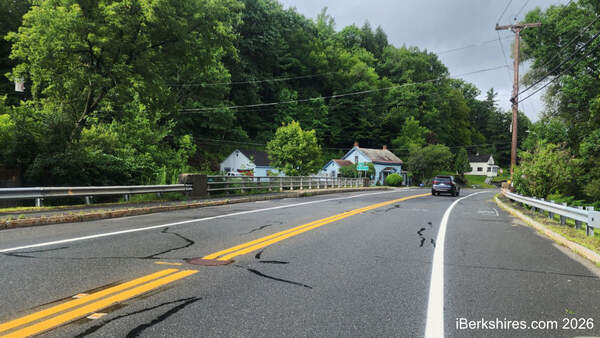
Canales reported that West Road turned into a sinkhole for several days because of rain and weather changes. A car became trapped in the middle of the dirt road truckloads of stone had be hauled in to stabilize the base. The road is currently in passable shape, he said.

He also updated the board on the senior housing projected planned new the Senior Center. Public hearings on the plans will be held on March 25 from 1 to 2 and April 2 from 6 to 7 at the Senior Center. Because the area is zoned for industrial, the Planning Board will approve a special permit that will then be presented to town meeting. The same procedure occurred for the Senior Center in 2001.

Town meeting will also be asked to adjust the tax exemptions for the elderly so home equity in house doesn't disqualify them; increase demand fees and split the revenue between the town and tax collector, who currently receives the entire amount, and change the tax collector to town collector to give the position authority over collecting all delinquent fees, such as fines and tickets.

"What we want is the ability for the tax collector to place these against their properties," said Canales. "It's the biggest tool we have."

If you would like to contribute information on this article, contact us at info@iberkshires.com.

Lanesborough Planners Bring STR, ADU, Signage Bylaws for Town Vote

By Breanna SteeleiBerkshires Staff

LANESBOROUGH, Mass. — The Planning Board held a public hearing on the much anticipated bylaws for short-term rentals, accessory dwelling units, and signage to be presented at the annual town meeting.

For the past few months, planners have diligently been working on wordage of the new bylaws after Second Drop Farm's short-term rental was given a cease and desist because the building inspector said town bylaws don't support them.

The draft bylaw can be found on the website.

The board voted on each of the four articles and heard public comment before moving to entertain any amendments brought forward.

A lot of discussion in the STR section was around parking. Currently the drafted bylaw for parking states short-term rentals require two parking spaces, and with three or more bedrooms, require three spaces but never more than five.

There were questions about the reasons for limiting parking and how they will regulate parking renters choose to park on the lawn or the street. Planners said it is not their call, that is up to the property owner and if it is a public street that would be up to the authorities.

Some attendees called for tighter regulation to make sure neighborhoods are protected from overflow.

Lynn Terry said she lives next to one of the rented houses on Narragansett Avenue and does not feel safe with all of the cars that are parked there. She said there can be up to 10 at a time on the narrow road, and that some people have asked to use her driveway to park. She thinks limiting to five cars based on the house, is very important.

The wordage was amended to say a parking space for each bedroom of the house.

Rich Cohen brought up how his own STR at the Old Stone School helps bring in money and helps to preserve the historic landmark. He told the board he liked what they did and wants to see it pass at town meeting, knowing it might be revised later on.

He said the bylaws now should not be a "one size fits all" but may need to be adjusted to help protect neighborhoods and also preserve places like his.

After asking the audience of fewer than 20 people, the board decided to amend the amount of time an short-term rental can be reserved to 180 days total a year in a residential zone, and 365 days a year in every other zone. This was in the hopes the bylaw will be passed and help to deter companies from buying up properties to run STRs as well as protecting the neighborhood character and stability.

They also capped the stay limit of a guest to 31 days.

Cohen also asked them to add "if applicable" to the Certificate of Inspection rule as the state's rules might change and it can help stop confusion if they have incorrect requirement that the state doesn't need.

The ADU portion did not have much public comment but there were some minor amendments because of notes from KP Law, the town counsel.

View Full Story

More Clarksburg Stories