Spring Brings Bears on the Prowl
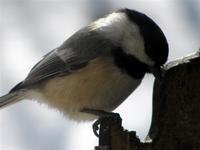 |
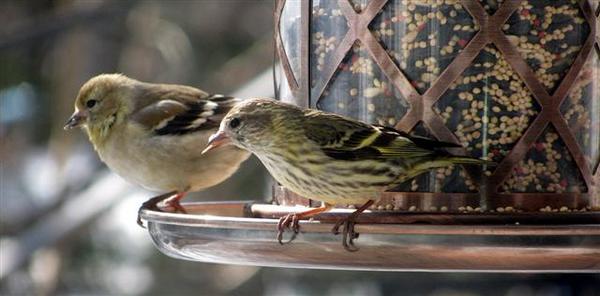
| Bird feeders can draw bears. |
That means it's time to take down the bird feeders, say MassWildlife officials, in northern Middlesex County, Worcester County and Western Massachusetts.
With the snow melting and longer day length, bears are will soon be leaving their winter dens. To avoid possible seasonal conflicts between people and bears in central and Western Massachusetts, the Division of Fisheries and Wildlife is issuing its seasonal reminder that bird feeders should be taken down by mid-March and other preventive steps be taken.
"There is little in the way of natural foods and bears learn to seek out high-energy human foods such as bird seed," said Jim Cardoza, MassWildlife Bear Project leader. "This may lead to conflicts that pose hazards to both bears and people."
Massachusetts is home to approximately 3,000 resident bears, with the majority living west of the Connecticut River. Bears also reside as far east as Worcester County and in northern Middlesex County.
Bears have excellent long-term memories and remember which foods are available at different seasons, as well as where these foods can be found. Even if a feeder is inaccessible to bears, they will be attracted by the scent of seed and suet. Once they learn the location of these foods, bears will return. Bears are typically shy and fearful of people, but deliberate feeding or indirect availability of human food, coupled with a lack of harassment can cause bears to become accustomed to people.
 Office of the Governor
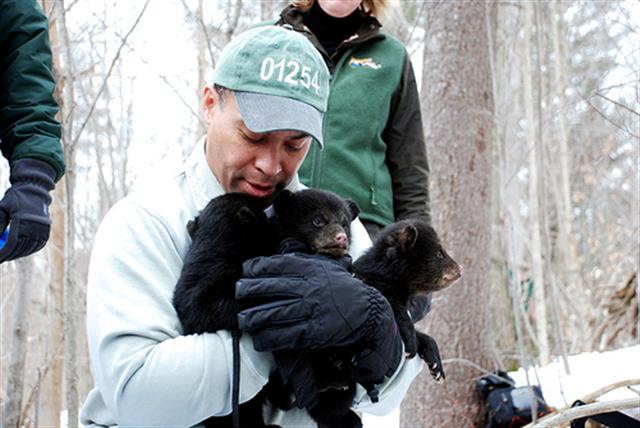
Oh, they're cute when they're little, but you don't want full-grown bears dropping by your back yard for dinner. Above, Gov. Deval Patrick on the annual bear count in Hadley. |
If a bear is passing through a neighborhood without stopping, enjoy the sight. However, if the bear stops to feed on trash, bird seed, or other human-generated foods, remove those foods after the bear has left and advise neighbors to do the same. Because of their fear of people, bears tend to leave a yard when people step outside and make noise. Keep garbage in airtight containers, securely stored in a cellar, garage, or shed. Put trash at roadside the day of trash pickup, not the previous evening. Keep doors to sheds and barns latched or locked to prevent bears from finding grain, sweet, or meaty foods. Refrain from feeding pets outdoors.
Do not deposit sweet or meaty items in compost piles as bears will soon find them. In residential areas where bears are known to be present, the entire neighborhood must take recommended actions or bears will move from yard to yard seeking food. Cardoza said taking these actions also reduces problems with other common wildlife species such as coyotes, raccoons, skunks, and foxes. For more black bear information, click here.