State Coalition Works to End Disparities in Health Care
By Monique CoppolaCommonwealth News Service
Print Story | Email Story
BOSTON — Health care is not created equal, especially for minorities and other people of color: That's the message for National Minority Health Month.

Despite the state's 3-year-old health-reform law, residents of color still face higher rates of disease and poorer health outcomes, and live shorter lives, according to the Disparities Action Network, which is working to advance policies that address health care inequalities.

Much progress has been made in Massachusetts, but there is more to the story, says Elmer Freeman, executive director at the Center for Community Health Education Research and Service and DAN co-chairman.

"We're really trying to make sure that people recognize that it's not a matter of access or insurance coverage, it's really about how you get treated in the system overall."

Dr. Michele David, DAN co-chairman and professor of medicine and director of Community Health Programs at Boston University's National Center for Excellence in Women's Health, says there are still many hurdles facing minorities regarding access.

"There might be some unconscious bias among some health-care providers as one of the reasons, and social determinants of health is also a bigger part of the picture."

The coalition's focus is twofold: to make permanent a statewide Office of Health Equity that works both within and outside the health-care system to create strategies for reduction of disparities; and to support community agencies to run programs shown to make a difference in addressing health care barriers.

For more on the Disparities Action Network visit hcfama.org.

If you would like to contribute information on this article, contact us at info@iberkshires.com.

Pittsfield Council Passes $232.7M Budget

By Brittany PolitoiBerkshires Staff

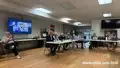
PITTSFIELD, Mass. — The City Council unanimously approved a $232.7 million budget for the upcoming fiscal year. 

It is a modest, almost 2.9 percent increase from FY26. 

"I do want to give the community kind of a heads up as we move forward on budgets. What we see coming out of the federal government that's trickling down to the states, it's going to be harder and harder for us as a community to meet our needs under the Proposition 2 1/2," Councilor at Large Alisa Costa said. 

"We're going to have challenges, as we've seen communities across the state trying to override the Proposition 2 1/2, because we have dwindling amounts of money coming from the state and federal government." 

She pointed out that, at the same time, utility bills are going up for both residents and the city, as are the costs of pavement and other items. 

The amended budget of $232,777,720, down from the $232,782,090 originally proposed, includes cuts to the Department of Diversity, Equity, and Inclusion and the restoration of funds for councilors to attend the annual Massachusetts Municipal Association conference. 

The Pittsfield Public Schools' $86,855,061 budget includes $68,886,061 in state Chapter 70 funding and $18 million from the city. With $345,000 in school choice and Richmond tuition revenues, it totals $87,200,061 and is an approximately $300,000 increase from the Pittsfield Public Schools' FY26 budget of $86.9 million. 

The district's budget will fund 13 schools, as Morningside Community School will retire in the fall, and includes the middle school restructuring. 

Councilors also approved the use of $2 million in certified free cash to reduce the tax rate, and appropriated $450,551 for parking-related expenditures. 

View Full Story

More Regional Stories