Barrett Kicks Off Campaign Touting Experience, Accomplishments
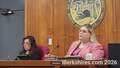
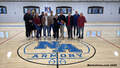
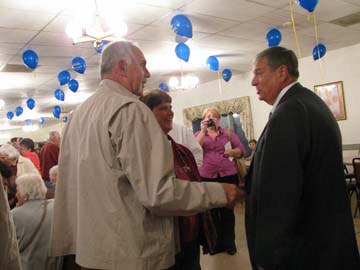
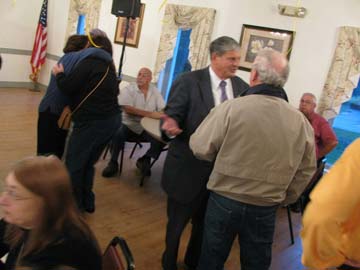 Mayor John Barrett III was surrounded by supporters at his campaign kickoff Wednesday night at the American Legion. |
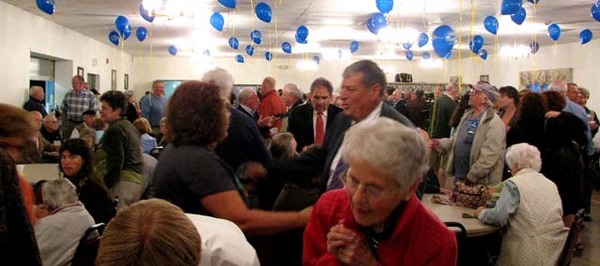
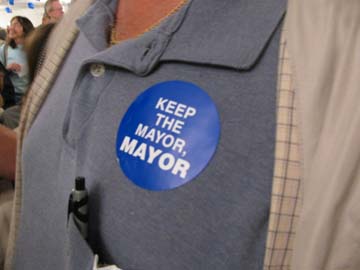
Surrounded by enthusiastic supporters — many sporting "keep the mayor the mayor" stickers — at the American Legion, the state's dean of mayors urged his backers to help him win another two years in the corner office.
"This is a very emotional time. I believe so much, so much that this election could be one of the most important elections that this city has faced in a long time," said Barrett, adding that if his opponents "want change, fine. But tell us what they want to change that we haven't already accomplished."
Barrett's served 26 years, longer than any other mayor in Massachusetts history. Most young people in the city have never known another leader — he's been handing out high school diplomas for nearly a generation. But those same youngsters don't remember when the city was a dying mill town after its biggest employer Sprague Electric, closed up shop, he said.
"I keep hearing around this country and around this city that we need change," said longtime friend and political colleague Rep. Daniel E. Bosley. You don't need to switch leaders for that, he continued, "because [Barrett] has been the agent for change .... [He has] made this city change in a good way."
Bosley introduced the mayor to crowded room that included Berkshire District Attorney David E. Capeless, City Councilors Gailanne Cariddi, Michael Bloom, Lisa Blackmer and Marie Harpin, council candidate Dennis Whitney and local leaders such as Mary Grant and James Canavan.
Barrett's facing his toughest opponent in years in City Councilor Richard Alcombright. He's touting his long experience, critical connections and accomplishment in transforming the city from mill town to arts haven as the reasons to check the box next to his name on the November ballot.
He pointed to the millions of dollars poured into roads, ball fields, the water treatment plant, library and the schools, while keeping property taxes among the lowest in the state as change for the good.
"We rebuilt this city by going back in the neighborhoods," the mayor said. "You don't rebuild a city by starting in the downtown."
The goal has been to create an attractive and, most importantly, affordable city for young families. That means good schools and enough teachers, said Barrett, a former teacher himself. Over the past two decades, the average student-teacher ratio has dropped by more than a third, students can take advantage of a range of programs, Brayton School was rebuilt and Drury High reconfigured.
 |
He rejected notions that the downtown isn't prospering, pointing to the Massachusetts Museum of Contemporary Art as a cornerstone and the development of condominiums and small businesses on Main Street, along with redevelopment of the former Kmart building.
Who would have thought people would pay more than $300,000 to buy condos on Main Street? he asked. The city under his administration has sponsored the annual Beach Party, Downtown Celebration and Food Festival. It's also saved state properties like the armory and the skating rink.
But there's still more to do: additions to two of the elementary schools, which are now K-7, more road work and some $3.2 million in streetscape improvements to the city's main entrances made available by the late U.S. Sen. Edward Kennedy.
"Yes, there's been some decisions along the way that have offended some people," he said. "But that's the job of the mayor. A mayor has to be many things to many people. He cannot, or she cannot, be the person who sits on the bus. That mayor has to drive the bus but make sure there's people sitting on the bus with him or her."
The city is facing dire years ahead, said Barrett, as the state economy continues to founder. "We face the toughest challenge ahead, even more than Proposition 2 1/2 ... We lost $2.8 million [in state aid] and the next two years are going to be more difficult."
 The connections he's made over his career — he and Boston's Menino were the only mayors invited to Kennedy's funeral — will be critical to keeping North Adams in the loop, he said. "At least when I make a call to Boston or Washington, they take the call."
He acknowledged this election will be hard fought and that his experience could be held against him as well.
"It's going to be a tough one because I'm running on a record of making tough decisions, 26 years of having to say no to people when they wanted me to say yes, 26 years of sometimes having to say to the union leadership, 'no, we can't afford it.'"
He thanked his supporters for never wavering in their faith in him over the years and asked them to stick with him again.
"I need you one more time. I cannot tell you how important the next two years are," Barrett said to applause. "I hope that in two years, we can say we done the job and we done it well."