Hancock Shaker Village Gearing Up for 50th Anniversary
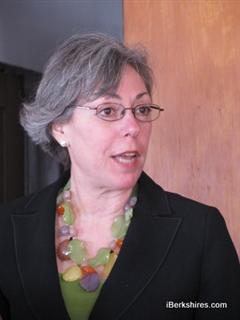 President Ellen Spear said the museum will be positioned as a 'center for exploring principled living.' It's also planning major improvements to its 18 historic buildings. Below, the Brick Dwelling.  |
The anniversary exhibit, "True and Honest Before the World," opening in May will bring together a wide array of scholars, students and local and not-so-local dignitaries to select what item they believe best represents the Shaker ideal. Some 30 guest curators — from Hancock fifth-graders to documentarian Ken Burns — will be joined by one guest entry selected online.
This year's Shaker Seminar will be all about the village. SculptureNow will hold a juried event in Lee inspired by the Shakers, the village will host an artist-in-residence, and a gala event is set for August.
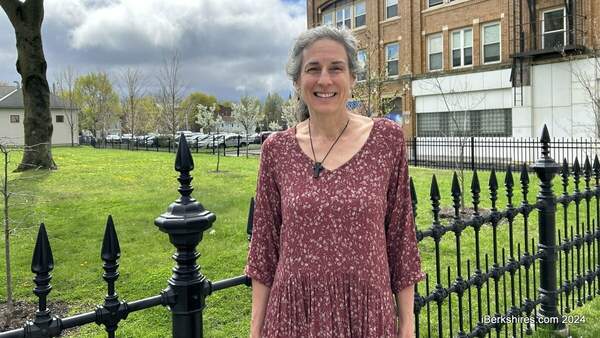
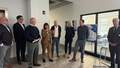
"We really went back to the core mission ... Our mission is to bring the Shaker story to life and preserve it for future generations," said President and CEO Ellen Spear on Tuesday, standing in the sunlight dining room of the Brick Dwelling. "Not everything that they did can apply to you, but we think there are good clues in what the Shakers did that can help our lives in the 21st century."
The village will tap into the current zeitgeist of sustainability, craftsmanship, local production, local food and spiritual ideals by reintroducing itself as a "center for exploring principled living," she said. "When you come to Hancock Shaker Village, you are going to learn something that you can apply immediately to the way you live today and you can explore what it means in your own life to live in a principled way in the 21st century."
In other words, a visitor will be able learn how "to be a good Shaker in your own home."
That will include new programs every week on everything from composting to Shaker style, an expanded Web site with access to the living museum's 22,000 artifacts and scholarly research from its annual seminars. Particular focus will be on the sustainability of the village, from its original Shaker innovations to its newest solar installation, and family programs to reflect the changes in the museum's membership.
"Outdoor living history museums as a group have been finding that the old ways of doing things has to change - our visitors are changing," said Spear. With the availability of virtual worlds and recreational pursuits, "we have to change with our audience."
About a quarter of the museum's visitors come from Massachusetts and another quarter from the New York City metro area. Fifteen percent are foreign and the rest are from around the country. The average age of both visitors and donors has declined by about a decade.
 Interpreter Lisa Ballantyne sings a song of grace. Ballantyne's worked at the village for seven years and says the communal spirit of the Shakers continues to inform its current occupants. |
For the Shakers, family was the community within which they lived. About 100 Shakers, a Protestant sect focused on achieving Heaven on Earth through simplicity, celibacy and communal living, established the village in the late 18th century. In its heydey, the village was home to some 300 people and contained 3,000 acres. But it declined, along with the Shakers.
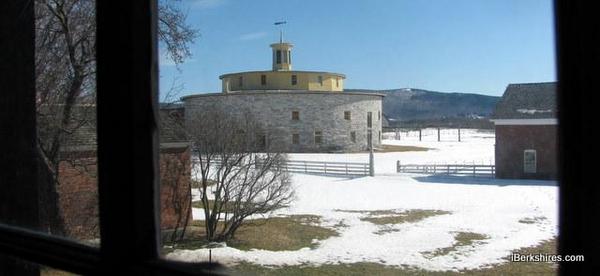
By 1960, there weren't many Shakers left on the property, much of which had been sold off. The landmark 1826 Round Stone Barn was dilapidated and the buildings crumbling; the property was up for sale for $200,000.
It was being eyed for a state prison, or a racetrack, when Amy Bess Miller saw the "For Sale" sign. The wife of then Berkshire Eagle Editor Peter Miller rounded up a group to help save the property, which they bought for $125,000. The next year, Hancock Shaker Village opened to the public — when the public deigned to stop in.
"I heard stories of [volunteers] who sat on the front porch waiting for people to come," said Spear. "And they told me candidly, if they were asked a question and they didn't know the answer, they made it up."
From that rickety start five decades ago, the village now has a $2 million operating budget and 28 full-time equivalent staff and another 50 during the open season, including trained interpreters who do have answers. It has become a center for research in Shaker living, farming, architecture, history and preservation.
 The museum's popular programs such as 'Baby Animals' return this year. This 3-day-old piglet and his brother are the first to arrive. |
Students may be doing some research toward the village capital improvement plan to restore the up to 200-year-old buildings dotting the property. The first on the list is the newer Trustees' Building that will house the program; the rest of the buildings will restored over the next 20 years in terms of priority and fund raising. Also a priority is the museum store, which will be revamped to concentrate on Shaker and locally produced items.
Its $1.5 million 50th anniversary campaign has raised $900,000 so far. Spear said the museum will embark on a more ambitious campaign to pump its $1 million endowment to $10 million to $15 million over the next two decades to ensure its future.
"It's our turn being stewards of this place and to make it better than we found it to pass on to the next group," said Spear.