If you would like to contribute information on this article, contact us at info@iberkshires.com.
Your Comments
iBerkshires.com welcomes critical, respectful dialogue. Name-calling, personal attacks, libel, slander or foul language is not allowed. All comments are reviewed before posting and will be deleted or edited as necessary.
I realize that faster internet service will be a boon to the area, However, it has not happened via the private sector because it was not cost effective. Will it be cost effective when financed by the taxpayer? How about a user fee user fee on the service until the "loan" can be paid back to the taxpayers. That way the region gets serviced and the taxpayers are not left holding the bag for the few. I am sure that to be able to benefit from this new faster service, the users would be happy to "pay back" the taxpayers who made it possible.
Does anyone at the State or Federal level ever think in terms of who is going to pay for things?
"The service area contains more than one million residents, over 44,000 businesses, at least 2,100 community anchor institutions (CAI), and 3,429 square miles. The middle-mile network will be within three miles of more than 98 percent of households, CAIs, and businesses. This will dramatically change the cost equation and service options for last-mile providers and allow for competitively priced residential and business-class broadband services."
Does this mean that private business will now be able to service customers they would not have been able to before for cost reasons?
Does this mean that we have now subsidized these "private" companies to the tune of millions of dollars to run a high speed line closer to the servicing area.
These companies should at least be made to pay laying of these High Speed lines. I know they will only pass the cost onto customers, but the customers should be happy that they can finally get High Speed Internet at a premium price for sure, but at least it would then be available as a choice.
Editor: The initiative is the same thinking that produced programs like the Rural Electrification and the federal and state highway systems. Those programs greatly aided businesses as well as citizens. The problem in rural communities is that the big carriers (DSL, cable) are not willing to invest millions because the return isn't big enough. Like electrification, the government is providing the main investment for communities to plug into - residents and businesses alike. Check out WiredWest for more information.
Abigail, you realize that you--and everyone else--most certainly HAVE asked for AND received governemnt monies, right? Lots of them.
Unless you're the rare person who doesn't use any of the following: highways, airports, cellular communications, and the internet. Or how about the "government monies" you get in the form of interest deductions and tax benefits for things like mortgages, capital gains, etc?
Or locally, things like snow plowing, court systems, enforcement of parking, zoning, or other ordinanaces. Fire protection. A prison to hold people who have broken criminal laws. Hospitals. Safe drinking water. Regulation of pollution.
Yea, I'm sure you never asked for or used any of that stuff.
You are right though, that stuff is "part of capitalism." It's the part that free-marketeers like to pretend doesn't exist.
Editor: I agree with Publius. Abigail's argument is she already has a road to her door, so why should she have to subsidize roads to other people's doors? iBerkshires, obviously, pays for broadband. We are situated in North Adams so have access to it. People on Florida Mountain would love to pay for broadband, too, but no one will offer it to them. This investment will build a road to Florida so they can pay to have it come to their doors.
Welcome to the 21st century Western Mass!! Nobody bats an eye when roads, bridges, and highways are built with tax dollars.
Fasten your seat belts and prepare for a ride on the information super-highway. In our increasingly wired (commerce) world information exchange becomes a requirement for participation in the new economy.
This is the type of infrastructure improvements that will yield many times the benefits of the initial costs.
This is a wise, far sighted, and proper use of tax dollars.
I find it ironic that some residents of densely populated eastern MA protest about the broadband initiative grant, when for years their auto insurance rates were heavily subsidized by drivers in Western MA under the state's former auto insurance rate formulas.
NORTH ADAMS, Mass. — Label Shopper is moving across the parking lot to the former Peebles location in April.
The discount clothing store has been located in the downtown's L-shaped mall downtown since 2009. It replaced Fashion Bug, which had been in that spot for 24 years before closing in 2007; the company liquidated in 2013.
Label Shopper is part of Peter Harris Clothes, established in 1970 by Peter Elitzer. Starting as a single store in Latham, N.Y., offering brand-name apparel at discount prices, the company operates more than 70 stores throughout the Northeast and Midwest.
The store is set to close on April 6 for the move and reopen on April 9 in the former Gordmans, according to signage.
Gordmans briefly replaced Peebles in the former Kmart until the parent company of the two brands declared bankruptcy and closed its stores in 2020.
At 17,250 square feet, the Gordman's space is at least double the size of Label Shopper's current location.
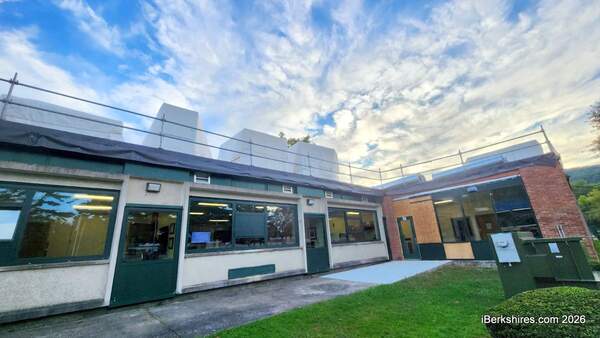
For many years, the town of Lee has had to struggle with an outdated and crowded Police Department station located in its Town Hall, which was built in 1874. Its nearby fire station was originally constructed to house horse-drawn firefighting vehicles. click for more
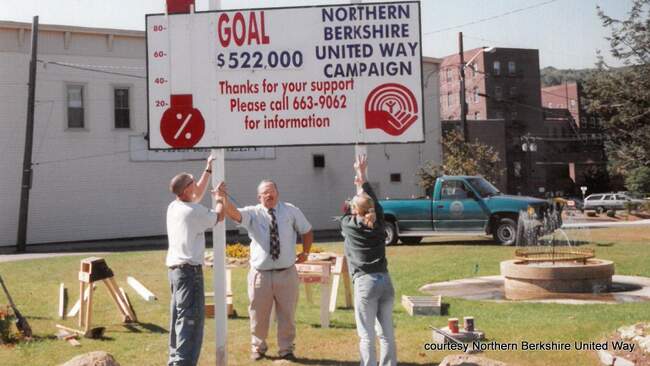
The organization had successfully grown over the past 20 years and, by the end of the decade, would see its campaign drives pass the $100,000 mark and the number of agencies under its umbrella grow to 17. click for more
The City Council got an update on what's up in the school system and its president was inducted into the mayor's Women's Leadership Hall of Fame. click for more
The Massachusetts Museum of Contemporary Art Commission welcomed bread-baking appliance designers Brod & Taylor to the campus on Monday. click for more