Pignatelli: Casinos Threaten Smaller Arts Venues
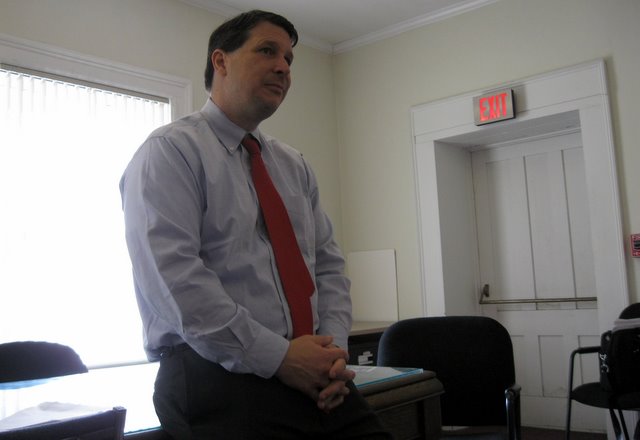 Greg Liakos of the Massachusetts Cultural Council has proposed four admendments intended to support nonprofit and small businesses in the face of casinos. |
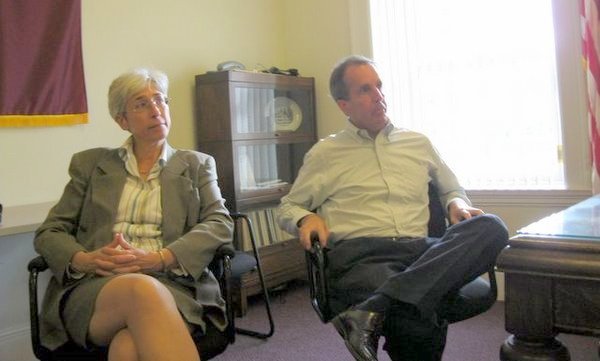
State Rep. William "Smitty" Pignatelli, D-Lenox, met with proprietors of smaller and nonprofit performance venues Monday morning to discuss the "grave" threat casinos will bring.
"We're going to make a bad bill better. But it'll still stink," Pignatelli told them. "I think it is a sad day when we have to turn to gambling to pay our bills."
Pignatelli, a member of the Joint Committee on Tourism, Arts and Cultural Development, scheduled the roundtable at Town Hall with state officials. He was joined by fellow committee member Rep. Gailanne Cariddi, D-North Adams, and a representative from committee Vice Chairman Sen. Benjamin B. Downing, D-Pittsfield.
Casinos have been the subject of debate for about a decade and bills allowing them in the state have come to the edge of being signed into law. This year, the executive branch is pushing another bill that is expected to be debated by the legislative bodies in September.
While a casino is not proposed in Berkshire County, the business model threatens smaller venues' abilities to bring in acts.
According to Greg Liakos, a spokesman for the Massachusetts Cultural Council, a casino's business model is based on providing entertainment at very low costs because it generates gambling income. Often, the contracts between the casino and the acts include clauses that prevent the acts from playing other venues in a 100-mile radius of the casino.
"It's a supply-side problem. It's getting those artists," Liakos said. "Our concerns are real, are unique and to be addressed is in the interest of the taxpayers."
For example, about five years ago, the 2,600-seat CityStage in Springfield sold out two Jerry Seinfeld shows and with other events going on in town, the city was booming with energy. Since then General Manager Tina D'Agostino has tried to book Seinfeld eight times but was blocked every time because of shows at Mohegan Sun casino in Connecticut.
Recently, CityStage booked "Lord of the Dance" but Mohegan Sun booked it the next day. Because the casino has an additional source of income, it was able to sell the tickets for $40 cheaper and D'Agostino's sales plummeted.
"It's frustrating. It hurts our ability to book," D'Agostino said. "We really do need to protect ourselves."
Troy Siebels, executive director of the Hanover Theatre in Worcester, said casinos could put his venue out of business.
"We already feel the impact from the Connecticut casinos," Siebels said. "Our goal is to get as many mitigating things in the bill as possible."
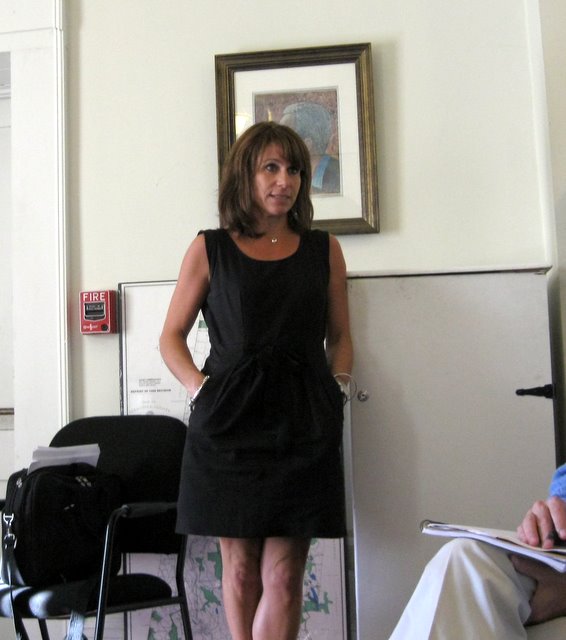 Tina D'Agostino has already seen the effects casinos have on smaller venues while running City Stage and Symphony Hall in Springfield. |
"It probably won't be in the Berkshires but it will have an economic impact," Pignatelli said. "When the Mahaiwe is boarded up, we're going to care."
The closest proposed casino is eyed for Palmer, Springfield or Holyoke. The casino bill should include provisions to prevent sinking all other venues and the business community will need to express these concerns to Gov. Deval Patrick, Pignatelli said.
Liakos shared some draft amendments to the bill that include a moratorium on building performance arts venues in casinos, prohibit theaters that hold between 500 and 5,000 people, require licenses to address impacts on smaller venues and dedication of a portion of the tax revenues to smaller venues that can prove hardship from the casinos.
Ideas of regulating the 100-mile clauses or the ticket prices were brought up but quickly rejected by Liakos and Pignatelli because of doubts they could stand up to a legal challenge.
Staurt Chase, CEO of 1Berkshire, added that the impacts will run deeper than just performance arts venues. Restaurants, hotels and art galleries will all be affected while the county loses part of its draw, he said.
"It's bigger than just performing arts," Chase said.
Tags: casinos, economy,