Legislators Host Wind Siting Hearing At Jiminy Peak
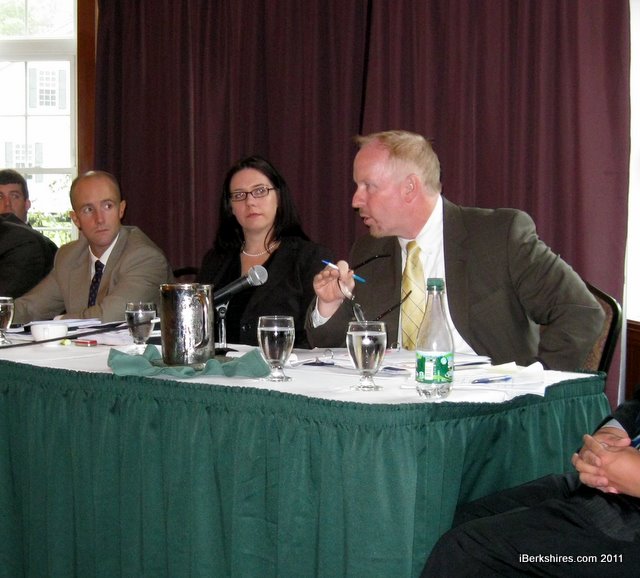 Sen. Michael Knapik, R-Westfield, was the most outspoken on the committee and questioned the need to fast-track permits. |
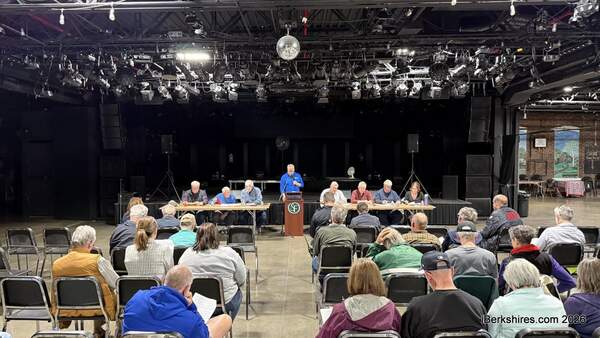
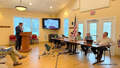
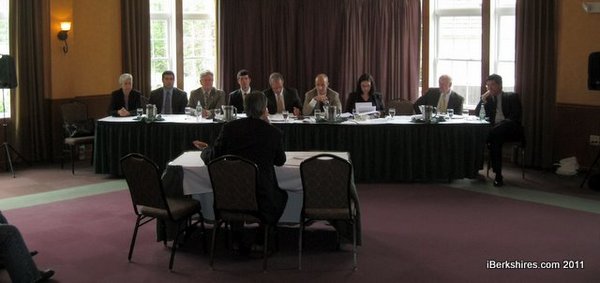
The hearing, at Jiminy Peak Ski Resort, attracted residents and organizations from across the state voicing support on both ends of the issues. The wind siting reform bill would streamline permitting and reduce the number of regulations as well as reduce the ability of abutters and interest groups to challenge a development.
Secretary of the state Executive Office of Energy and Environmental Affairs Richard Sullivan kicked off the hearing by denying claims that the streamlining process eliminates local control. The legislation would eliminate groups that oppose all wind project "ideologically" from interfering with local government, which will have the ability to grant permits with conditions and enforce stringent standards.
"We cannot allow those who are fundamentally and physically opposed to wind energy per se to thwart the will of the great majority of the residents," Sullivan said. "There is nothing in this bill that will permit a project without local support."
Sullivan pointed to the Berkshire Wind Project on nearby Brodie Mountain that took 13 years to come to fruition as a reason to speed up the process. However, Berkshire Natural Resources President Tad Ames countered by saying that project took so long because of reasons that did not have to do with permitting, then offered testimony against the bill.
Ames pointed to wording in the bill and said that it would allow a project to bypass local permitting and go straight to the state. Additionally, Ames opposed the bill because additional state standards are proposed to be created after the bill's passage.
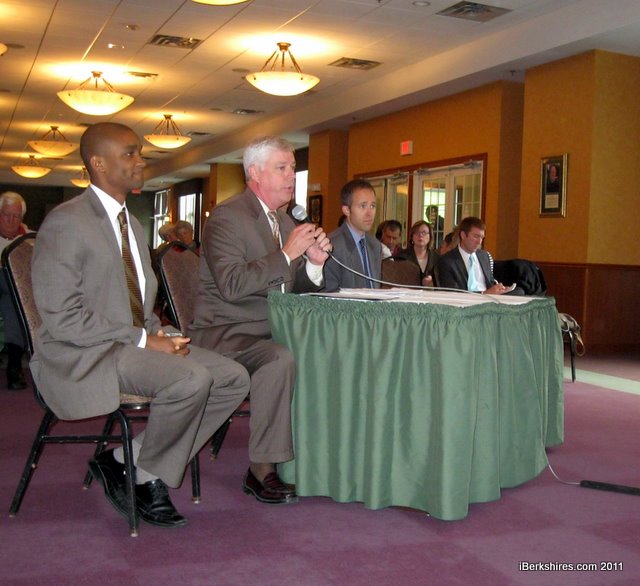 State environmental officials led of the day of testimony voicing strong favor for the bill as it is currently written. |
Richard Pierce also voiced concern about local control. The Granville Planning Board member said other towns are "backing away" from wind projects because taxpayer money is being spent on companies looking for tax breaks and substitutes and the towns are left with decommissioning costs.
Linda Smith, who is a member of the Blandford Finance Committee, opposed the business of wind projects. Smith said the push to increase the number of turbines in the state is an attempt to "sell a product" to the people but is not a long-term solution.
"Business is to sell a product and government is to represent the people. Those are two incompatible things in managerial practices," Smith said. "Everyone is having a hard time selling homes and now we're going to destroy what makes some of these homes desirable."
The opposition was countered many people who voiced favor for the bill. James McCaffrey, the state's Sierra Club chapter director, said it is "essential" to develop wind in the state.
"We have to move away from fossil fuels," McCaffrey said."Let's get this done. Let's make sure the communities have the first say."
|
"There are a lot of good meaning people who are for renewables and I get that. But it's not in your back yard. Some of this stuff is in our back yard... I don't mean to be a NIMBY-type guy but literally you open my back door and you see the Berkshires," Knapik said. "We've got to do it right for Massachusetts ... Do we really want speed things up?
This is the second year the legislation has been debated in the State House. The committee, co-chaired by the county's Sen. Benjamin Downing, will host a second hearing on Monday, Sept. 26, at the Tilden Arts Center at Cape Cod Community College. Those who were unable to attend either of the hearings can submit testimony in writing to the committee.
"We know there is no perfect time or location for these hearings," Downing said.
Tags: wind power,