Williamstown's Lickety Split Closes

By Phyllis McGuireSpecial to iBerkshires
Print Story | Email Story

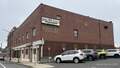
Residents craving ice cream were greeted with this sign in the window of Lickety Split since Nov. 1.
WILLIAMSTOWN, Mass. — Rumors began flying this summer but now what the Williams College community and town folk dreaded has come. Lickety Split on Spring Street has closed.

The beloved ice cream shop closed its doors at the end of October but owner Robin Kanelos said she expects the restaurant to reopen in a new location. However, that location is still unknown after the Kanelos' lease expired.

Kanelos did not wish to expand further on the shop's closing but when contacted in September, she said she intended to return to Spring Street. She declined to reveal what steps, if any, she is taking in that direction nor would she say why she was not renewing her lease or if she had even been given an opportunity to do so. The building's owner, Mark Paresky, has not been available to comment.

Recently, Kanelos mentioned that Williams College is helping her find a space to reopen Lickety Space. The only available space on Spring Street as of this moment is 32 Spring St., which was occupied by McClelland's until 2009.  But rumor has it that something else may be opening up on the street.

Loyal patrons of  Lickety Split, the shop best known for its delicious ice cream, including the popular Purple Cow flavor, are more than disappointed that their supply has literally been cut off. One Williams student spoke of the closing of the shop as an "atrocity" and the wife of a faculty member has vowed not to patronize any other ice cream vendors on the street.


The Lickety Split location at the Massachusetts Museum of Contemporary Art is still open.

In September, Kanelos made it clear that since she assumed ownership of the Williamstown Lickety Split eleven years ago, she has operated the business independently of Lickety Split at Mass MoCA.  

"My sister and her husband own the Lickety Split at Mass MoCA," she said.
 
Though mystery continues to shroud the fate of the cozy eatery that offered snacks, soups, sandwiches and salads as well as ice cream, iBerkshires will be sleuthing until it can report the opening of a re-incarnated Lickety Split.


*iBerkshires reporter Andy McKeever also contributed to this article.

If you would like to contribute information on this article, contact us at info@iberkshires.com.

Local Authorities Responding to State's Action on Kratom

By Stephen DravisiBerkshires Staff
WILLIAMSTOWN, Mass. — The Board of Health on Monday began a discussion about regulating the sale of kratom products in town.
 
The board's monthly meeting came four days after the governor's office in Boston announced that the commonwealth temporarily will designate kratom, also known by its chemical name and marketed with the term "7-OH" as a Schedule I drug, greatly restricting its sale in Massachusetts as of Aug. 28.
 
The board already was meeting virtually with the director of South County's Tri-Town Health Department on a different matter. Jim Wilusz stayed on the conference call to discuss the implications of Gov. Maura Healey's Thursday announcement on 7-OH, which the U.S. Food and Drug Administration has called potentially "The Next Wave of the Opioid Epidemic."
 
Wilusz said he already was working on draft regulations for Tri-Town based, in part, on an ordinance enacted by Northampton before Gov. Maura Healey's announcement. But in the wake of the announcement and the classification of kratom as a Schedule I drug, he might have to change the language of the proposed ordinance.
 
Healey's emergency order of Aug. 14 is intended to "give local boards of health and other municipal officials additional authority to take enforcement action against retailers selling kratom products," according to a news release announcing the move.
 
"I was actually hoping they were going to pass a statewide ban on this thing," Wilusz said. "This goes into effect Aug. 28, so effective the 28th, they can't have kratom in the entire state on their shelves with a one-year [period] to give not only boards of health but, possibly, the Legislature, time to enact regulation.
 
"I don't know if the intent is to work on a statewide Department of Public Health regulation, which would be ideal, where you would have uniformity across the entire state. It does authorize the boards of health to enact local regulations."
 
View Full Story

More Williamstown Stories