Pittsfield City Council Briefs: Bianchi Joins PEDA
 |
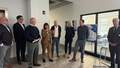
Bianchi had said throughout the mayoral campaign last year that he would appoint himself to the board, in contrast to his opponent, Peter Marchetti, whom he defeated in November.
The quasi-public agency was established to oversee and develop the former General Electric property now known as the William Stanley Business Park. PEDA has become a topic of intense discussion since the December announcement of a proposed retail development on the property.
The mayor will replace Peter Fruet, who is the current neighborhood representative, on the board. The mayor told the council there were a "couple of options" for the possibility of bringing new members onto the board in the near future.
"There are some spots that are becoming available on the board," Bianchi hinted. "What I'm planning on doing in the next month is to apply to the Massachusetts Senate and House of Representatives for an additional two more spots on there. That takes a legislative change. I'm hoping to do that in pretty short order."
Bianchi said he had spoken to the Berkshire delegation and didn't foresee much obstacle to the proposed additions.
► Paula King, chairman of the Board of Assessors, offered a presentation on the assessment of vacant lots.
King explained the process by which properties are assessed and re-evaluated every three years.
During the review process, King said, "It was strongly recommended, by the Department of Revenue, to remove undocumented factors from developable and potentially developable vacant lots."
King said a period of public disclosure took place during which the information was available online and taxpayers had an opportunity to view the proposed values.
Ward 6 Councilor John Krol expressed concerns he'd heard from constituents about unexpected, and sometimes drastic changes in tax burden to some property owners under the re-evaluation
"There were some cases where we had property value going something like $5,500 to $55,000, and that's a major hit on the the tax bill, so it definitely is something that ought to be a concern," he said.
If individuals feel they have cause to contest the evaluation of their vacant lots, such as documentation that a piece of property is not buildable land, they should present that to the tax assessor's office immediately.
"They need to be sure to file for an abatement by Feb. 1," said King. "They will need to provide as much information as possible ... [and] defend what they think their value should be."
Paperwork is available for free online or for a 50 cent fee at City Hall.
► The city will retain attorney Richard M. Dohoney to represent it in the ongoing litigation brought by Spectrum Health over permitting for a methadone clinic.
Newly appointed City Solicitor Kathleen Degnan explained that because of the transition, and because Dohoney is already well into litigation on this case, "it makes sense" to retain him. A cap of $5,000 has been established for these services, and if the Spectrum Health suit is not fully litigated by the time his services reach that cap, the solicitor's office will take over representation.
Councilor Churchill Cotton asked if there were any other cases that the city will require Dohoney's assistance on. Degnan said that all other matters she was aware of would be handled by herself, or newly appointed Assistant City Solicitor Darren Lee.
Updated with PEDA brief at 4:05 p.m., Jan. 25, 2012.
Tags: assessment, PEDA,