North County Wins Battle For Rail Trail Money
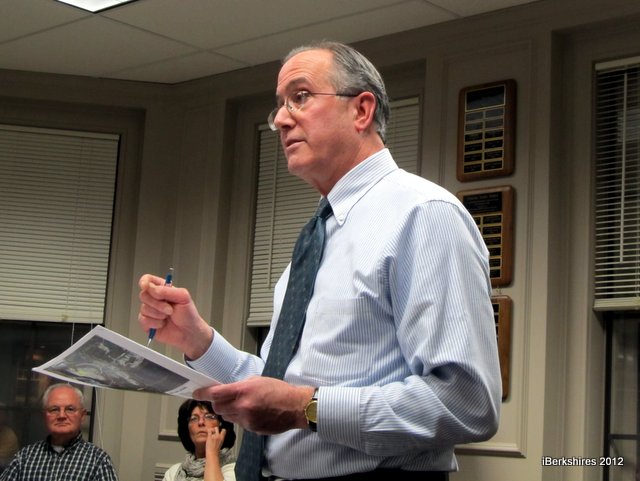 Bianchi said they would be willing to pay the some $800,000 difference in the project cost and the available money. |
The Berkshire Metropolitan Planning Organization reversed on Tuesday its previous decision to support using federal funds to extend the Ashuwillticook Rail Trail from the Berkshire Mall to Crane Avenue and decided to instead extend the trail from Lime Street in Adams to Hodges Cross Road in North Adams.
The regional planning group through the Berkshire Regional Planning Commission voted in August to prioritize Pittsfield's extension.
North County officials felt it was "underhanded" move and asked the group to reconsider. The meeting had taken place days after Tropical Storm Irene and none of North County's representatives had attended. On Tuesday, the group listened to presentations arguing each position and ultimately decided to support sending the money north by a 4-3 vote.
"I think this is a positive step for the Northern Berkshires," North Adams Mayor Richard Alcombright said after the vote. "I feel we are ready to close that gap."
However, despite winning the presentation war, Northern Berkshire officials are not getting what they expected. In August, the vote directed $2.3 million for the project but now the total earmark is down to $1.2 million because of extra work needed to clean up contamination in Adams. The state Department of Conservation and Recreation recently found arsenic at the planned rail trail extension to Lime Street and needed to dip into the earmark.
Adams Town Administrator Jonathan Butler said the town was unaware of that bill until Tuesday afternoon. The Hodges Cross Road extension is estimated to cost $3.1 million and now officials need to find $1.9 million to bring the project to completion.
Both Pittsfield and North Adams brought in the big guns to argue their points. In Pittsfield's corner, Mayor Daniel Bianchi, state Reps. Tricia Farley-Bouvier, D-Pittsfield, Paul Mark, D-Peru, and city officials pleaded their case while in North Adams' corner Alcombright and Butler were joined by state Rep. Gail Cariddi, D-North Adams, Williamstown Selectman Ronald Turbin and many other Adams officials.
"At this point in time, it's about momentum," Alcombright said. "We have so much that's ready to go."
Turbin said rail trail projects in Williamstown are ready to go with funding outside of the federal earmarks. Alcombright said there is only one section — through Western Gateway Heritage State Park and connecting to Williamstown — that is not ready. The completion of the northern section of the envisioned extension from Vermont to Connecticut is close to being done, Alcombright said.
Pittsfield officials, however, argued that it was their turn. City Councilor Christine Yon said sending the money somewhere else would jeopardize any project in the city's neck of the woods. The Housatonic Railroad is willing to sell its property now whereas before they were not, she said.
"They are willing to sit at the table and discuss," Parks Commissioner James McGrath said.
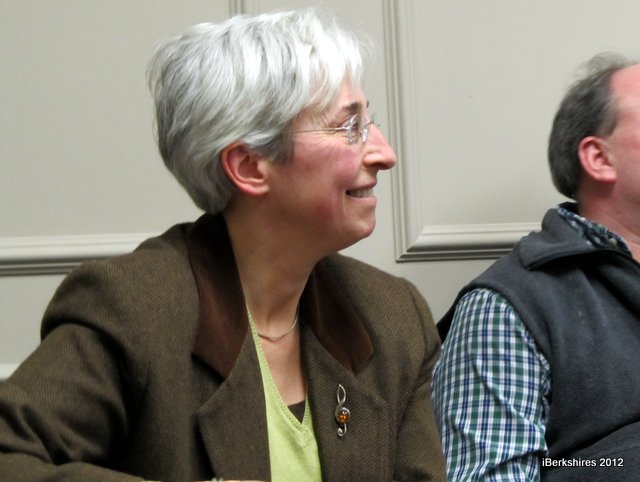 State Rep. Gail Cariddi was the only state official at the meeting in support of extending the trail north. |
"We need to bring recreation into the urban centers," Farley-Bouvier said. "This is an issue of fairness."
Bianchi said the entire project in Pittsfield would only cost $2 million and that the city would be willing to budget for the rest. However, that estimate did not include acquisition of the land.
Not only is the entire northern part of the project nearing completion, Butler said there are far fewer issues. There are only three property owners who need to give approval and 75 percent of the project is on one supportive owner's land. The project is entirely in farmland.
Butler also pointed to the view, the connection to Drury High School, McCann Technical School, Massachusetts College of Liberal Arts and Massachusetts Museum of Contemporary Arts and the need for a recreation economy to advocate for the project.
Despite the setback, Bianchi said the city will continue to pursue its section.
"It was a close vote and we'll just keep our eye on the prize," Bianchi said after the meeting.
McGrath added that the city will continue to seek alternative funding.
Tags: Ashuwillticook Rail Trail, BCRC, federal funds,