Williamstown Board Eyes Limits On Housing Trust
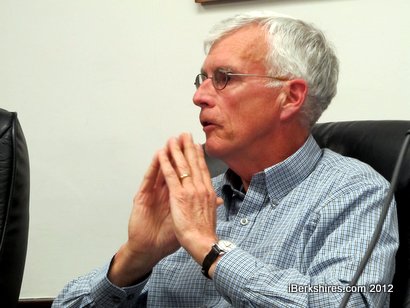 Chairman Thomas Sheldon asked that language protecting the town be included in the affordable housing trust's bylaws. |
The bylaws as drafted would not require the trustees to seek approval from any other board.
"My concern is these five individuals could make some very profound decisions that could affect the town," said Selectman David Rempell. "My fear is only that if something is done that is not as well vetted as it should be, it would be a calamity to the town."
But Selectman Tom Costley disagreed, saying "I don't think you should appoint people and have them come back for permission for what you told them to do."
The housing committee is working to create a trust with an influx of Community Presevation Act funds that would allow action on developing affordable housing, purchasing property, hiring developers, accepting grants and donations, and taking out mortgages and entering into other legal agreements. It would be created through the adoption at town meeting of MGL Chapter 44, Section 55c.
In a letter to the Selectmen, the Affordable Housing Committee recommended keeping the board of trustees at the state minimum of five to be appointed by the Selectmen and chosen for expertise in real estate law and development, finance and community housing needs. One member would be a serving selectman; all would have to be Williamstown residents.
But Selectmen queried the reseasoning behind the independence of the board in terms of making decisions and without limits to spending that have been placed on similar boards in the state.
"We felt those were restrictions that would inhibit the purpose of the trust," said Affordable Housing Committee Chairwoman Catherine Yamamoto. "The feeling of the committee is that the while the powers seem broad, the objectives of the [trustees] are so proscribed that the powers are restricted. ... They're there to create affordable housing, nothing else."
The committee would still function, filling in areas that an expanded trustee board or other advisory board might cover, she said, and the new trust would be able to act quickly and flexibily to better pursue the goals laid out in the town's master plan.
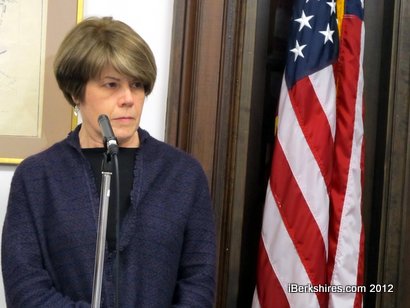 Affordable Housing Committee Chairwoman Catherine Yamamoto said her board did not limit the power of the proposed trust to ensure it could fulfill its mission. |
"I don't raise these as perfect additions to the proposal before us," said Sheldon. "But it does signify the ability to build in some safeguards, in one way or another, if we're not uniformly content in terms of just letting it run in what terms the statute provides."
Resident Joan Burns told the board she was concerned over eminent domain and other powers the trust might have.
"It's dangerous for the town to abrogate powers and turn them over to an independent committee," she said. "I hope you look into the more dangerous things."
Yamamoto said she would bring the suggested language and other concerns back to her board.
In other business:
► The board appointed Beth Phelps to a three-year term on the Agricultural Commission and Jeff Kennedy as an associate member to the Berkshire Public Health Alliance.
► Approved permits for to Pine Cobble School for a one-day all-alcoholic beverage license on May 5 from 6:30 to 11:30 for the Founders' Day 75th anniversary.
► Renewed Taconic Golf Club Inc. seaonal all-alcholic, background music and common victualler licenses.
► Adopted guidelines for penalties for pouring establishments violating alcohol laws.
► Entered into executive session to discuss litigation related to the lawsuit filed against the town by Morgan Management.
Affordable Housing Letter: Williamstown
Tags: affordable housing, affordable housing trust, Spruces,