LENOX, Mass. — Turtles have existed for millions of years, but roadways are threatening the survival of local populations. A state coalition is seeking volunteers to help monitor the turtle vs. motor vehicle action.
Turtles often cross roadways from late spring to early fall and are vulnerable to car collisions. Ambitious citizen scientists, turtle enthusiasts, and conservation organizations are encouraged to join state wildlife and transportation personnel in collecting data for the Turtle Roadway Mortality Monitoring Program.
The state is especially looking for crossing "hot spots" at which multiple turtles are killed.
Linking Landscapes for Massachusetts Wildlife, a recent partnership between the Division of Fisheries and Wildlife, Department of Transportation Highway Division and the University of Massachusetts at Amherst, trained volunteers to collect data in 2010. It is expanding its volunteer program this year by offering two citizen scientist information and training sessions in Amherst and Westborough.
These sessions are designed to train new volunteers, acknowledge current volunteer efforts, and share results from the first year of data collection. The information gathered through this volunteer effort will be used to coordinate local turtle conservation efforts.
There will also be an information and training session on Wednesday, May 16, at United Methodist Church, 6 Holmes Road, starting at 6:30 p.m. The event will be co-sponsored by Berkshire Environmental Action Team and Project Native. The sessions are free, but advance registration is required. Interested volunteers can register with Dave Paulson at David.Paulson@state.ma.us or call him at 508-389-6366.
If you would like to contribute information on this article, contact us at info@iberkshires.com.
Your Comments
iBerkshires.com welcomes critical, respectful dialogue. Name-calling, personal attacks, libel, slander or foul language is not allowed. All comments are reviewed before posting and will be deleted or edited as necessary.
No Comments
Becket Looks to Wind Power for Energy Savings
By Breanna SteeleiBerkshires Staff
The single turbine is a low maintenance and has a 50-year life. The town went with wind power after finding a solar installation would be too difficult.
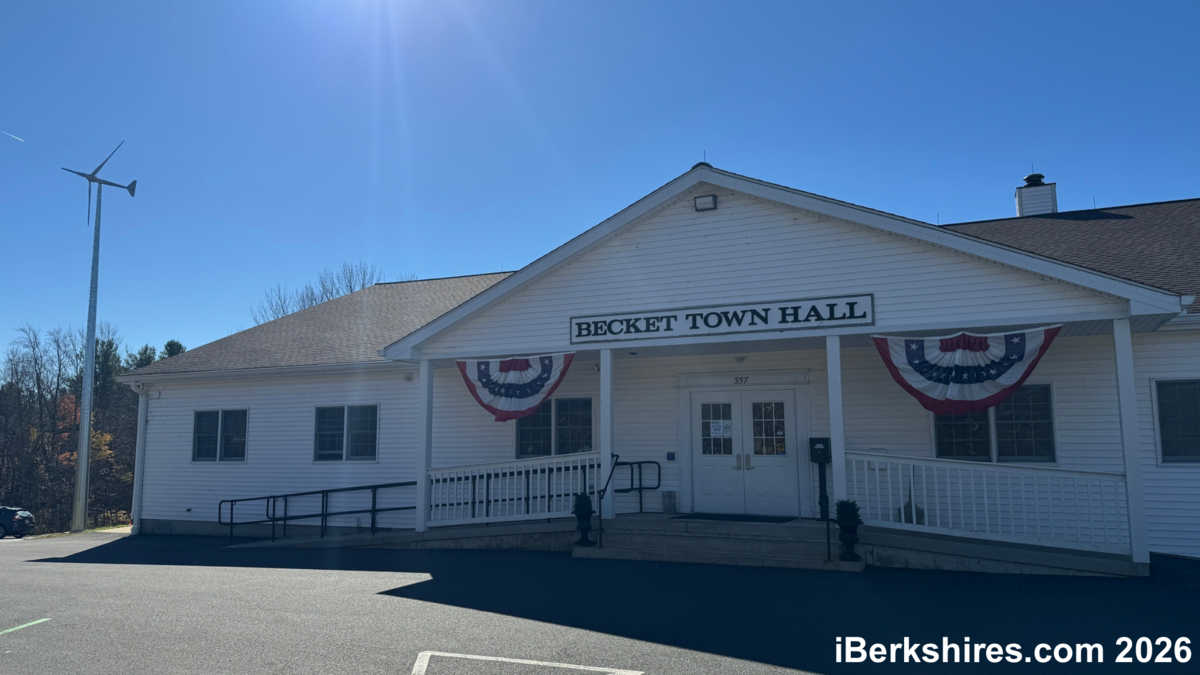
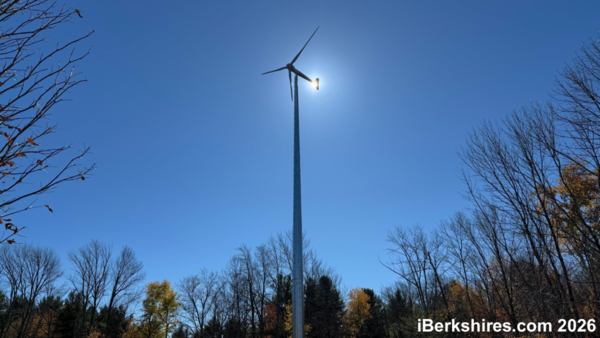
BECKET, Mass. — The town unveiled a wind turbine Monday that will reduce electricity costs and show the benefits of renewable energy produced by wind.
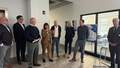
Residents, town and state officials gathered outside the Town Hall for the ribbon cutting on a project first conceived nearly a dozen years ago.
The wind turbine stands 100-feet tall next to Town Hall and is from Oklahoma manufacturer Bergey Wind Power. It has a 50-year life and is a direct-drive permanent-magnet design, meaning it has no gearbox, making it low maintenance.
According to Garth Klimchuk, chair of the Becket Energy Committee, the town started discussions about a wind turbine in 2014. The turbine is expected to generate about 36,000 kilowatt-hours. Klimchuk said Town Hall uses about 24,000 kilowatt-hours, with excess power expected to go to the Highway Department. This is expected to save $9,000 annually from the electricity cost.
"This turbine is just going to be such a good thing for the town. It is really incredible. Zero-cost electricity. Zero cost to the town. Carbon free. Just a huge, huge milestone for us," he said.
The town received a grant from the state Department of Energy Resources totaling $139,500. The remaining funding for the project will come from a direct-pay investment tax credit under the federal Inflation Reduction Act. If the town does not receive the funding, voters at the annual town allocated $100,000 just in case, but Klimchuk said the town will only need about $60,000 to $70,000 if necessary.
"It's going to help the community. Hopefully, it'll lower our tax bills. And as we look at everything going around around the world right now, energy volatility has been with us for a long time. It's going to stay with us for a long time," said state Sen. Paul Mark. "So any move we can make as a community, whether as Becket specifically, as Berkshire County as a whole, but anything we can do to bring some of the reliability into our own hands, to produce a bit on our own, and just guarantee that in a renewable, safe way moving into the future, I think is going to pay off dividends."
The town has spent more than a decade reducing municipal energy consumption in a variety of ways including HVAC upgrades and LED street light conversions, bringing it to a Level 2 Green Community status.
While solar had been considered, interconnection constraints and limited grant opportunities made it harder to achieve. But the high elevation of Town Hall and a Small Wind Site evaluation done in 2023 and 2024 found the site was perfect for a turbine with favorably high winds.
State Rep. Leigh Davis praised the project as an example of a small town addressing a larger energy challenge through persistence and collaboration. She stressed that the single turbine represents a practical step toward reducing reliance on fossil fuels and said Becket's effort could serve as a model for communities across the commonwealth.
"You hear about all these kind of big wind farms and solar farms and all these ways that we're gonna you know create green energy, but at the same time what we're not being sensitive to the landscape, and what I appreciate about this is that this is it's a single turbine, but it represents so much more," she said. "You're right. It's really adding to the ability for this town to contribute to green energy and to bringing our reliance on gasoline fuels back down to solving big problems."
Mark Rabinsky, deputy director of DOER's Green Communities Division, said the state supports municipalities with technical assistance and grants, and that reducing municipal energy costs can leave more resources for other local priorities. He presented the turbine as an example of state support working alongside local knowledge and decision-making.
"I think that this is a really a great example of what green communities can do," he said. "I'm obviously a really big fan of the green communities program, but I think that connection between the state, what we're doing at the state, and that local level, and relying on the local knowledge here with Becket is a true testament to what we're doing."
Select Board Chair William Elovirta thanked everyone for being here and shared his memories of first coming tp Becket in 1946 before utility electricity arrived. His family and neighbors used small 32-volt generating plants and batteries. He recalled utility workers installing poles and wires by hand around 1947.
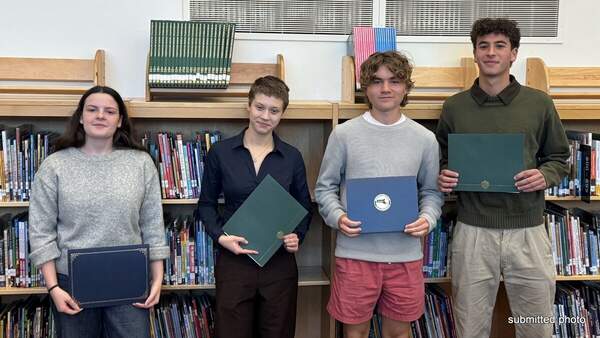
Four members of Monument Mountain Regional High School's Class of 2027 were celebrated for their achievements at October's School Committee meeting at WEB Du Bois Regional Middle School. click for more
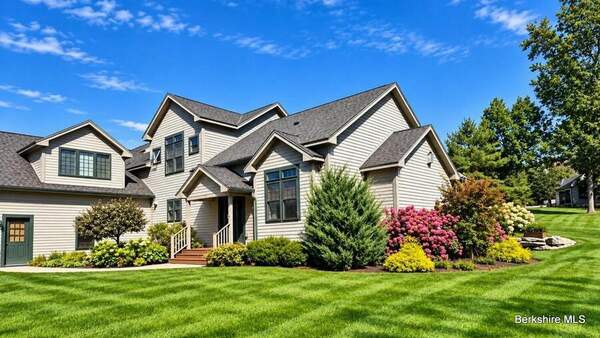
Our Friday Front Porch is a weekly feature spotlighting attractive homes for sale in Berkshire County. This week, we are showcasing 577 Mallard Lane.
click for more
Gabe Thomas carded an even par round of 71 at Stockbridge Golf Club Monday to finish two shots clear of the field and claim the first county individual championship for the McCann Tech golf team. click for more
The Cooperative Hoosac Valley football program will resume football related activities on Monday, Sept. 28, after being on “pause” for the past nine days. click for more