image description
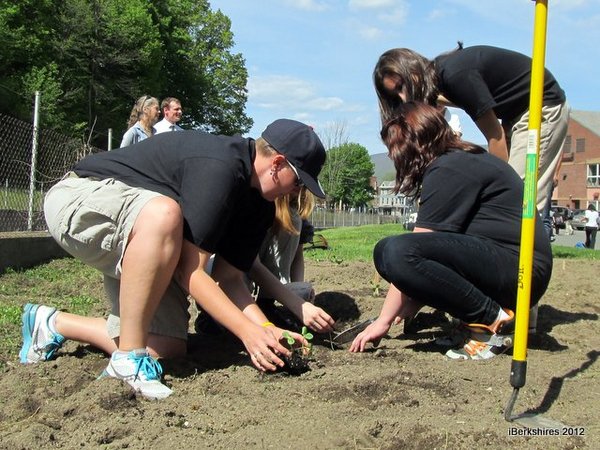
Teacher Jennifer Choquette has developed a schedule to have the students work in the garden.

BArT Joins Initiative To Grow Food For Pantries

By Andy McKeeveriBerkshires Staff
Print Story | Email Story

The students will tend to the garden during the school year but then staff will be doing it on their own during the summer.
ADAMS, Mass. — Berkshire Arts and Technology Public Charter School is the first organization to join a new initiative to bring homegrown vegetables to the county's food pantries.

The Grow Extra — a variation of national Grow a Row intuitive — is an attempt to get farmers, organizations and home gardeners to grow even more vegetables this summer and donate to the pantries.

The effort is spearheaded by the Northern Berkshire Community Coalition's Mass in Motion grant initiative and Hoosac Harvest.

At BArT, the fitness and athletic teachers were bringing back the school's community garden when Mass in Motion Program Director Amanda Chilson contacted them about it. The school was mainly using the garden to help teach wellness so teaming up with the Grow Extra was natural, the teachers said.

"This way everybody has a chance to get out and give back to the community," Heather Linscott, fitness teacher, said on Monday.

The school started a community garden about five years ago but over time it fell into disarray. According to Fitness and Athletic Director Jennifer Choquette, a co-worker who started the garden five years ago has become ill and bringing the garden back was a tribute to her. It also fits in with the school's education.

Choquette has developed a schedule for students to work in the garden and after the school year ends, she will take over the majority of the gardening with staff helping out.
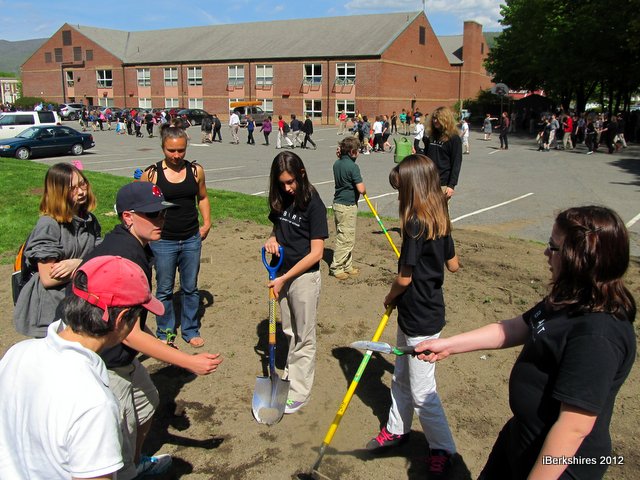

A garden fits in line with the school's wellness education.
Hoosac Harvest started the program and is organizing volunteers to help transport the extra vegetables to the nearby food pantries as well as even help the gardeners pick the crops.

Hoosac Harvest is aimed at promoting locally grown food. It started by subsidizing shares at Community Supported Agriculture farms and has now taken on this project.

Mass in Motion jumped on board because it fits in with their goals. Mass in Motion is funded by a state Department of Public Health grant to promote healthy living.

"All of our work plans align with healthy living," Chilson said. "Hoosac Harvest is already here so there is no need to reinvent the wheel."

Mass in Motion will lend its expertise in helping coordinate and promote the program.

The crops will be given to the Friendship Center Food Pantry in North Adams, the Parish of Pope John Paul the Great in Adams and St. Patrick's Food Pantry in Williamstown.

Tags: agriculture,   food pantry,   gardens,   

If you would like to contribute information on this article, contact us at info@iberkshires.com.

Williamstown Planning Board Narrowing in on Subdivision Bylaw Changes

By Stephen DravisiBerkshires Staff
WILLIAMSTOWN, Mass. — The Planning Board late last month discussed specific features of what it plans to pass as a new subdivision control bylaw this year.
 
The board long has discussed the complex set of regulations as being out of date and cumbersome to both potential developers and the board itself, which has needed to hear requests for waivers of outdated rules for the handful of residential subdivisions that have been proposed in town in recent years.
 
This spring, the town engaged consultants from Northampton's Dodson and Flinker Landscape Architecture and Planning to go through the existing bylaw, compare it to more contemporary regulations in other communities and help craft a revised bylaw.
 
Unlike the zoning bylaw, where amendments require approval of town meeting, the subdivision control bylaw is a creation of the Planning Board, which can make changes on its own after a public hearing process it hopes to complete this year.
 
At a special Planning Board meeting on May 26, Dillon Sussman of Dodson and Flinker and his colleagues walked the board through a dozen different decision points that the board must resolve — either by leaving the bylaw as is or making a change — and offered suggestions based on best practices.
 
All of the issues are technical and ranged from the fundamental, like how the bylaw will define types of subdivisions, to the highly specific, like what turning radii will be required in new streets that are constructed to serve planned developments.
 
One example of a topic that came up in the recent approval of a four-home subdivision off Summer Street is stormwater management.
 
View Full Story

More Williamstown Stories