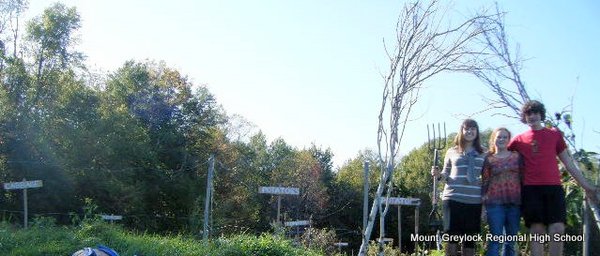
image description

Mount Greylock High Garden Offers Harvest of Learning
Community SubmissionPrint Story | Email Story
The student-run garden at Mount Greylock Regional High School is providing produce for the cafeteria and Berkshire Food Project and as a source for academic projects.
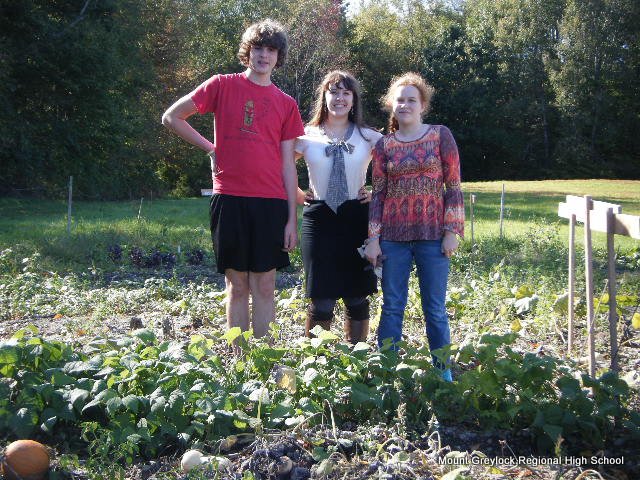
WILLIAMSTOWN, Mass. — In addition to engaging in academics, sports, clubs, and other commitments, a number of Mount Greylock Regional High School students are also busy harvesting kale, tomatoes, squash, and pumpkins from the school garden this fall.

First planted in spring 2010, and maintained since then by a student-run Garden Club, the Youth Environmental Squad, and interns from Williams College, the Mount Greylock garden continues to grow and is serving a vital role on the campus and in the broader community. Seasonal produce from the garden is used by cafeteria staff in school lunches during the school year and is donated in the summer to the Berkshire Food Project through the Williams College WRAPS program.

Rebecca Green, biology and environmental science teacher, is the faculty adviser to the school Garden Club. 

"Having a garden at the school allows students to experience the joy of gardening and of eating food they have grown or their peers have grown," Green said recently. "It also supports the local food movement and educates individuals on the importance of supporting local food producers."

Garden Club co-President Evelyn Mahon, a junior, agrees. 

"I find that working in a community garden makes you feel a respect for food, and that you can't take the food you eat for granted," Mahon said. "You realize how much work it takes, and how difficult yet extremely rewarding it is to be supporting an organic garden. Now, when I eat anything, I can't help but thinking, 'Do I know the person who grew this lettuce or raised this chicken?' I usually do, and I find that to be a real comfort."

Additionally, teachers are using the garden as a resource for academic and enrichment projects.  Studies have included lessons in sustainable farming techniques, symbiosis, and ecosystems.


"Instead of having to drive to Hopkins Forest, biology classes and environmental science classes have the ability to walk out their back door and into another classroom," Mahon said.

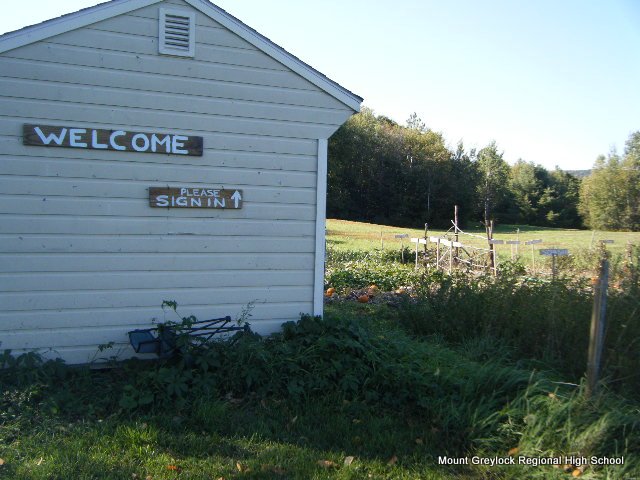
Mount Greylock's garden is a place on campus where students, teachers, and community members may gather. A recent donation from the Finnegan Family of a large shed is a welcome addition to gardeners this year, and plans to expand the garden's presence in the life of the school continue to evolve.

Kaatje White is the coordinator for the Williams Center at Mount Greylock and has been an active supporter of the garden since its inception. 

"Hopefully, next year the garden will become even more a part of the school with classes and other groups finding ways to connect to this resource," White said. "Down the road it would be wonderful to see a horticulture class, a cooking club, healthy recipes with ideas from the garden posted on the website, and perhaps a dedicated Master Gardener to help guide these efforts."

To celebrate their fall harvest, the Garden Club and Greylock Cooks! are hosting a Harvest Party on Tuesday, Oct. 2, at 5:30 p.m. at Mount Greylock. Community members are welcome to attend. There is no cost for the potluck dinner, although guests should bring a dish to share and are encouraged to use local ingredients in their recipes.

Tags: agriculture,   locavore,   MGRHS,   school garden,   
If you would like to contribute information on this article, contact us at info@iberkshires.com.

Prospect Meadow Farm Opens New Vocational Barn

By Breanna SteeleiBerkshires Staff

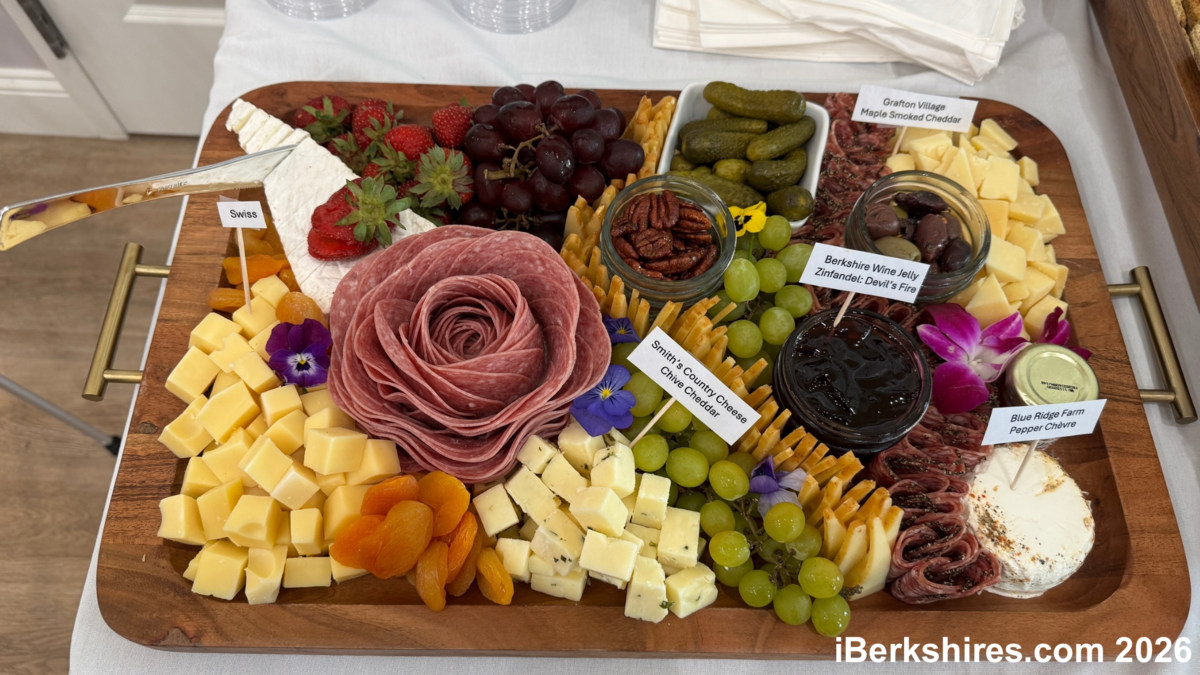
A charcuterie board at the event displays fare from some of the regional producers.

PITTSFIELD, Mass. — Prospect Meadow Farm last week officially opened a new barn to sell plants and other goods it produces.

Prospect Meadow Farm Berkshires is an expansion of ServiceNet's first farm in Hatfield that has provided meaningful agricultural work, fair wages, and personal and professional growth to hundreds of individuals with intellectual and developmental disabilities since opening in 2011. 

The Berkshires farm opened on Crane Avenue two years ago and has now introduced a new vocational and unwinding space for the more than 25 farmhands who get paid a minimum wage.

"This is a facility for our folks who work on the farm to learn additional skills and do additional work," said Vice President of Vocational Services Shawn Robinson at the Friday event. "So we have a food packaging space, we've got a walk-in cooler space, we've got a floral design space, we've got a farm store room for staff, lunch room, and then a meditation room that we're standing in now, which is when you're having those hard moments and you need to get away from everything.

"This is going to be a peaceful place you can find and sort of find some comfort, and then hopefully get back to work."

The barn was built by funds from the state Executive Office of Economic Development and the state Department of Agricultural Resources that equated to around $600,000, with ServiceNet contributing around the same amount. The structure took over a year to build.

The state's Department of Developmental Services Commissioner Sarah Peterson spoke on how meaningful this farm and ServiceNet is to her and that this place is important to those who need it.

"Places like this are so crucial because they create opportunities for people living with disabilities that aren't plentiful," she said. "People living with developmental and intellectual disabilities have an unemployment rate over 25 percent five times the rate for people without disabilities, even more jarring is under appointment, which is at 80 percent. That means that four out of every five people with disabilities earn below market rate wages and have limited upward mobility.

"The building itself is really impressive, but what you're really seeing here is the result of vision. It's about opportunity, it's about community, and it's founded in the belief that every person deserves the chance to learn and work and contribute to thrive under the leadership of ServiceNet."

One aspect of the barn will be the market where produce from the farm and other local growers will be sold as well as keeping the tradition of Jodi's Seasonal, which previously occupied the location, alive with plant sales. The market will be open Monday through Saturday from 10 a.m. to 3 p.m.

"Everything you see in terms of the tomatoes, the fresh produce, that's all done with the hands of our farm hands here, individuals with disabilities who get out every single morning, get in those greenhouses, put their hands in the dirt, and make all of this happen, and this is just the start," said Robinson. "This farm is a little over a year old at this point, but give it another two years, and we hope to be growing enough food to share throughout the Berkshires."

Robinson said the farm is focused on local food security, recently partnering with the Hatfield Council on Aging and planning to work toward making enough food to partner with places in the Berkshires.

He said the barn serves the Hatfield farm and what the employees here needed.

"We've been able to learn the needs of the farm hands who work there and so we have learned that they need a comfortable break space for those times where it's hard to be out in the fields, we've learned that a quiet space for when you're going through something you need to be away from people are key, and then also we have a small farm store in Hatfield, but we've seen increasing interest in retail work from our participants, so we thought it was time for a larger-scale farm store," he said.

Robinson noted that Prospect Meadow Farm has helped the individuals working there feel valued and head.

View Full Story

More Lanesborough Stories