image description
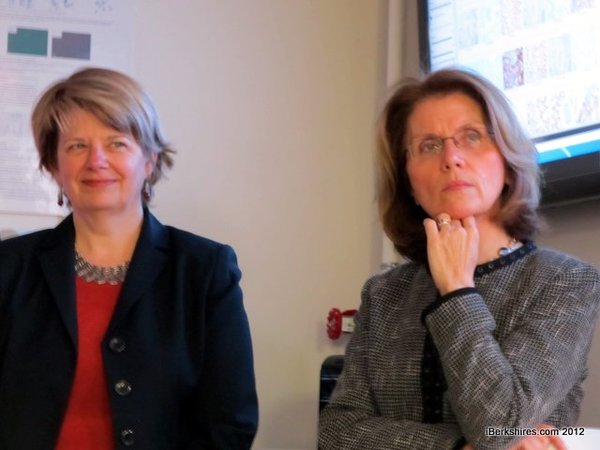
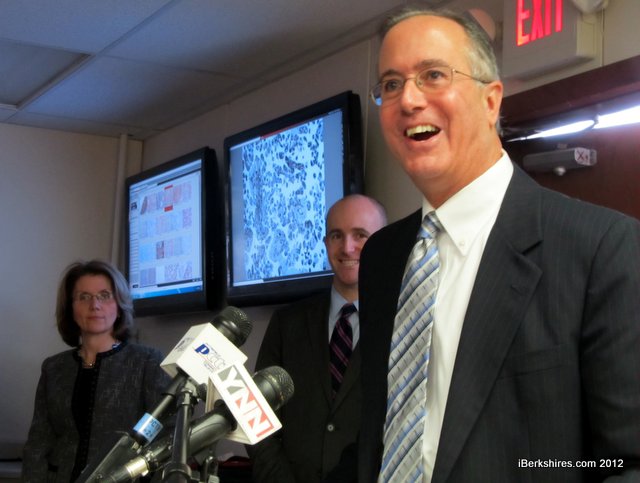
BCC President Ellen Kennedy and MCLA President Mary Grant both raved about the educational opportunities the partnership will provide.

Nuclea Partners With Colleges to Spark Life Sciences Industry
By Andy McKeeveriBerkshires Staff
Print Story | Email Story

Mayor Daniel Bianchi sees the Nuclea partnership as the start of a major industry in the city.
PITTSFIELD, Mass. — In what officials are heralding as the "the beginning of a life science industry," Nuclea Biotechnologies is creating a pipeline of employees by partnering with local public colleges.

Nuclea announced Thursday morning that it has installed computer clusters at both higher-education institutions and will partner for job training.

Nuclea has invested about $200,000 to install such clusters in the last two years, which will give them expertise from the faculties of Berkshire Community College and Massachusetts College of Liberal Arts, internships and the "pick of the litter" for employees.

The schools, in turn, are receiving top-of-the-line technology, on-the-job training for students and professional development by giving faculty more research opportunities.

"This is a true economic initiative that has many, many tentacles," said Mick Callahan, chairman of the Pittsfield Economic Development Authority.

In the last month, Nuclea has moved its Bioinformatics and Imaging Center into a 1,700 square-foot office in the William Stanley Business Park. State and local officials are hoping that will burgeon into an entire industry on the former General Electric land.

"The next chapter is being written right now," Mayor Daniel Bianchi said. "The William Stanley Business Park will soon be a magnet for many life science industries."

Particularly, city officials are shooting for a $6 million bond that Gov. Deval Patrick has set aside for a life science center. The academic partnership is eyed as the seed from which to grow that industry by providing the employees and technology other businesses seek.

"This is going to free up new technology and new opportunities for the PEDA site," Nuclea President Patrick Muraca said. "We've always supported education in the Berkshires."
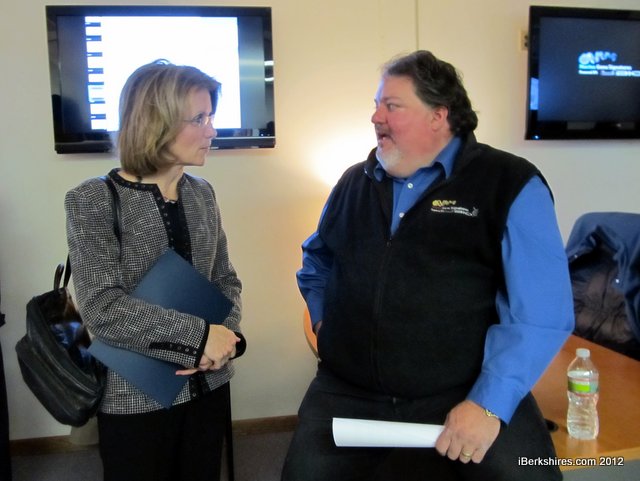
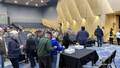
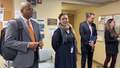
Top: MCLA President Mary Grant talks with Nuclea CEO Patrick Muraca about the partnership.

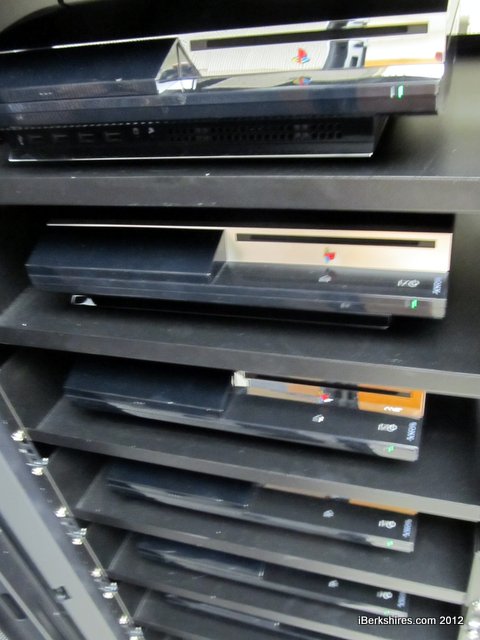
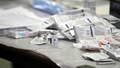
Right: The computer cluster at the Kellogg Street office, which is made up of PlayStation 3s.

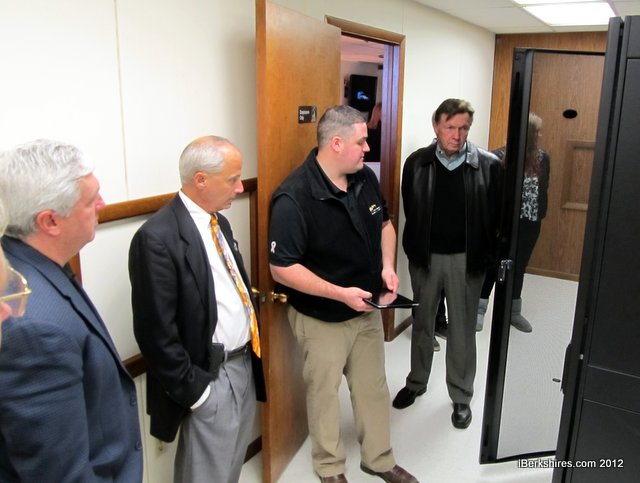
Bottom: Vice President for Information Technology Tom Weber shows off the rebuilt cluster.
With the new clusters at MCLA and BCC, the company now has four total. Their new Kellogg Street home is comprised of 35 Sony PlayStations featuring IBM Cell/BE processors, which are all linked to a massive storage unit.

The cluster can transmit large files quickly by broadband between all of the company's computers, according to Tom Weber, vice president for information technology.


From Pittsfield, Nuclea can connect with clients globally. The company specializes in medical diagnostics for facilities such as Boston Medical Center as well as research and development for the pharmaceutical and biotechnological industries.

The hands-on training is hoped keep students in the county after graduating college.

"There will be opportunities here if you study and if you work hard," state Sen. Benjamin Downing said, adding that growth is based on education, innovation and technology and that this partnership provides them all.

For MCLA, the partnership brings the real-world work into a classroom in the new Center for Science and Innovation set to open in 2013.

"This partnership will make a lifetime of difference," MCLA President Mary Grant said. "We are the institutions that are preparing the next generation of innovators."

BCC President Ellen Kennedy called the partnership the "moment to inspire" and increase residents' educational attainment by not only spurring interest in the students but also retraining the current work force.

Bianchi said that for every one job created in the industry, three to five jobs are created outside of the industry and he hopes this "fresh start" for the William Stanley Business Park will revitalize the city.

"Gov. Deval Patrick wants Massachusetts to be the life science capital of the world. Our dream is to be the western part of that," Bianchi said.

From here, Callahan said the PEDA board will be reaching out to life science businesses to continue to grow that sector in the county.

"We're going to reach out to anyone who wants to do business in the Berkshires," he said.


Tags: BCC,   job training,   life sciences,   MCLA,   Nuclea,   PEDA,   
If you would like to contribute information on this article, contact us at info@iberkshires.com.

Sheffield Craftsman Offering Workshops on Windsor Chairs

By Breanna SteeleiBerkshires Staff

Andrew Jack uses hand tools in his wood working shop. 

SHEFFIELD, Mass. — A new workshop is bringing woodworking classes and handmade items.

Andrew Jack specializes in Windsor chairs and has been making them for almost 20 years.

He recently opened a workshop at 292 South Main St. as a space for people to see his work and learn how to do it.

"This is sort of the next, or latest iteration of a business that I've kind of been limping along for a little while," he said. "I make Windsor chairs from scratch, and this is an effort to have a little bit more of a public-facing space, where people can see the chairs, talk about options, talking about commissions.

"I also am using it as a space to teach workshops, which for the last 10 years or so I've been trying to do out of my own personal workshop at home."

Jack graduated in 2008 from State University of New York at Purchase, and later met woodworker Curtis Buchanan, who inspired him.

"Right after I finished there, I was feeling a little lost. I wasn't sure how to make the next steps and afford a workspace. And the machine tooling that I was used to using in school." he said, "Right after I graduated, I crossed paths with a guy named Curtis Buchanan, and he was demonstrating making really refined Windsor chairs with not much more than some some flea market tools, and I saw that as a great, low overhead way to keep working with wood."

Jack moved into his workshop last month with help from his wife. He is renting the space from the owners of Magic Flute, who he says have been wonderful to work with.

"My wife actually noticed the 'for rent' sign out by the road, and she made the initial call to just see if we get some more information," he said. "It wasn't on my radar, because it felt like kind of a big leap, and sometimes that's how it's been in my life, where I just need other people to believe in me more than I do to, you know, really pull the trigger."

Jack does commissions and while most of his work is Windsor chairs, he also builds desks and tables, and does spoon carving. 

Windsor chairs are different because of the way their backs are attached into the seat instead of being a continuous leg and back frame.

"A lot of the designs that I make are on the traditional side, but I do some contemporary stuff as well. And so usually the legs are turned on a lathe and they have sort of a fancy baluster look to them, or they could be much more simple," he said. "But the solid seat that separates the undercarriage from the backrest and the arms and stuff is sort of one of the defining characteristics of a Windsor."

He hopes to help people learn the craft and says it's rewarding to see the finished product. In the future, he also hopes to host other instructors and add more designs for the workshop.

"The prime impact for the workshops is to give close instruction to people that are interested in working wood with hand tools or developing a new skill. Or seeing what's possible with proper guidance," Jack said. "Chairs are often considered some of the more difficult or complex woodworking endeavors, and maybe less so Windsor chairs, but there is a lot that goes into them, and being able to kind of demystify that, or guide people through the process is quite rewarding."

People can sign up for classes on his website; some classes are over a couple and others a couple of weekends.

"I offer a three-day class for, a much, much more simple, like perch, kind of stool, where most of the parts are kind of pre-made, and students can focus on the joinery that goes into it and the carving of the seat, again, all with hand tools. And then students will leave with their own chair," he said.

"The longer classes run similarly, although there's quite a bit more labor that goes into those. So I provide all the turned parts, legs and stretchers and posts and things, but students will do all the joinery and all the seat carving the assembly. And they'll split and shave and shape their own spindles, and any of the bent parts that go into the chair."

His gallery is open Wednesday through Sunday 10 a.m to 2 p.m., and Monday and Tuesday by appointment.

View Full Story

More South Berkshire Stories