Berkshire Bank Workers Volunteer for Season of Service

Print Story | Email Story

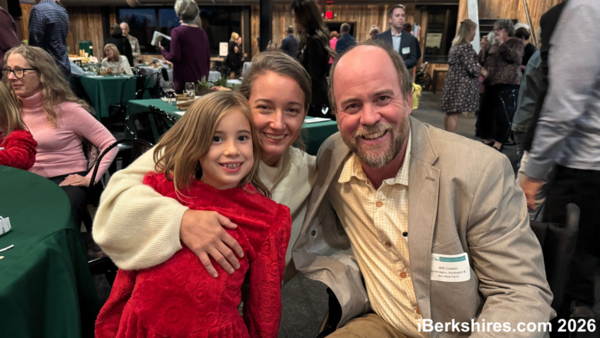
PITTSFIELD, Mass. — Berkshire Bank employees will be volunteering throughout region as part of the bank's first annual Season of Service campaign.

More than 150 employees are expected to participate in the holiday Season of Service effort with all of the community service projects benefiting non-profit organizations and families across Massachusetts, New York, Connecticut and Vermont.

Bank employees are also inviting the public to join with them from Nov. 26 to Dec. 21 to support local children and families in need this holiday season.

"We wanted to do something special to give back to our communities this holiday season," said Lori Gazzillo, assistant vice president of community relations, adding that the financial institution's Employee Volunteer Program is part of its commitment to the community. "Our monthlong Season of Service is an extension of this program and allows us to use our time and talents to have an impact the communities that we serve. We hope our efforts this holiday season will inspire others to give of their time, treasure, and talents to make our communities a better place."


The projects were selected and organized by regional employee volunteer committees, consisting of employees who help oversee the bank's Employee Volunteer Program in their areas under the guidance of the Berkshire Bank Foundation.

In Berkshire County, the program will feature Berkshire Bank branch offices and departments adopting children and families in partnership with the Department of Children & Families' Pittsfield office, which serves all of Berkshire County. In addition to their collection efforts for these local families, bank employees will participate in a variety of service projects including distributing Christmas gifts and food to families with the Salvation Army and teaming up with the Berkshire County Chapter of the American Red Cross to wrap presents and raise funds for the Red Cross' programs at the Berkshire Mall in Lanesborough in December.

In 2011, more than half of the bank's employees donated more than 26,000 hours of service to benefit community organizations across the bank's service area. The bank also gives nearly $1.5 million annually to nonprofit organizations through the Berkshire Bank Foundation and Berkshire Bank Foundation – Legacy Region.

If you would like to contribute information on this article, contact us at info@iberkshires.com.

Lee Wants Bioremediation in Housatonic River Vernal Pool Study

LEE, Mass. — The town has asked the U.S. Environmental Protection Agency and General Electric to include PCB bioremediation in its vernal pool study on the Housatonic River. 

Lee officials are urging the EPA to require GE to add a bioremediation treatment arm to the vernal-pool study or provide the public with a clear explanation for why such testing is being excluded.

"This is exactly the kind of question EPA and GE should be asking before final remedy decisions are locked in," Select Board Chair Bob Jones said in a statement released to the press. "The town is not asking to slow the cleanup. We are asking EPA and GE to make the cleanup smarter, less destructive, and more protective over the long term."

An open house was held in Pittsfield earlier this summer for the Vernal Pool Pilot Study on Reach 5A of the Housatonic River, a five-mile stretch between the river's confluence and Lenox border.

EPA has required GE to conduct a Vernal Pool Pilot Study as part of the Housatonic River Rest of River remediation, comparing excavation and restoration with activated-carbon-based treatments, including a product called SediMite and powdered activated carbon, the town said. 

Ten vernal pools will be cleaned of polychlorinated biphenyls in total, five with excavation and five with active carbon, and seven additional vernal pools will be monitored as controls. Construction will be complete around October, but the pools will be left to their natural processes and monitored with surveys and sampling for three years. 

The Lee PCB Advisory Committee wrote a letter calling for the 21st-century approach it said could reduce long-term toxicity, avoid unnecessary destruction of sensitive habitats, and improve the effectiveness of the cleanup.

It states that Lee supports the study's purpose and agrees that EPA and GE must understand how cleanup activities affect sensitive vernal-pool ecosystems.

"The current pilot includes 10 treatment pools and seven control pools, while local officials understand that roughly 100 vernal pools may occur in the broader remediation corridor," the Aug. 27 letter reads. 

"That makes the pilot study consequential: the methods tested now could shape how many sensitive wetlands are excavated, reconstructed, treated, or left with PCBs managed in place."

View Full Story

More South Berkshire Stories