Medical Marijuana Law Leaves BRPC With Unanswered Questions
|
The issue of medical marijuana was brought to the Executive Committee on Thursday and BRPC is now beginning to look for answers. |
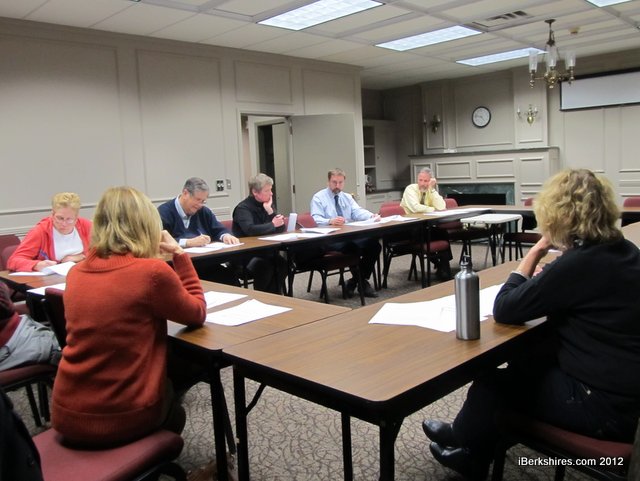
PITTSFIELD, Mass. — The small towns and the two cities of Berkshire County may find zoning is their only way to control medical marijuana dispensaries.
Except most small towns, like Becket, don't have zoning.
That was the issue brought to the Berkshire Regional Planning Commission's Executive Committee by Gale LaBelle of Becket.
LaBelle said the Becket Planning Board had a conversation of how it can regulate dispensaries.
"There is only one zone," LaBelle said after Thursday's meeting. "There can be up to five dispensaries in the county and there are only two cities. So, what does it mean for the rural areas?"
The Regional Issues Committee of BRPC is going to take the question up at its next meeting.
While the prospective dispensaries would likely move toward cities, it is unknown how the cities will control them. The committee is left wondering if the dispensaries will be able to cluster in the same locations or if towns will attempt to outright ban them, as is being considered in other parts of the state.
The ballot initiative that passed in November allows up to 35 dispensaries statewide, with at least one nonprofit in each county. The drug would be available only through prescription.
"We won't know exactly what the full implications are until the regulations are out," Assistant Director Tom Matuszko said. The state Department of Public Health is charged with developing regulations by late spring.
However, once those are out, it'll be after most of the small towns hold their annual town meetings, when zoning bylaws are typically voted.
But there is also a lot of open land in the Berkshires, so towns will want to know how to regulate cultivation, which is by license, and what that'll mean for law enforcement or health departments.
"THC can be delivered in many ways. It could be food products. Food is regulated by the Board of Health so they're going to have to have some role in this. We don't exactly know and I think the regulations will help clarify that," Matuszko said.
Executive Director Nathaniel Karns said he's not "convinced they thought this through" enough because of the array of questions and responsibilities it brings on the towns.
"At this point all you have is a blank slate other than the language. So we have to think about how communities prefer to approach this and offer that to DPH," Karns said. "It's all so new. It's prompting conversations and dialogue in real time so trying to gather what the communities want is kind of difficult. Everyone is just now digesting this."
Committee member Rene Wood said she was more concerned with the zoning issues because DPH would likely focus on the heath issues.
Tags: marijuana, prescription drugs, zoning,