Lanesborough Tax Rates To Jump Nearly A Dollar
|
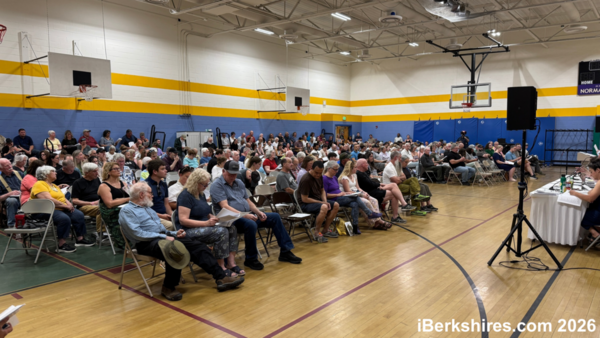
The town held both a tax classification hearing and a presentation from school officials Monday night. |
||
|
||
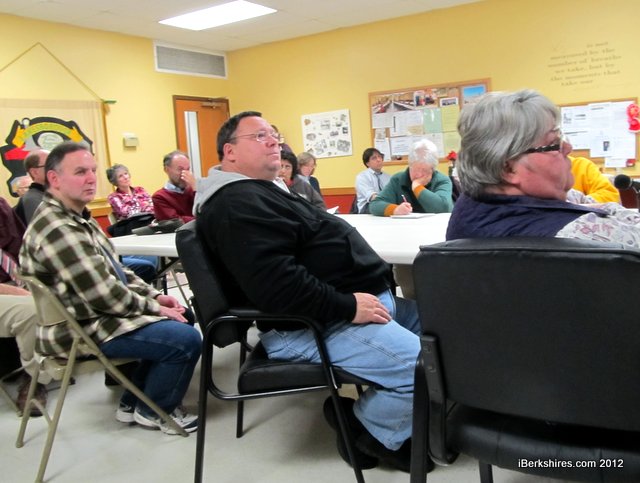
 A tax rate increase of .99 cents per $1,000 valuation means the average homeowner's tax bill will rise about $213 next year.
LANESBOROUGH, Mass. — The Selectmen approved a tax rate increase of nearly a dollar Monday night, a jump most significantly affected by a settlement to reduce the assessment of the town's largest commercial property.
The Berkshire Mall appealed its tax assessment since 2010 and agreed with the town with an assessment $13 million less than it had been taxed in those three years. In 2012, the mall was assessed at $46 million and per the agreement will be assessed at $33 million. The appeals for the past years will be dropped, which could forced the town to repay the mall nearly $1 million.
"It was a hard-fought battle that came up with an assessment that we could live with and they could live with," Selectman William Prendergast said.
According to Assessor Kelly Baumert, property values stayed consistent and the budget is nearly $80,000 under the Proposition 2 1/2 override levy limit but the mall's reassessment means reduced revenues. Overall, tax rates are jumping .99 cents per $1,000 of assessed value — from $17.08 to $18.07.
The town chose a single rate for both commercial and residential properties. Chairman John Goerlach said there is an informal agreement with the mall that the town will continue to have a single rate for three years and mall officials will not contend the rate increases in court.
To shift the maximum to commercial properties would mean tax rates of $27.10 for commercial and $15.81 for residential but residents said doing so who be too devastating to small businesses.
Finance Committee member Bill Stevens said that with 80 percent of the town's tax roll being residential, the town would "have to sock it to" the commercial properties to provide only modest relief to residential.
Residents, however, were surprised with the change and advocated for a significant reductions when crafting the next budget. But telling the Selectmen to cut the budget is, in a sense, preaching to the choir — the Selectmen proposed more than $25,000 in cuts at the annual town meeting that were rejected by voters.
"We really, really need to look at our spending habits and we really need to look at secret ballot voting at town meeting," resident Barbara Hassan said.
Hassan said voters shy away from making the "tough decisions" to cut department budgets in a public fashion.
|
School Building Committee member Paula Consolini said suggestion boxes have been placed around town for residents to weigh in on what to do with the building. |
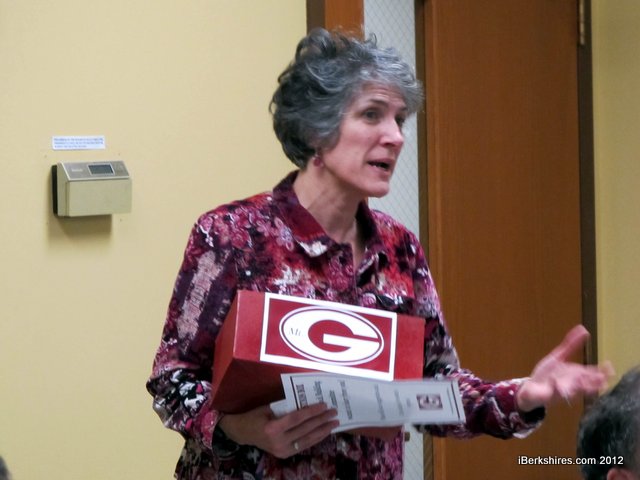
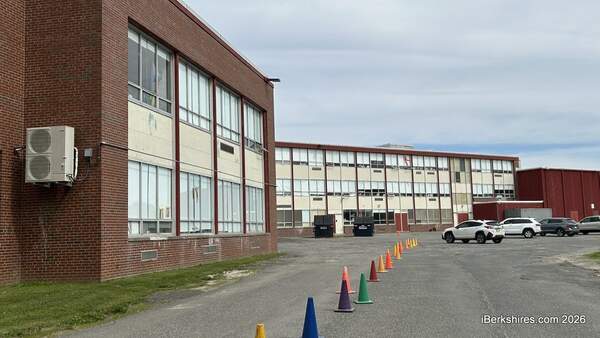
In juxtaposition to setting of one of the town's highest tax rate increases, the Selectmen also heard the presentation from Mount Greylock Regional High School officials about building a new school. School officials are attempting to ramp up support for construction or renovation.
School officials also announced tours of the building on Wednesday, Dec. 19, at 6 p.m. for residents to see firsthand the condition of the building.
After the presentation, many residents questioned if the school could be renovated or a new school needed to be built. Those answers won't be available, said school officials, until the state School Building Authority authorizes a feasibility study to look at the options.
"We are looking for support. We came here tonight to give you information about the scope of the project," Superintendent Rose Ellis said. "Help us determine what to do with this building."
Selectman Robert Barton said while the school waits for the feasibility study, the town should take a look at how to fix the building's deficiencies in the short term. Some residents, however, questioned whether it is time for the towns to join the two city school districts nearest them instead of building a new school for some 450 students.
"Some of the kids need to go to Pittsfield, some of the kids need to go to North Adams," resident Ray Jones said.
Tags: assessment, MGRHS, school building committee, school project, tax rate,