Decision Postponed on Pittsfield Vocational Choices
|
|
.JPG)
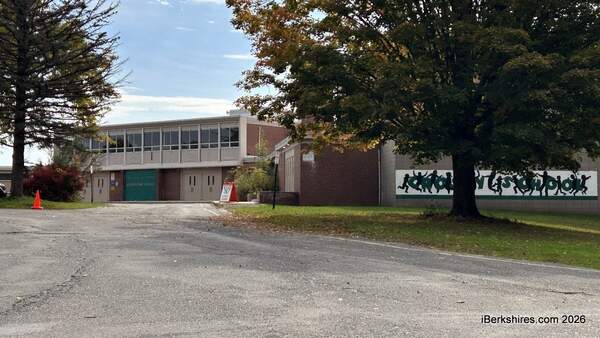
PITTSFIELD, Mass. — The School Committee will wait until late February to vote on which vocational programs will be sought for an anticipated new school to replace the current Taconic High facility.
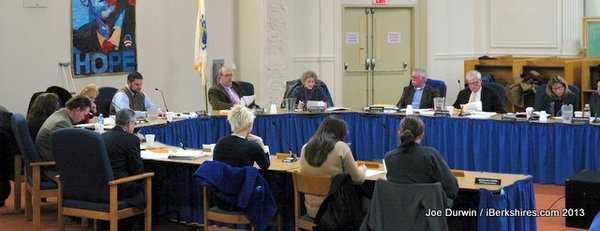
The committee opted Wednesday to pursue further dialogue with vocational experts in subcommittee over the next month about options for balancing key current programs with new proposed curriculum to see if there is a way to save some popular trade programs while opening up offerings in newer emerging fields.
A determination has continued to be delayed since November in light of extensive push back from the local business community to the possibility of eliminating some of the automotive and metal fabrication curriculum.
Following a presentation on the local economic impact of these training programs and additional input from several members of the public, the committee voted unanimously to scrutinize the matter more closely in several upcoming meetings of its curriculum subcommittee.
"I don't know why I didn't think of this before," said Kathleen Amuso, who made the motion to refer the matter to the smaller body, noting "When we have something like this, that we need more discussion on, is we usually send it to our subcommittee on curriculum."
Mayor Daniel Bianchi added that taking more time with this evaluation would in no way jeopardize the availability of funding for the new school's construction, and that the School Department may be able to restructure the vocational system in a way that would allow it to keep more programs.
A study by the New England School Development Council (NESDEC) last year advised that the district would only be able to receive funding to sustain 14 programs based on current vocational enrollment numbers of around 625 students, but Bianchi suggested that by improving the programs that enrollment could rise.
"If we had more programs that encouraged greater sophistication, we wouldn't be looking at 625, we might be looking at 700, 800 students," said the mayor, who sits on the committee by virtue of office. "I think if we come up with the right curriculum, and we make the commitment to the vocational programs, if we make a commitment to structuring things properly, we may not have that conundrum of limited enrollment."
Interim Superintendent of Schools Gordon Noseworthy agreed that the 14 programs was based on enrollment trends and not an absolute cap, he suggested it was "unlikely" that even with reinvigoration the vocational programs would reach 800 enrollment, or about half the high school population.
One major part of such restructuring, according to many trade professionals who've come forward to the committee, is the need to revert to a one-week on, one week-off staggering of classroom and technical training, including on-site co-op work through local shops, a system which was the norm for many vocational programs in Pittsfield until the 1990s.
In a presentation, members of the business community in the relevant metal and auto fields said that in quick polls of 35 local operations across those spectrums, the average current age of employees was mid-40s, and that the majority were planning to hire or expand in the near future. More than 80 percent indicated that they would be open to employing co-op students in a one-on-one-off system.
The perceived need for this switch back is not new, and Noseworthy indicated he has been working to achieve the rearrangements needed to begin re-implementing the one-on-one-off schedule for some programs by the beginning of the next school year.
Resistance to elimination of these metal fabrication and automotive programs has run high and drawn large crowds to speak against the move at School Committee meetings.
"We need to keep business here, we need keep construction here," said Bill Knowles, who was sharply critical of the current school system, during the public input period Wednesday. "Right now we're a hot air balloon sinking and we're throwing children overboard to gain altitude."
The subcommittee is expected to meet several times over the next few weeks and present its recommendations to the committee at its Feb. 27 meeting.
Noseworthy said that while he does not see it as a "race," he emphasized that he felt it was important that a decision did ultimately get reached in order to move forward in the next steps of a school building process that has stretched across many years.
"Now is the time to get a core group to pull all of this data together," said Noseworthy. "Because sooner or later, the school committee does have to make a decision, and I would hope it's not going to be 'let's just do what we always have and move forward.'
"I think we really do need to admit that in the 21st century we do need to have some change and we do need to have some programs that will be populated for kids going in a new direction."
Tags: school project, Taconic High, vocational program,