Patrick Pitches Transportation Plan At Stockbridge Station
|
Gov. Deval Patrick called for an increase in the income tax to pay for his proposed investments in infrastructure. |
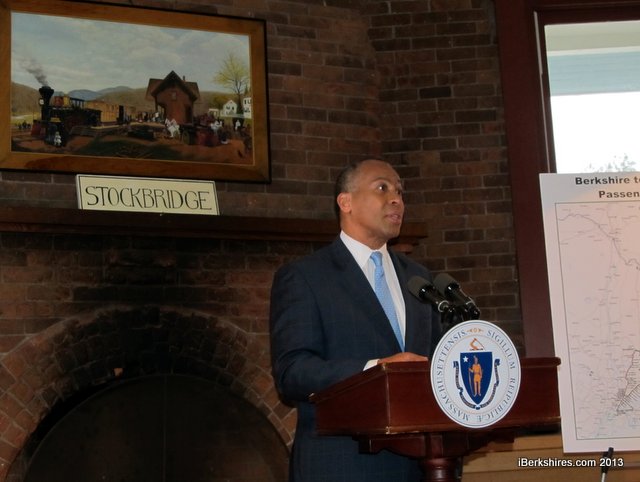
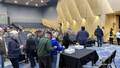
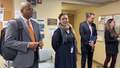
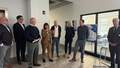
STOCKBRIDGE, Mass. — Gov. Deval Patrick called for an "investment in the future" on Friday as he stood in the historic Stockbridge Station.
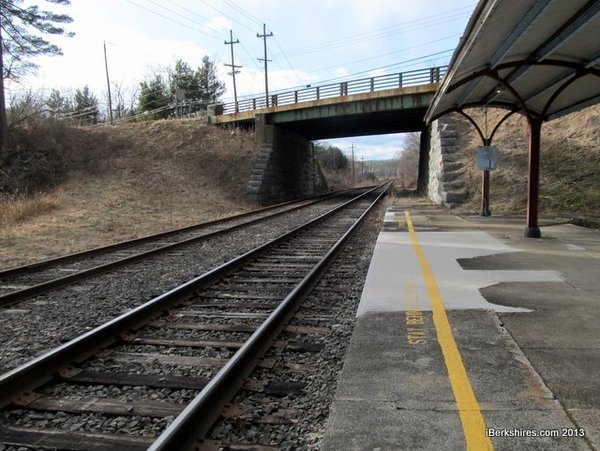
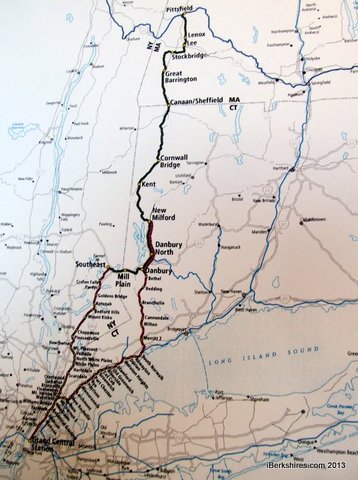
Patrick traveled across the state to the historic Stockbridge Station on Friday to rally support for his proposed transportation plan, which calls for $113.8 million to rehabilitate rail tracks from Pittsfield to New York City.
The rail is eyed to be a major boon to the Berkshires' tourist economy by providing 2 million passengers a year, enabling many New Yorkers to vacation here. His plan also calls for increased funding for roads, bridges and regional transportation funding.
But, in order to support all of his plans, the governor says the income tax will have to be raised.
"The days of promising things without a way to pay for them are over. We have proposed a way to pay for it and it's going to require new revenue in terms of higher income taxes and lower sales taxes," Patrick said.
Berkshire Visitors Bureau President Lauri Klefos said a study from two years ago has shown that one in four potential visitors from New York claimed they would take the train to get here, which would answer the "No. 1 question" she is asked by out-of-state residents. The study showed that more than 2 million people would take the train here each year.
"The economy not only flows east to west but it flows north to south," said Secretary of Transportation Richard Davey, calling investment in rail as going "back to the future."
Davey said the rail plan is a "down payment" on infrastructure; the state would have to work with Connecticut and find an operator before the project would come to fruition.
"Step one is upgrading this track," he said.
The Berkshire Regional Transportation Authority could also see an increase of $3.2 million in funding with the plan, which would allow it to expand services.
|
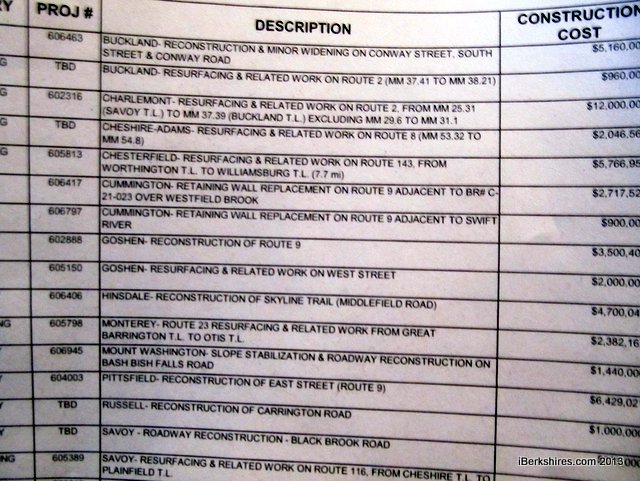
The plan has a multipage list of bridges and roads that would be repaired if the bill passes. |
"I can't wait until they come off the train and my buses can pick them up," said BRTA Administrator Gary Shepard.
Shepard said increased services would allow more people to get to work whereas right now, he can't get people to work on Sundays, for the third shift or home after a second shift. While rail would provide more jobs, increased BRTA funding will allow people to get to them.
"We know public transportation is economic development," said state Rep. Tricia Farley-Bouvier, who has taken transportation funding as her primary push in the Legislature. "If we want a future, we have to invest in it."
Beyond rail and public transportation, the plan identifies a number of bridges and roads in the county which would be improved.
"It's a very specific plan. It is not a long wish list of pie-in-the-sky things. It is a very specific plan about meeting some long unmet needs and making some targeted expansion plans," Patrick said.
North Adams Mayor Richard Alcombright and Pittsfield Mayor Daniel Bianchi both spoke about how much the various projects — from increased Chapter 90 funding to rail to roads and bridges — would mean to the county's two largest municipalities.
"We can continue to make mediocre investments or we can make major investments," Bianchi said, adding that the bill would "put thousands of people to work."
While local officials are behind the project, taxpayers will still have to pay for it. Patrick called for a statewide conversation among citizens on how to "build the future." He believes investment in infrastructure now is the state's hope for a stronger economic future.
"Instead of doing what we always do in American politics, which is to retreat to our usual rhetorical corner and not have a conversation based on fact about how we build our own future, instead of doing what we usually do, let's turn to each other and engage on the facts that we are proposing to choose growth. Leaving things as they are is a choice, too, and I believe that is a choice of no growth or low growth," Patrick said.
Tags: Berkshire Regional Transportation Authority, Deval Patrick, infrastructure improvements, passenger rail, rail, rail station, railroad, transportation,