Crane Doubles Technical Material Facility in Pittsfield
|
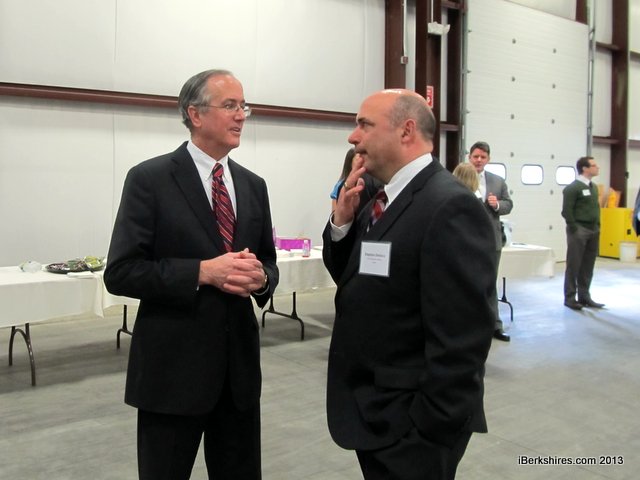
Mayor Daniel Bianchi speaks with CEO Stephen DeFalco after Wednesday's ceremony. |
PITTSFIELD, Mass. — Crane has doubled its Technical Material Division in terms of production capacity, space and employees.
On Wednesday, the company celebrated the opening of a $5 million expansion of its Hubbard Avenue building calling the move "a point of departure to our future."
The division uses Crane's paper-making techniques (Crane manufactures U.S. currency paper and fine stationary) to weave a variety of polymers into webs for an array of high-tech products.
The rolls of polymers are used in the manufacture of such items as water filtration systems, photovoltaic panels and battery cells. The company has customers in the fields of nanotechnology, aeronautics and green technology.
"We're often a component of a high-tech device," CEO Stephen DeFalco said. "The division has gone from commodity to high-tech manufacturing."
The company saw massive growth in technical materials sales in recent years and has up to 65 to 70 customers worldwide. The growth has increased employment to about 100; another 10 workers and 24/7 operations expected by the end of the year.
"In the past five years, we have doubled our revenue," said Dennis Lockyer, vice president of the division.
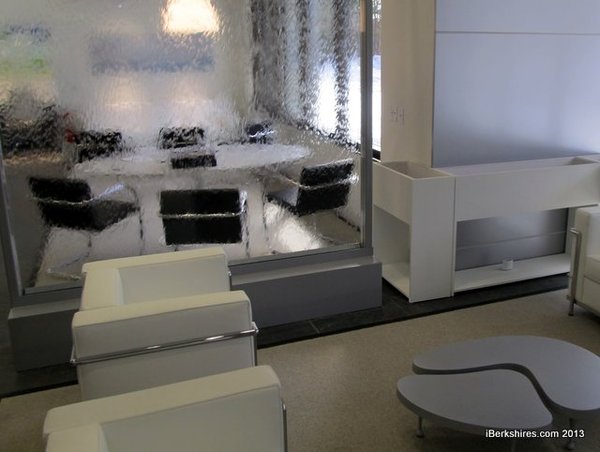
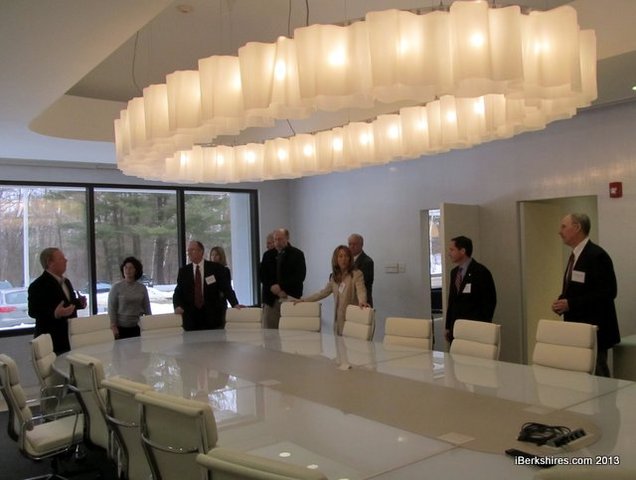
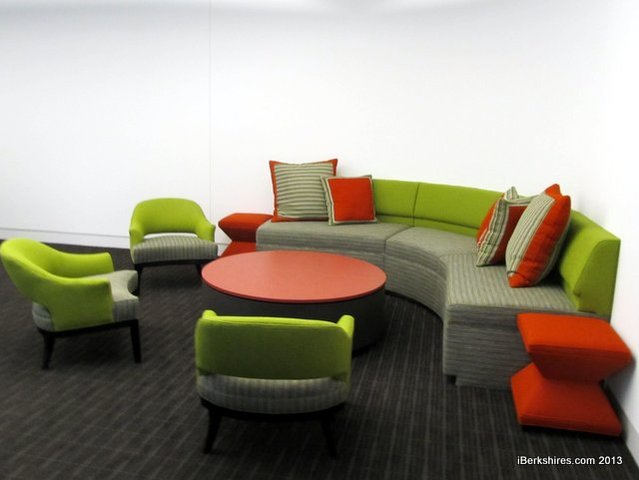
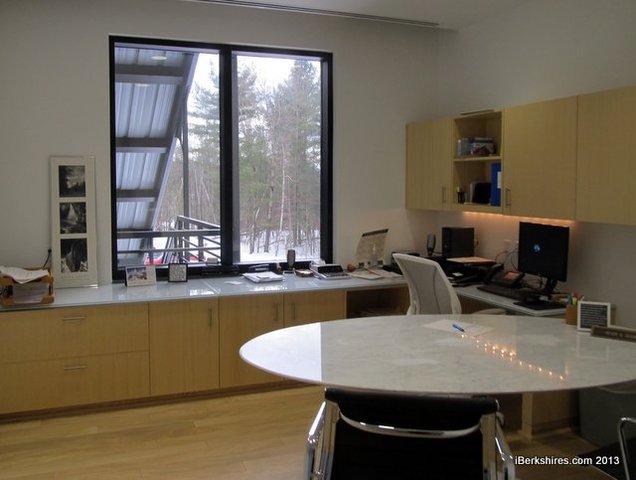
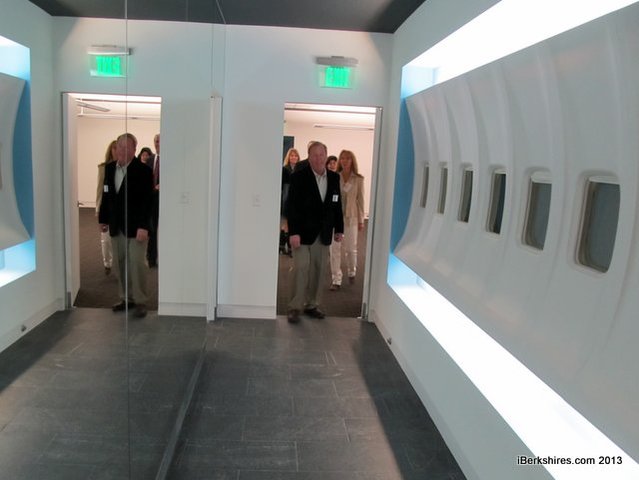
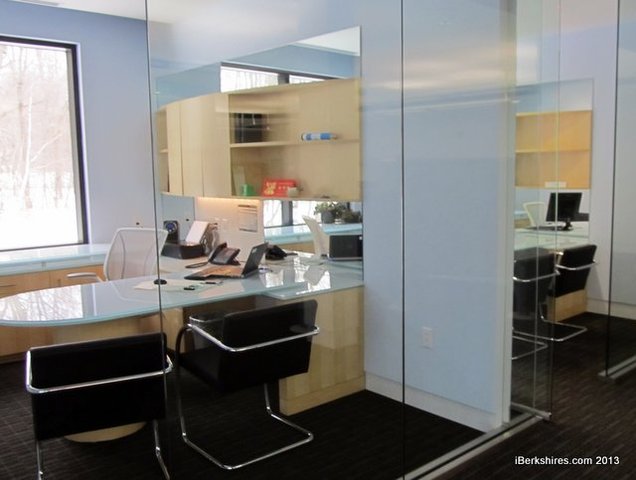
The company decided a physical expansion was needed to keep pace with sales growth. The construction included renovating existing spaces and adding 30,000 square feet. The entire office suite was redone to create a headquarters for the division where company officials can meet with potential customers. Additionally, an office was opened in Boston to be closer to an international airport.
"It was a very big year in 2012, nearly doubling profits and moving the company forward. A lot of this was driven by the investments we made in technology over the last five years. As a company we invested more than $150 million in new technology in both this facility and across the other businesses," DeFalco said.
The opening of the new facility is the company's second expansion in just a few months. In November, Crane's stationery division purchased William Arthur Stationery and is expecting to move 100 jobs to North Adams.
But, while there is significant growth, the company is also embarking on a campaign to "pull together" its divisions to create a single name, according to DeFalco. He said the divisions had gotten too spread out, to the point where if you compared business cards for each division, one wouldn't be able to tell they were from the same company.
"We began to fragment ourselves," DeFalco said.
|
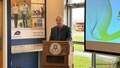
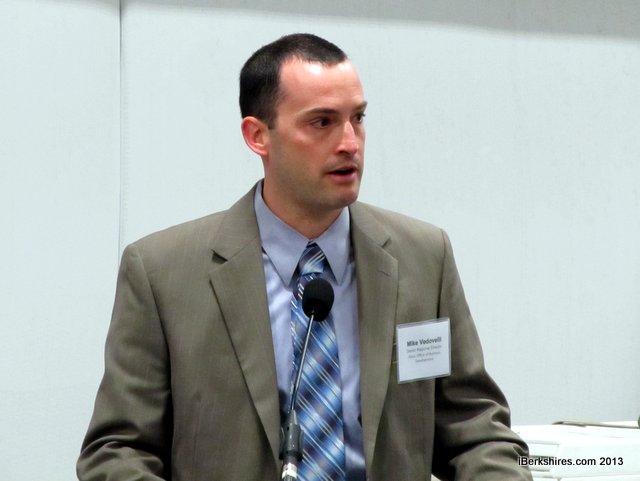
Mike Vedovelli, of the state's Office of Business Development, said Crane is an example of manufacturing being 'still alive.' |
DeFalco unveiled the new campaign that drops the "& Co" from the company name and creates three distinctive divisions — currency, technical materials and stationery divisions — under the larger Crane name. With new business cards, websites, letterheads and a mission statement, the company hopes to reinforce the idea of "one ubiquitous brand" with each division having its own small variation on the theme.
The reeling in of the divisions is part of the reason behind the renovated administrative offices on Hubbard Avenue. There is still technical materials production being done in the "Government Mill" near the Dalton town line but the majority of the work will be handled at the renovated building.
The company did something similar with its stationery division when it closed three buildings — two in Pittsfield and one in Dalton — and moved the entire division under one roof in North Adams last year.
"We think of this not as a change of a symbol but rather a symbol of change — binding our employees together in global teams to work and serve our customers and bring a greater sense of teamwork, unity and values across the workforce," DeFalco said.
The recent growth of the company reminded Mayor Daniel Bianchi that with all the pursuit to bring more businesses to the city, sometimes existing, innovative companies get overlooked.
"Since 1801, you've gone through the Great Depression and a number of minor depressions in the 19th century and the 20th century. But you are serving as one of the strongest and most resilient economic backbones in Berkshire County. In our quest to identify and recruit new businesses, we oftentimes overlook companies that have operated here for so long," Bianchi said. "Crane is an economic backbone for Berkshire County providing great jobs, great benefits and you are just the kind of company we need to recognize and help wherever we can to support growth."
Bianchi credited Crane's survival and growth to its "tremendous work ethic" and "vision" for the future.
Mike Vedovelli, senior regional director for the state Office of Business Development, said Crane is exactly the type of company the state needs and fits in with Gov. Deval Patrick's push for innovation.
"It's just great to see that in this area, a company that is world-known and really exemplifies what Massachusetts is about, which is innovation and standing the test of time," Vedovelli said, adding that they are an example that "manufacturing is still alive, is still doing well" and can still be done in Massachusetts.
Tags: business growth, Crane & Co.,