Letters: Conserved Lands Needs Advocates
 |
To the Editor:
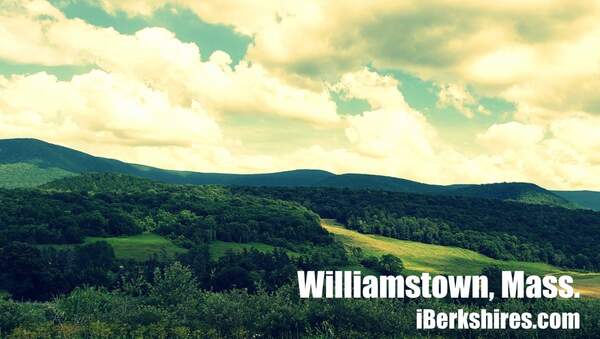
Why not build on conservation land in Williamstown?
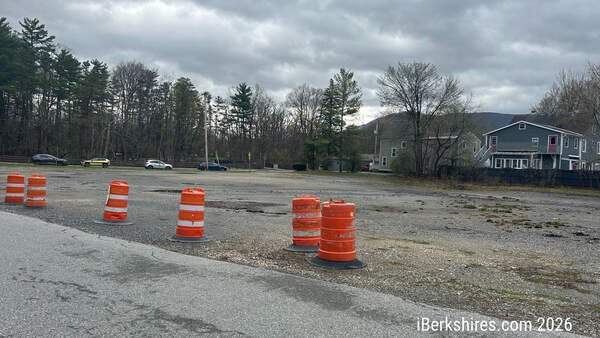
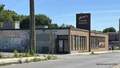
Williamstowners are asking a lot of questions about the Affordable Housing Trust's proposals to build more housing on town-owned property — economic questions about comparative costs among proposed sites and about the actual need for more of such housing, social responsibility questions about providing housing for people who work in Williamstown and about expanding the diversity of town residents, environmental questions involving sites like the half torn-down PhoTech building or the deteriorating, half-built Cable Mills building, questions about how an affordable housing effort, under state regulations, can legally serve those residents in the Spruces trailer park who lost their homes to flooding.
But on the question of how to consider the recent Affordable Housing Trust's proposal to build on town land officially designated as "conservation land," the discussion is particularly murky, fragmented and often ill-informed. Proponents argue mostly from an economic standpoint, that building on open, clean space would be cheaper and simpler than tearing down and de-toxifying present building sites. Opponents argue that building houses on conservation land, destroys forever the land's potential for agricultural uses, as in the Trust's proposal to take the Lowry Farm property out of conservation designation. This, opponents argue, takes away the livelihood of farmers using the land for haying. However, there is a larger defense to be made for preserving conservation land.
The purpose of setting aside conservation land in this town has been stated locally, and reasonably, by the Williamstown Rural Lands Foundation, as: "to conserve the rural character of Williamstown; to enable working landscapes such as forests and farms; to promote land stewardship; and to connect the community to the region’s natural heritage." At the state level, Gov. Deval Patrick, in August 2012, announcing proudly that his administration "protected more than 100,000 acres of open space in just five and a half years ... in over 310 communities," focused on three strategies: "building parks in urban communities, preserving working farms and forests, and conserving high value habitat areas."
State Energy and Environmental Affairs Secretary Rick Sullivan praised this accomplishment as an example of big thinking about the quality of life in the state, among a wide diversity of interest groups — "state agency staff, land conservation organizations, sportsmen, landowners, and environmentally-minded businesses."
This is the kind of cooperative discussion we should be having in Williamstown now, on the question of using conservation land for building housing. We should be talking about the need to preserve a whole quality of life that connects us to our joint past and to the natural world, which is not of our making but of which we are the designated trustees. Before we consider doing more building in our open, green spaces, we have to think about preserving important resources for drinking water, rare plants and wildlife, working farms and forestland, unique outdoor recreation sites, and the best remaining greenspace in our towns and cities. We can't just pave over and build on town conservation land with impunity.
Someone recently remarked to me, angrily, "We have too much conservation land in this town!" I wonder what measure she was using in determining how much is too much. But I do know how much it matters to me personally and to my family and friends, that we can look up to wildmountain tops and wide green spaces that we need to share harmoniously with wild animals, and wild trees and grasses.
As Supreme Court Justice William O. Douglas argued in 1972, in Sierra Club vs. Morton: "Inanimate objects are sometimes parties in litigation. A ship has a legal personality, a fiction found useful for maritime purposes ... The ordinary corporation is a 'person' for purposes of the adjudicatory processes, whether it represents proprietary, spiritual, aesthetic, or charitable causes. So it should be as respects valleys, alpine meadows, rivers, lakes, estuaries, beaches, ridges, groves of trees, swampland, or even air that feels the destructive pressures of modern technology and modern life. ... Before these priceless bits of Americana (such as a valley, an alpine meadow, a river, or a lake) are forever lost or are so transformed as to be reduced to the eventual rubble of our urban environment, the voice of the existing beneficiaries of these environmental wonders should be heard."
We are the beneficiaries of those wonders and need to be their advocates.
Tela Zasloff
Williamstown
Feb. 24, 2013
Tags: affordable housing, conserved land, development, Spruces,