Williamstown Finance Panel Looks at McCann, Water District
|
The Finance Committee is reviewing next year's proposed budget. |
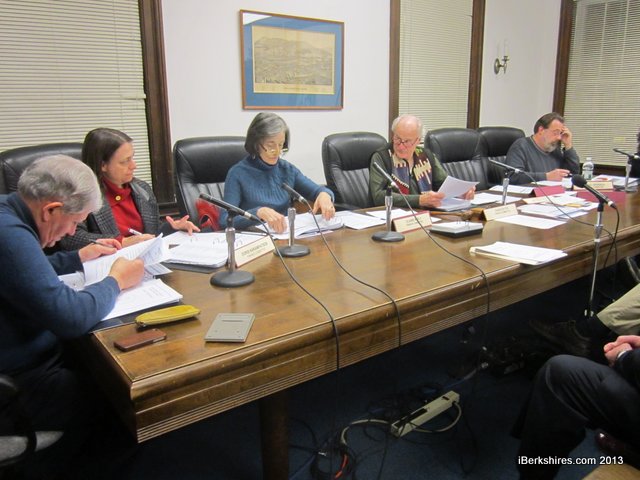
WILLIAMSTOWN, Mass. — The Finance Committee looked outside the town line on Thursday night, probing the budgets of two regional services to which Williamstown belongs.
Representatives from the Hoosac Water Quality Distsrict and McCann Technical School's Northern Berkshire Vocational Regional School District visited Town Hall to present their respective budgets to the panel.
School Superintendent James Brosnan reported that Williamstown's adjustment for the McCann budget is estimated to be about $267,500, a decrease of 12 percent from the $300,300 the town approved at town meeting last May for fiscal 2013 budget.
Although the total McCann budget of $8.4 million is up about 4 percent from last year, the funding dynamics of the district have changed with the addition of Cheshire and Lanesborough last year.
Not every municipality in the district will see a reduction in its assessment from FY13 to FY14, but some three — Florida, Monroe and Williamstown — will, according to a budget supplied to the committee on Thursday night.
Williamstown's share of the just over $3 million McCann plans to assess local towns is 8.8 percent. In 2013, Williamstown is sending 18 students to the vocational school, about 3.9 percent of its in-district enrollment of 463.
Although Williamstown's contribution to McCann's budget is expected to drop slightly, Brosnan explained some of the factors driving the overall 4 percent budget increase.
Chief among the reasons he cited: the loss of grant revenue.
"As the federal government tightens its belt, the state is seeing that and putting more of the burden on us," said Daniel Maloney of Adams, the chairman of the Northern Berkshire Vocational School Committee, who accompanied Brosnan. "There are positions we were funding with grants that are now part of the regular budget."
The district saw another hike in its transportation costs, which go up by $13,000, or about 4 percent, to nearly $384,000 in the FY14 budget. Brosnan said fuel costs are the driver of that increase.
The cost of fuel is also to blame for the biggest single line item rise in the Hoosac Water Quality District budget for FY14.
District Manager Bradley Furlon also presented his budget to the committee on Thursday and it showed, among other things, a jump of $21,000 in the cost of chemicals, from the $121,205 spent in FY12 (the latest year with actual spending data) to $166,000 budgeted for fiscal 2014.
"Everything is based on the cost of diesel," Furlon said, explaining that the processes used to produce the chemicals used at the water treatment facility are energy intensive, and those chemicals need to be shipped from processing facilities far from town.
Overall, the district's operating expenses are expected to be just more than $1.3 million, an increase of about $57,300 (or 4.5 percent) from the amount budged for this year.
Williamstown's share of the sewer district's operating budget is expected to decline to about 29.5 percent; the remaining 70.5 percent comes from the city of North Adams. Last year, Williamstown shouldered 33 percent of the operating budget.
|
The sewer district's budget increases 4.5 next year but the town's share will drop to 29.5 percent. |
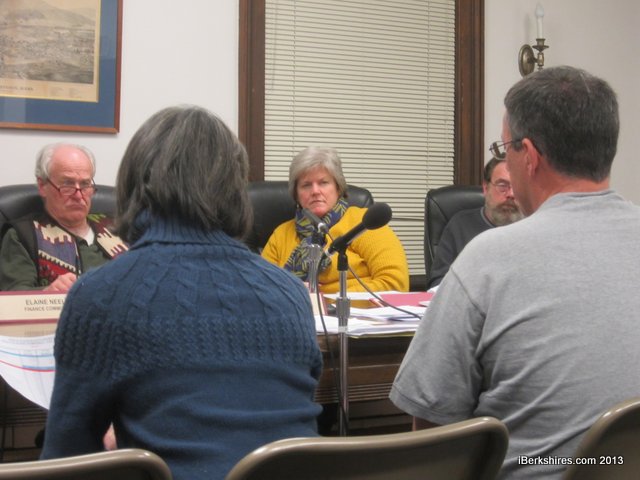
Finance Committee member K. Elaine Neely, who also serves on the Water District board, said based on the fact that Williamstown has about half as many residents and about a third of its residents are not on municipal water, the town's contribution should come in at about 35 percent in any given year.
Furlon explained the fluctuation from year to year is based on the fact that Williamstown's and North Adams' usage of the system is calculated differently. And depending on the type of year (last year was a dry year, for example), the percentages will shift slightly.
Furlon said another reason for the increase in his department's budget is the change of two salaried positions from 35 hours per week to 40 hours per week. One was an office manager, and the other was a compliance officer, whose workload has increased dramatically over the years because of increased EPA reporting requirements, Furlon said.
While such demands outside the district's control continue to rise, the district is taking steps to lock in a low electric rate for the next 20 years by negotiating a contract to purchase solar credits, Furlon said.
"Over the years, the district has done a lot of things to save money and find other sources of income," Neely said. "It's pretty efficiently run."
Tags: HWQD, school budget, town budget,