Pignatelli Files Multiple Bills To Combat Opiate Abuse
|
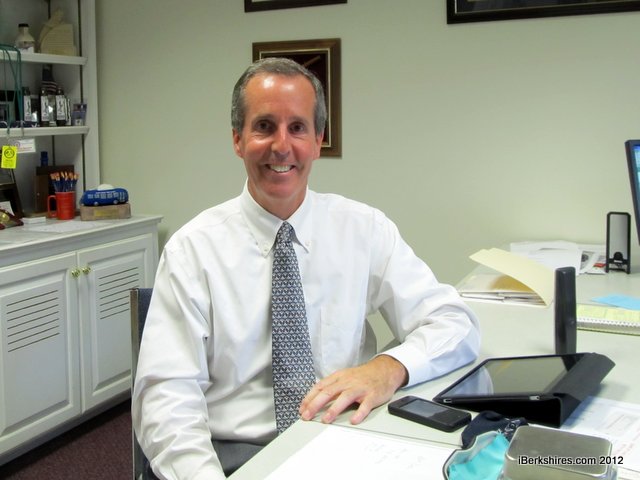
State Rep. William 'Smitty' Pignatelli in his office last August. The 4th District representative and dean of the delegation has sponsored multiple bills aimed at opiate addiction in this legislative session. |
LENOX, Mass. — A young South County man wants to break his addiction to prescription opiate pills so he enrolled in program with the methadone clinic in Pittsfield.
But the insurance company sees his daily visits as a doctor's visit and requires a $20 co-pay. Meanwhile, heroin is cheaper.
Another man entered the McGee unit at Berkshire Medical Center to cure his alcoholism. After seven days, the insurance company no longer paid for his recovery, forcing him to look at private organizations costing upward of $40,000.
These stories are what has driven state Rep. William "Smitty" Pignatelli to file multiple bills this session aimed at combating substance abuse. The most recent bill would require insurance companies to pay for the entire cost of treatment just as if it was any other medical condition.
"I've seen good people, good kids and good families be torn apart by substance abuse," Pignatelli said last week. "The Berkshires has a problem and we have to address it."
Pignatelli said many people are "burying their heads in the sand" and not recognizing the problem. Annually, hospitals prescribes about 3.7 million doses of opiates — not including at nursing homes or for children under the age of 12 — and many people are becoming addicted to prescription pills. From there, heroin becomes a cheaper option.
Instead of spending the money to lock up drug users who commit petty crimes to feed the addiction, Pignatelli wants to improve rehabilitation.
The health insurance parity bill calls for "a group health insurance police providing coverage for hospital or medical expenses shall provide coverage for expenses arising from treatment for chemical dependency, including alcoholism, and for mental or nervous conditions at the same level as, and subject to limitations no more restrictive than, those imposed on coverage or reimbursement of expenses arising from treatment for other medical conditions."
"It requires health insurance companies to treat for the cure," Pignatelli said, adding that under the current system, individuals are kicked out of treatment well before they are actually cured and often can't afford the out-of-pocket cost. "This is very, very important."
But that isn't the only bill Pignatelli has either sponsored or co-sponsored. About a half-dozen bills were filed this session by Pignatelli that include increasing jail time for dealers, limiting the dispensing of drugs from emergency rooms, requiring prescribers of opiate treatment drugs to conduct routine drug testing and making improvements to the prescription drug monitoring program.
"I have no sympathy for the dealers. If you are peddling drugs, throw them in jail until the hinges on the bars rust," Pignatelli said. "For some of the less serious crimes, I'd rather get them into a rehab problem."
Pignatelli said more than 80 percent of those incarcerated at the Berkshire County House of Corrections are there because of crimes related to substance abuse. While increasing availability of programs will help more people fight the addiction, the representative has also sponsored legislation to restrict the distribution.
"There are people who are doctor shopping to get prescription medications," Pignatelli said, explaining people will go from doctor to doctor and then sell their prescriptions on the street. "We wanted to have some tighter constraints to make sure they weren't doctor shopping."
Sitting on the Cultural Development and Higher Education committees, Pignatelli talks a lot about the "good things in the Berkshires." But in the last few years he is hearing more and more about the opiate problem so much that it has become a passion.
"I think the substance abuse problem in the Berkshires is worse than some people want to admit," he said. "We have to put our arms around it and not be embarrassed about it."
Beyond legislation, Pignatelli is also working with youth organizations to help address the problem. He says laws can only do so much so schools and police need to do their part at curbing the issue.
"It takes a village and this village is public safety, education and families," Pignatelli said.
Tags: legislation, opiates, prescription drugs, substance abuse,