BRPC Gets Affordable Housing Advice From Hilltown CDC
|
Dave Christopolis advocated for towns to adopt the CPA to increase affordable housing options. |
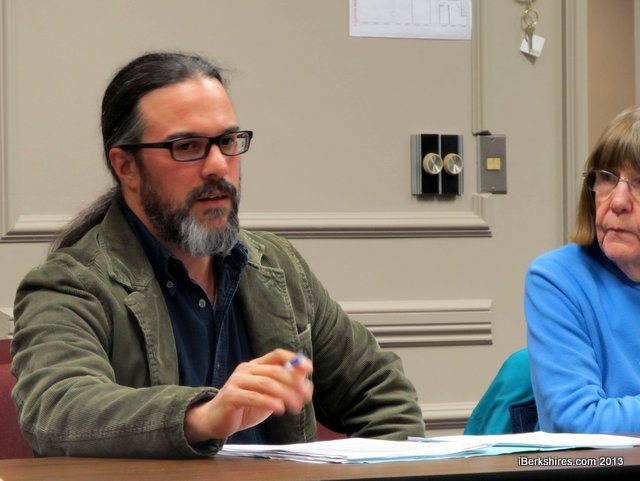
PITTSFIELD, Mass. — Affordable housing projects are complicated and take a long time but reap many benefits, the executive director of Hilltown Community Development Corp. told county planners on Thursday.
Dave Christopolis of Hilltown CDC was invited by the Berkshire Regional Planning Commission to talk about rural housing efforts.
Christopolis said there is a growing need for housing and that subsidized projects serve a big role in rehabilitating buildings, creating jobs, revitalizing downtowns and saving historic buildings as well as provid ting the muc- needed affordable living arrangements.
The term affordable housing is often misconstrued. Simply put, the housing is designed so the residents do not pay more than 30 percent of the town's median household income.
"A four-person household can make $64,000. That's a reasonable salary to live on but it still makes it difficult to pay the bills when you have a family of four and a mortgage or relatively high rents," Christopolis said, adding that often in the current market "a single earner can't afford the typical fair-market rent."
The need is dramatic with some 12 million people in the nation paying more than half of their monthly income for rent or mortgages. Christopolis' focus is working in rural towns just outside of the Berkshires — sorting out the multiple funding sources and weeding through the multi-year process of building.
"We really function as an advocacy agency as well as a developer," he told BRPC. "It is a pending crisis and we see it in our communities."
But the benefits are worth the effort. An affordable housing project not only creates construction jobs but it brings employers and possible employees together as well as save historic buildings, he said.
Christopolis has been involved in many types of projects, from the construction of condo-like villages to a few rental units around a town marketplace. He added that a few tools towns have are the state 40B law, which streamlines permitting for developers, and the Community Preservation Act, which is an optional tax towns can adopt with matching fund by the state to use toward affordable housing.
Meanwhile, organizations like Hilltown CDC, which the Berkshires does not have in the same capacity, can help alleviate "soft costs" from developers in exchange for keeping the rent down.
Christopolis echoed Berkshire County Regional Housing Authority Executive Director Brad Gordon, who spoke about the issue in January.
Tags: affordable housing, Berkshire Regional Planning Commission,