Mark Leading Investigation Into Student Loans, Debt
.JPG)
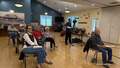
State Rep. Paul Mark, D-Peru, had been named chairman of a joint subcommittee looking into ways to reduce the burden of educational loans on graduates. |
DALTON, Mass. — Colleges across the state are sending graduates off with hard-earned degrees — and mountains of debt.
Nearly $1 trillion in student loans are outstanding nationwide and those graduating from Massachusetts colleges carry an average of $27,000 in student loan debt.
State Rep. Paul Mark is leading an investigation into ways to reduce that burden.
The Peru Democrat was chosen to chair a five-member joint subcommittee that will spend nearly a year looking at the causes behind rising student debt and ways to diminish it.
"The purpose is to find out if there is something to be done on the state level to alleviate the growing problem," Mark said during an interview Friday morning.
In the end, Mark hopes the subcommittee will come up with bills to reel in those escalating costs or, at least, file a report outlining the challenges for future considerations.
"I want to make it an intensive look into the issue," Mark said. "I think it is a very important issue and I think it is an honor that they chose me to chair this."
The subcommittee was formed by the House Committee on Higher Education, of which Mark is vice chairman. The subcommittee will be his first chairmanship and he will be holding hearings in all regions of the state this fall.
Mark knows the issues firsthand, which is part of the reason he was chosen to lead the investigation. He and his wife pay more than $700 a month for their combined student loans. That "could be a mortgage," Mark said.
At least two-thirds of graduates carry student loans, often until well into their 30s and beyond, according to the nonprofit American Student Assistance.
Early in his career, Mark withdrew from college because it was too expensive. He later returned and worked full time while he earned his bachelor's and eventually a master's and a law degree.
But the costs have only risen since Mark was last in school and now students are becoming bogged down with the loan payments.
"If someone has the desire and the talent, we want them to have the opportunity to go to college," Mark said. "We don't want cost to be the deciding factor."
The amount of debt students and their families take on varies wildly depending on the school, the student's financial resources and the availability of scholarships. According to Project Student Debt, the average debt at private Williams College was $8,801 in 2011, in part because of the college's strong commitment to needs-based scholarships.
But for colleges (private or otherwise) that don't have deep pockets to draw from, the costs require students to borrow. The average debt for Massachusetts College of Liberal Arts graduates in 2011 was nearly $30,000 — not far off from other Massachusetts public colleges, according to Project Student Debt.
At the federal level, U.S. Sen. Elizabeth Warren is pushing a bill to reduce student loan interest rates, which she says are set to double on July 1.
The committee will be looking into colleges' budgets, how students loans are crafted and how interest rates are derived — asking if they are fair. Mark also wants to know how the various options are presented to prospective students among the many aspects of the issue.
"There are a lot of different issues to look at," Mark said. "As we begin the process it is going to open a lot of other ideas and lead us in other directions."
The debt issue is having dramatic effects on all levels, Mark said. Graduates are often taking higher-paying positions outside of their field just because of the debt, he said.
He used the examples of physicians not moving to and working in the Berkshires because of pay and high schools not attracting the best teachers. Reducing the debt burden will allow the graduates to have more control over their careers, he said.
"People are moving back in with their parents because they can't afford a house on their own. People are taking jobs they otherwise wouldn't," Mark said. "This is a problem that is getting out of control."
The committee is holding its first investigatory meeting this week to talk with those involved in the Massachusetts Educational Financing Authority's U Plans, a tuition program Mark said is underutilized. Later he hopes to meet with bankers, school administrators and other players before delving into the public hearings.
The committee is made up of House representatives from Holyoke and Somerville and senators from Lowell and Wrentham.
"We tried to balance it geographically," Mark said.
For more statistics on student loans, see the American Student Assistance and Project Student Debt websites.
Tags: college, higher education, Legislature, paul mark, student loans,