image description
Pignatelli came the closest to spending his entire budget.
image description
State Rep. Mark considering the fruit options.
image description
Rep. Mark's final cart of $31.18 worth of food which he will live on for the next week.
image description
Put it back, Smitty! No sweets this week.
image description
Downing adding up his purchases to make sure he is on track.
image description
Andrea Samson, a dietitian with Big Y, consulted with Tricia Farley-Bouvier about the health benefits of the food.
image description
Sen. Downing comparing prices.
image description
Put it back, Smitty.
image description
State Rep. Gailanne Cariddi decides on which can of tomatoes to purchase.
image description
Cariddi examines her receipt after stocking up on groceries at Price Chopper.

Berkshire Lawmakers Taking SNAP Challenge

By Andy McKeeveriBerkshires Staff
Print Story | Email Story

State Rep. Tricia Farley-Bouvier looks over the nutritional value of juice as she does her shopping.

Editor's Note: This is the start of the challenge and we will be following the Legislators throughout the week.

PITTSFIELD, Mass. — State Rep. Tricia Farley-Bouvier spent an hour and a half Monday morning browsing the supermarket shelves looking to feed a family of five on $127.

She even had some help. Big Y provided her with a dietitian to help find healthy food that fits into the budget. Farley-Bouvier has a large garden at home in which she can get fruits and vegetables and she spent 45 minutes clipping coupons and studying the sales flyer to get the best deals.

After spending $105.17 with three chickens and cheese not crossed off of her grocery list, Farley-Bouvier left Big Y shaking her head saying, "there is no way my family can live on this."

"This took a lot of time and I certainly didn't buy the healthy foods that I usually do," she said after the shopping trip which begins the SNAP challenge. "This budget is too low to adequately feed a family of five."

Farley-Bouvier and the rest of the Berkshire delegation is spending the next week living on the average food stamp disbursement. For a family of five, that is $127 just for food. For individuals the disbursement is $31.50.

"This is what we expect people to be able to get by on," said Sen. Benjamin Downing, who spent Monday morning spending his $31.50 allotment at Price Rite with state Reps. William "Smitty" Pignatelli and Paul Mark. "It's important to walk a mile in someone else's shoes."

The Supplemental Nutrition Assistance Program is going to soon become a hot topic on both Beacon Hill and in Washington D.C.

On the federal level Congress is currently debating a farm bill, which sets the SNAP benefits budget for the coming years and the most recent version calls for a $20 billion cut to the program. Multiple Congressmen have taken the challenge as well and the goal is to spread awareness of the challenges those who need the benefits have.

On the state level,  an amended budget calls for photo identification be added to benefit cards, the removal of some foods from the eligibility list has been debated and state Auditor Suzanne Bump filed a report recently claiming more than $2 million in benefits were inappropriately distributed.

The Berkshire delegation is joining federal leaders in trying to illustrate the problem of poverty and the need for the program.

"We are not trying to live like we are poor. Living in poverty is much, much harder than what we are about to do," Farley-Bouvier said, outlining an array of other challenges they will not be facing.

Typically, the representatives say they try to eat healthy - and Farley-Bouvier challenged herself to continue that even with the limited budget - but the focus changes in a shopping trip. Downing said the first focus was cost, then he considered the difficulty in preparation before thinking of the health benefits.

"I tried to do it as healthy as possible but it is tough with a limited budget," Mark said. "The main focus was to make sure you have enough for the week."

For Mark, the $31.50 figure isn't so daunting because that is what he typically spends. However, now he has to cut out all of the supplemental foods he eats on the road. That budget is usually supplemented with prepared food during the days he is working in Boston, which he won't be able to do this week.

"A tough thing for me, with my job, is finding the time to prepare it," Mark said. "But everyone who works multiple jobs is facing the same problem."

Mark didn't even spend the time preparing for the trip like Farley-Bouvier had, saying that those who work three jobs don't have the time to plot out a shopping trip either.
 

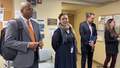
State Reps. Paul Mark and William "Smitty" Pignatelli shopped with with state Sen. Benjamin Downing Monday morning.

For Pignatelli, the shopping trip was "the first time I had to pay attention to what I was buying."

Pignatelli says it is typical for him to do his shopping and return home wondering how the bill added up so quickly.

But on Monday, he didn't have the freedom to wonder, he had to know - knowing so well where he stood that his bill came to $31.41, the closest any member of the delegation came to spending their entire budget.

"You have to be very aware of what you are buying. You have to put things back on the shelf," Pignatelli said. "I certainly have a better understanding, just in shopping, of what some folks are living on."

In North Adams, state Rep. Gailanne Cariddi took on the challenge that she said many people face.
 
"You just see people of all ages really just struggling to make sure they have enough to eat," Cariddi said, as she did her shopping at Price Chopper.
 
She entered the day with a budget of about $24, accounting for leftover food from a share at Many Forks Farm in Clarksburg. Cariddi browsed the store quite extensively, weighing in choices between brands, cost per volume and mixing and matching meal options for the week, noting that one of the biggest challenges is to be your own nutritionist. She ended the trip spending $23.90.
 
Cariddi said she hopes for healthy eating education efforts to expand.
 
"Can we do better?" Cariddi wondered.
 
The representative said about 3,700 families and 4,800 individuals in the first district receive assistance from SNAP, costing about $700,000.
 
"It's really alarming," Cariddi said, noting that the area needs more and better jobs.

And while the state officials Legislate the program, local clergy have a stake in the issue too and have joined in the effort.

Quentin Chin of the First Baptist Church of Pittsfield has teamed up with leaders from five other churches to take the challenge and are asking the community to join them.

"I just hope this will raise the awareness of hunger in Pittsfield and Berkshire County," Chin said on Monday. "There are 50 million people in this country who are food insecure... this is the wealthiest nation in the history of the world and we're letting 50 million people go hungry."

Chin said that churches and other institutions had put in place an "emergency food network" but that has grown into becoming just another part of many people's food ratios.

The clergy — including Rev. Jennifer Gregg of St. Stephens Episcopal Church, the Rev. Tim Weisman of Zion’s Evangelical Lutheran Church, the Rev. James Lumsden of the First Church of Christ Pittsfield, UCC, Pastor Barbara Rice of South Congregational Church, and President Sheila McKenna of the Unitarian Universalist Church — will take their challenge during any seven day period from July 8 until July 28.

On Sunday, July 28, anyone who took the challenge is invited to a community dinner to share their experiences.


Tags: SNAP challenge,   

If you would like to contribute information on this article, contact us at info@iberkshires.com.

Becket Looks to Wind Power for Energy Savings

By Breanna SteeleiBerkshires Staff

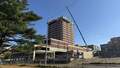
The single turbine is a low maintenance and has a 50-year life. The town went with wind power after finding a solar installation would be too difficult. 

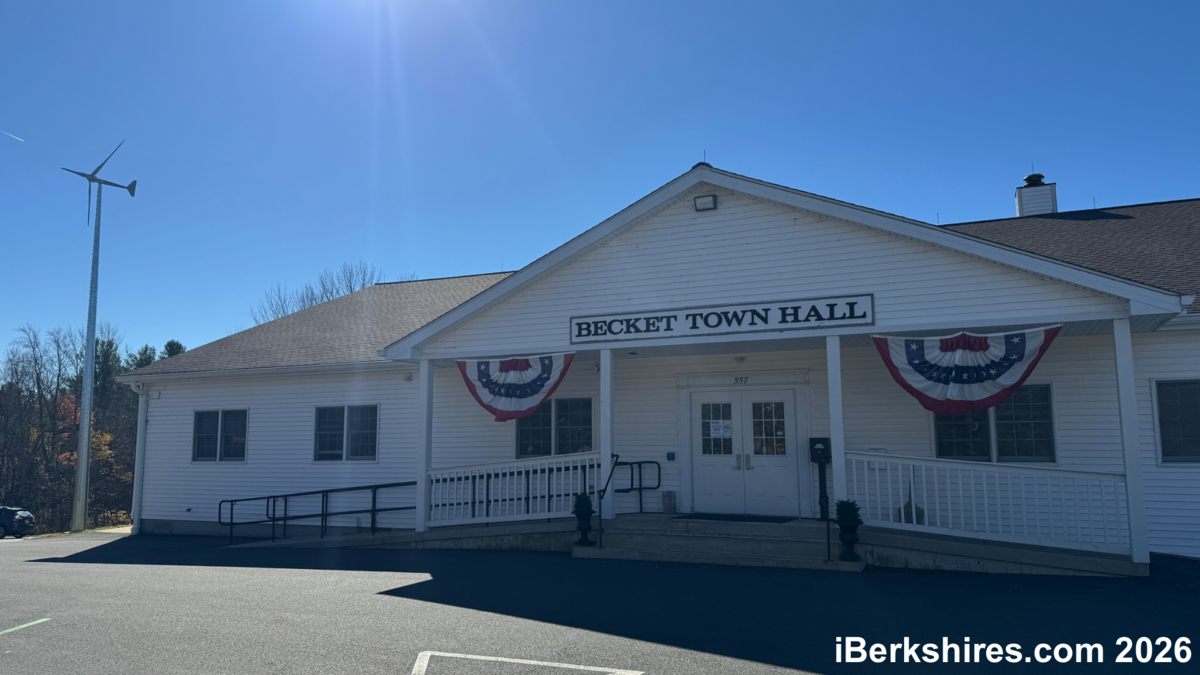
BECKET, Mass. — The town unveiled a wind turbine Monday that will reduce electricity costs and show the benefits of renewable energy produced by wind.

Residents, town and state officials gathered outside the Town Hall for the ribbon cutting on a project first conceived nearly a dozen years ago.

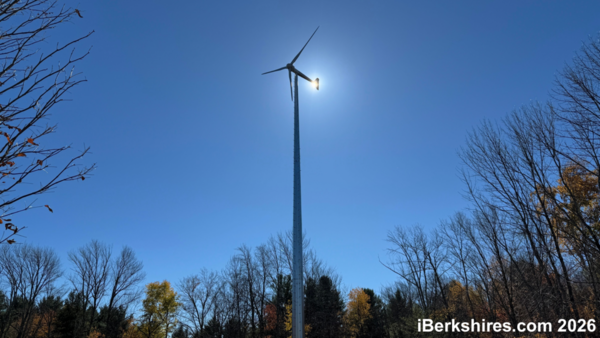
The wind turbine stands 100-feet tall next to Town Hall and is from Oklahoma manufacturer Bergey Wind Power. It has a 50-year life and is a direct-drive permanent-magnet design, meaning it has no gearbox, making it low maintenance.

According to Garth Klimchuk, chair of the Becket Energy Committee, the town started discussions about a wind turbine in 2014. The turbine is expected to generate about 36,000 kilowatt-hours. Klimchuk said Town Hall uses about 24,000 kilowatt-hours, with excess power expected to go to the Highway Department. This is expected to save $9,000 annually from the electricity cost.

"This turbine is just going to be such a good thing for the town. It is really incredible. Zero-cost electricity. Zero cost to the town. Carbon free. Just a huge, huge milestone for us," he said.

The town received a grant from the state Department of Energy Resources totaling $139,500. The remaining funding for the project will come from a direct-pay investment tax credit under the federal Inflation Reduction Act. If the town does not receive the funding, voters at the annual town allocated $100,000 just in case, but Klimchuk said the town will only need about $60,000 to $70,000 if necessary.

"It's going to help the community. Hopefully, it'll lower our tax bills. And as we look at everything going around around the world right now, energy volatility has been with us for a long time. It's going to stay with us for a long time," said state Sen. Paul Mark. "So any move we can make as a community, whether as Becket specifically, as Berkshire County as a whole, but anything we can do to bring some of the reliability into our own hands, to produce a bit on our own, and just guarantee that in a renewable, safe way moving into the future, I think is going to pay off dividends."

The town has spent more than a decade reducing municipal energy consumption in a variety of ways including HVAC upgrades and LED street light conversions, bringing it to a Level 2 Green Community status.

While solar had been considered, interconnection constraints and limited grant opportunities made it harder to achieve. But the high elevation of Town Hall and a Small Wind Site evaluation done in 2023 and 2024 found the site was perfect for a turbine with favorably high winds.

State Rep. Leigh Davis praised the project as an example of a small town addressing a larger energy challenge through persistence and collaboration. She stressed that the single turbine represents a practical step toward reducing reliance on fossil fuels and said Becket's effort could serve as a model for communities across the commonwealth. 

"You hear about all these kind of big wind farms and solar farms and all these ways that we're gonna you know create green energy, but at the same time what we're not being sensitive to the landscape, and what I appreciate about this is that this is it's a single turbine, but it represents so much more," she said. "You're right. It's really adding to the ability for this town to contribute to green energy and to bringing our reliance on gasoline fuels back down to solving big problems."

Mark Rabinsky, deputy director of DOER's Green Communities Division, said the state supports municipalities with technical assistance and grants, and that reducing municipal energy costs can leave more resources for other local priorities. He presented the turbine as an example of state support working alongside local knowledge and decision-making. 

"I think that this is a really a great example of what green communities can do," he said. "I'm obviously a really big fan of the green communities program, but I think that connection between the state, what we're doing at the state, and that local level, and relying on the local knowledge here with Becket is a true testament to what we're doing."

Select Board Chair William Elovirta thanked everyone for being here and shared his memories of first coming tp Becket in 1946 before utility electricity arrived. His family and neighbors used small 32-volt generating plants and batteries. He recalled utility workers installing poles and wires by hand around 1947.  

View Full Story

More South Berkshire Stories