Pittsfield to Consider Food Truck Ordinance
|
How We Roll has become quite popular among residents but not with other business owners. |
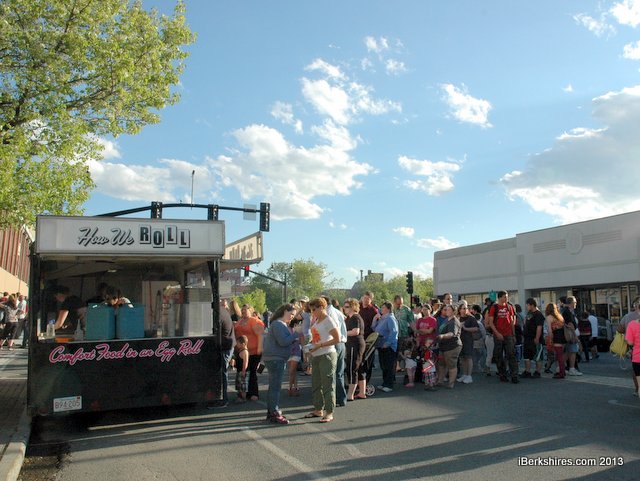
PITTSFIELD, Mass. — Complaints from some downtown restaurants have led to a request for a city ordinance regulating the operation of mobile food trucks.
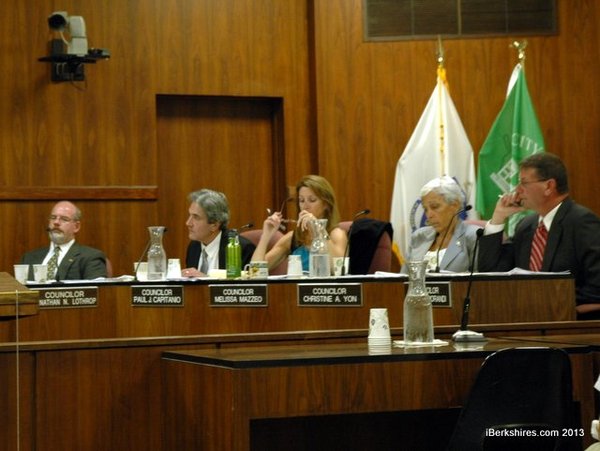
The petition headed by Downtown Pittsfield Inc. will be examined by the city's Community Development office in conjunction with the City Council's Committee on Ordinance & Rules to potentially place additional restrictions on the vehicles.
"Just within the last 30 to 40 days we've seen food trucks on the main corridor of downtown, parked directly in front of businesses who are here on a year-round basis, who pay taxes, who pay rent," said Pam Tobin, executive director of Downtown Pittsfield, Inc.
"We're looking to have an ordinance put forth by the city to put a restriction on these, or at least control them in some form so that they're not impeding on the everyday businesses."
Susan Gordon, owner of Bagels Too, also asked the council to advance such an ordinance, saying the trucks hurt her business. The company "depends on the income we generate during good weather," she said.
"After spending thousands of dollars advertising in local media to attract seasonal customers to our store," Gordon told the council, "It's really disheartening to wake up in the morning and go to work and find a food truck parked in front of your store, siphoning off the customers that you've spend a lot of money to attract."
The push for increased regulation of food trucks stems in large part from a complaint by a North Street eatery following June's 3rd Thursday event. Following the event, which featured multiple food truck offerings, a scathing indictment of the practice posted to Facebook by Brenda & Company provoked extensive debate. While the controversial post was later deleted, the discussion it prompted lead to the petition from Downtown Pittsfield Inc.
Kathy Lloyd, proprietor of the popular local food truck business How We Roll, later told iBerkshires that she intends to be part of the discussion as the process moves forward, in the hopes of finding an equitable solution that will work for both types of eateries.
"I can see why North Street vendors are upset that certain food trucks are parking right in front of other businesses, but I also think that if there's going to be a non-compete ordinance in Pittsfield that it should apply across the boards," Lloyd said.
"The flack that I've heard from local restaurant owners is that they're mad because we don't have any overhead, which I would argue is vastly untrue," she said. "But just because we've found a leaner way of doing business, it seems bizarre that that is the argument for keeping us out of downtown."
But Lloyd says she understands the other side of the argument.
"On the other hand, they're paying a lot to be downtown, and I don't blame them for being angry when someone parks right in front of their door. There has been a food truck from Great Barrington that has been doing exactly that, and I think they're going to ruin it for all of us."