Adams Park Street Buildings Go to Mortgageholder
 The Carlow Building, right, and the Jones Block were auctioned off on Thursday. The Carlow Building, right, and the Jones Block were auctioned off on Thursday. |
||
|
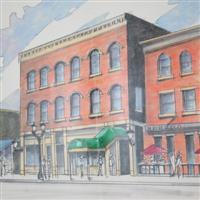
ADAMS, Mass. — The Jones Block and the adjacent Carlow building are now owned by the bank that holds their mortgages.
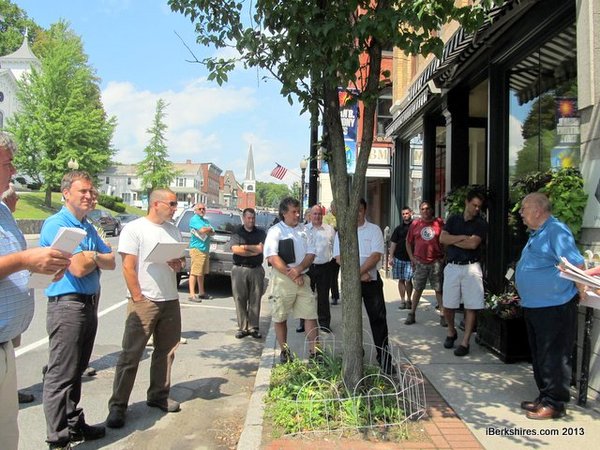
A public auction for the Park Street properties attracted four or five interested buyers to bid on one or both of the three-story buildings on Thursday afternoon.
Auctioneer Ronald Marcella of Marcella Associates of Dalton tried to gin up interest but the top bidder was MountainOne, coming in at $500,000 for both buildings, through bank consultant Bob Bender.
The buildings had been owned by Gerard Sanchez, operating as Samuel Adams Enterprises LLC, who filed for bankruptcy protection in January, the day before the buildings were scheduled to be auctioned off for foreclosure.
The Jones Block had been purchased for $100,000 from the town and the Carlow for $480,000 in 2008. Sanchez had planned to invest $2 million in the buildings — the Jones Block had been vacant since a fire in 1996 — but only part of the promised work was completed.
The Carlow building is 23,635 square feet on a 1/2 acre; the Jones Block is 12,900 square feet on 8,275 square feet of land.
The value of the two buildings is $2.125 million while $1.3 million is owed to MountainOne, according to court documents.
Town officials frequently expressed frustration with the progress of the building and prodded Sanchez repeatedly to move forward.
Two weeks ago, U.S. Bankruptcy Court dismissed Sanchez's case at the request of MountainOne, then operating as Hoosac Bank. That allowed the auction, which had been scheduled twice before, to finally move forward.
Registered bidders had to provide a $10,000 certified deposit; the buildings were being sold as is. Marcella informed the small crowd gathered on the hot sidewalk that each building would be auctioned separately, and then together. Among the bidders interested in the Jones Block were local developers David Moresi of Moresi & Associates and John Burke of Burke Construction, who had worked in the building and is listed among Sanchez's creditors.
The Jones Block reached $155,000; the Carlow building, which has two ground-floor tenants, $50,000. Marcella started the bidding for both at $205,000 but within a minutes Bender bid $500,000 and that was the end of it.
"We're disappointed it did not go to someone who could move the project forward," said Town Administrator Jonathan Butler, one of the spectators. He said the hope was a developer will now take interest in the buildings and "do what was supposed to be done in 2009."
Tags: auction, Jones Block, Park Street,