Child Expert: Kids Need to Learn from Mistakes
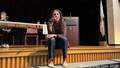
 Maria Trozzi is an expert in grief counseling and childhood crises. Maria Trozzi is an expert in grief counseling and childhood crises. |
Sometimes, it is an essential part of growing up.
Watching your child fail can be one of the hardest things a parent does, but it is important that children learn how to fail, author and child development specialist Maria Trozzi told a roomful of parents at Mount Greylock Regional High School last week.
"If the child doesn't get it right the first time ... they need to do three things: practice, practice, practice," Trozzi said. "That's all that matters. You just keep practicing at it.
"I worry more than anything that children are finding it hard to deal with disappointment. Children have a hard time managing feelings. They're good with happy, but they're not so good with disappointment. They're not so good with frustration. They're not so good with not having an answer yesterday."
Trozzi is an assistant professor of pediatrics at Boston University and the director of the Good Grief Program at Boston Medical Center. She is a nationally recognized consultant on grief counseling among youngsters, the author of the book "Talking with Children About Loss," and a consultant who has worked with educators — including those in Williamstown-Lanesborough's School Union 71 — on the emotional side of crisis management.
The thrust of her talk last Wednesday was not crises on the order of Sept. 11 or the Newtown school shooting but the day-to-day minor crises that can can be opportunities for young people develop what psychologists call "agency" and what is sometimes referred to as free will.
Her talk was titled "Intentional Parenting: Critical Issues for Parents' Consideration Now," and it was clear Trozzi felt one issue parents need to consider is how their family handles failure.
Trozzi told the audience of parents and educators that the understandable desire to protect children from disappointment can lead to children and adults who cannot work through frustration on their own.
"I know where hovering comes from," Trozzi said. "It comes from loving our children. ... That gets translated sometimes unwittingly as doing for the children.
"There is some benefit to having children sit with their feelings when they're disappointed. There's some benefit to delayed gratification. Those strategies — living and dealing and sitting with their feelings, perseverance, grit — we know those are characteristics of kids that will serve them as adults and it will help them not become the anxious kids we see a lot in school.
"Fifteen years ago, we'd see middle school kids with a generalized sense of anxiety. They were worried about sex, drugs and rock 'n' roll. ... Now, I see those kids in fourth or fifth grade. They don't know what they're worried about, but they're worried."
Trozzi asked her audience to consider their response to a scenario she heard from a parent recently.
"I was giving a parent lecture for parents at an independent high school, and as we were talking, this lady says, 'What should I have done when I picked up my son this afternoon after track practice, and he slumped into the passenger seat and said, "Mom, I'm never going to be fast enough"?' " Trozzi said.
After letting her Mount Greylock audience pitch some possible responses — good and bad — Trozzi told them how she would recommend they handle a similar situation.
"I'm likely to say two words, 'I'm sorry,' " Trozzi said, pausing for dramatic effect. "You know what I just did? I let it land. I didn't say, 'I'm sorry, but you should have practiced more this summer.' I didn't say, 'I'm sorry, but maybe golf is your sport.' I didn't say, 'I'm sorry, but your three best friends are running track. Don't you want to be with them?' ... I let him sit in his disappointment. If this is not something you've done in the past, it will kill you.
"Guess what happens when you say you're sorry and then zip it. It gives him a chance to reflect, feel the feeling and say, 'Maybe I should have practiced more this summer' or 'My three best friends are on the team' or 'Maybe I could try golf.' ... He can solve his own problem."
The constant push for perfection and achievement is pervasive in society, but the pressure placed on the very young can have tragic consequences, Trozzi said.
In her role as a grief counselor, she was called into a high school in the Boston suburbs last year after a senior committed suicide. The prototypical high achiever had the week before had a successful interview for admission to Brown University, and, to outside observers, she looked to be leading a charmed life.
But last fall, someone in the guidance office at her school realized the student had been forging her grades and her SAT scores, and a meeting was scheduled with her parents.
"She got wind of it," Trozzi said. "Her mother and father did not talk about it with her that night. ... She walked out of the house and killed herself."
As tragic as that story was, it gets even more poignant.
"What you don't know about this child is she was forging her grades from A-minuses to A-pluses," Trozzi said. "She was nearly perfect already, but she had such a distorted sense of achievement."
If it is OK to fail, then children learn coping mechanisms and, ultimately, develop their own strategies to overcome life's disappointments, Trozzi said.
"I think achievement is cool if we're happy about it," she said. "But what's more important is for me to have a sense that I can problem solve and I can advocate for myself.
"We want them to be able to sit in their disappointments and say, 'That's OK. I'm lovable enough. ... It's not what I do. It's what I be.' "