Pittsfield Panel Advances Zoning Change for Self-Storage
By Joe DurwinPittsfield Correspondent
Print Story | Email Story
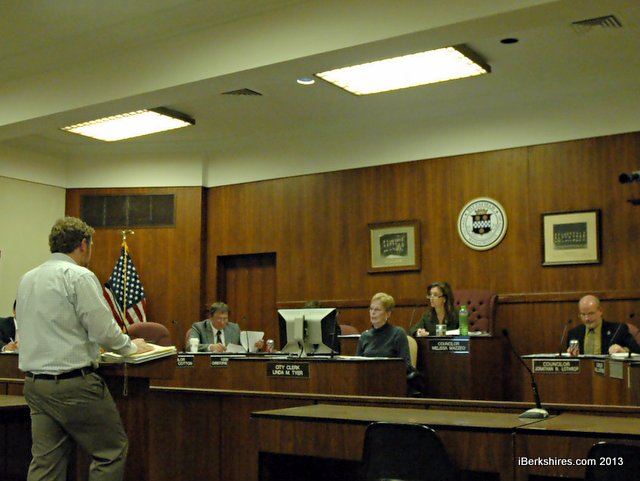
A zoning change that would allow a self-storage facility by special permit at the Pittsfield Plaza is being recommended by the Ordinance and Rules Committee.
PITTSFIELD, Mass. — A plan to tweak the city's zoning ordinance to allow more retail-style storage facilities to operate within a commercial business zone with a special permit moved forward on Monday, with the support of the City Council's Ordinance & Rules Committee.
 
Alfred Weissman Real Estate, which proposed the change, said this would allow it to seek approval to redevelop part of the Pittsfield Plaza on Route 20 to address what its representatives called an underserved need for a new kind of self-storage operation that would be unlike the more industrial, open-air facilities currently in the city.
 
"We're here to tonight hoping that you will look at this as a change that is not only better for our property," said Joseph Genzano, general counsel for the company, "But one that recognizes the growing market of client-controlled, more retail-oriented storage, and one that will help foster a more competitive free market."
 
The amendment was previously endorsed last month by the city's Community Development Board, which after some concerns put forth to the City Council the petition that this type of operation be allowable in a BG zone with a special permit, retaining the city's right to approve such businesses on a case-by-case basis.
 
"This proposal does not allow for a million little huts on West Housatonic Street," clarified Councilor Jonathan Lothrop, who further amended to expand the change to light industrial (LDI) as well.
 
Councilor Christopher Connell expressed concerns about proximity of residential housing and possible safety issues such as fire access in the current draft design for the anticipated Pittsfield Plaza business, but City Planner C.J. Hoss said this change would merely allow for special permits to be granted, and a site plan for this particular project would still need to go through a separate approval process. 
 
The Pittsfield Plaza, built in 1962,  originally home to the Big N discount department store, has also contained a multiplex movie theater, restaurants, a furniture showroom, and other retail establishments. The shopping center's last major tenant left eight years ago, and the complex was in a state of serious disrepair when the current owners purchased it in 2007. A year later, Big Y World Class Market announced it's intention to relocate there, before eventually abandoning the plan in 2010 to maintain and renovate its existing West Street location.
 
Weissman was first denied a variance by the Community Development Board earlier this year because of the zoning ordinance's rules about uses within this BG zone, prompting the petition to amend the ordinance to allow application for a special permit.  
 
If approved by the rest of the City Council, the company said it will work with the Office of Community Development and the development board to insure that the design of the new retail self-storage structure fits the city's idea of acceptability for this special permit use.

Tags: special permit,   zoning,   
If you would like to contribute information on this article, contact us at info@iberkshires.com.

Prospect Meadow Farm Opens New Vocational Barn

By Breanna SteeleiBerkshires Staff

A charcuterie board at the event displays fare from some of the regional producers.

PITTSFIELD, Mass. — Prospect Meadow Farm last week officially opened a new barn to sell plants and other goods it produces.

Prospect Meadow Farm Berkshires is an expansion of ServiceNet's first farm in Hatfield that has provided meaningful agricultural work, fair wages, and personal and professional growth to hundreds of individuals with intellectual and developmental disabilities since opening in 2011. 

The Berkshires farm opened on Crane Avenue two years ago and has now introduced a new vocational and unwinding space for the more than 25 farmhands who get paid a minimum wage.

"This is a facility for our folks who work on the farm to learn additional skills and do additional work," said Vice President of Vocational Services Shawn Robinson at the Friday event. "So we have a food packaging space, we've got a walk-in cooler space, we've got a floral design space, we've got a farm store room for staff, lunch room, and then a meditation room that we're standing in now, which is when you're having those hard moments and you need to get away from everything.

"This is going to be a peaceful place you can find and sort of find some comfort, and then hopefully get back to work."

The barn was built by funds from the state Executive Office of Economic Development and the state Department of Agricultural Resources that equated to around $600,000, with ServiceNet contributing around the same amount. The structure took over a year to build.

The state's Department of Developmental Services Commissioner Sarah Peterson spoke on how meaningful this farm and ServiceNet is to her and that this place is important to those who need it.

"Places like this are so crucial because they create opportunities for people living with disabilities that aren't plentiful," she said. "People living with developmental and intellectual disabilities have an unemployment rate over 25 percent five times the rate for people without disabilities, even more jarring is under appointment, which is at 80 percent. That means that four out of every five people with disabilities earn below market rate wages and have limited upward mobility.

"The building itself is really impressive, but what you're really seeing here is the result of vision. It's about opportunity, it's about community, and it's founded in the belief that every person deserves the chance to learn and work and contribute to thrive under the leadership of ServiceNet."

One aspect of the barn will be the market where produce from the farm and other local growers will be sold as well as keeping the tradition of Jodi's Seasonal, which previously occupied the location, alive with plant sales. The market will be open Monday through Saturday from 10 a.m. to 3 p.m.

"Everything you see in terms of the tomatoes, the fresh produce, that's all done with the hands of our farm hands here, individuals with disabilities who get out every single morning, get in those greenhouses, put their hands in the dirt, and make all of this happen, and this is just the start," said Robinson. "This farm is a little over a year old at this point, but give it another two years, and we hope to be growing enough food to share throughout the Berkshires."

Robinson said the farm is focused on local food security, recently partnering with the Hatfield Council on Aging and planning to work toward making enough food to partner with places in the Berkshires.

He said the barn serves the Hatfield farm and what the employees here needed.

"We've been able to learn the needs of the farm hands who work there and so we have learned that they need a comfortable break space for those times where it's hard to be out in the fields, we've learned that a quiet space for when you're going through something you need to be away from people are key, and then also we have a small farm store in Hatfield, but we've seen increasing interest in retail work from our participants, so we thought it was time for a larger-scale farm store," he said.

Robinson noted that Prospect Meadow Farm has helped the individuals working there feel valued and head.

View Full Story

More Pittsfield Stories