North Adams Panel Rejects Medical Marijuana Moratorium
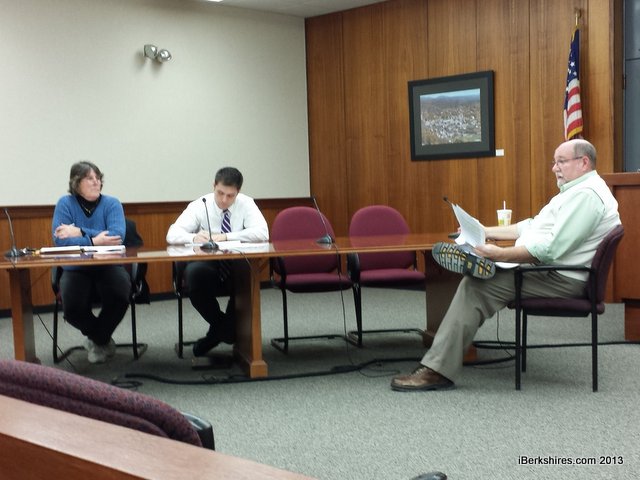 The Community Development Committee declined to support Mayor Richard Alcombright's request for moratorium on medical marijuana dispensaries. The Community Development Committee declined to support Mayor Richard Alcombright's request for moratorium on medical marijuana dispensaries. |
NORTH ADAMS, Mass. — The request for a moratorium on medical marijuana dispensaries was shot down on Thursday by the Community Development Committee.
"There is no potential of it moving forward at all," said Chairman David Bond.
Mayor Richard Alcombright, who had advocated for the moratorium, said he would withdraw the order at Monday's City Council meeting.
"This is a brand-new thing. I'm not against it, not against it all," said the mayor. "I just wanted to be certain the community has time or had some input to weigh in on the site-specific issues."
The Community Development Committee, however, did not see the point of a moratorium since the public would be able to weigh in during the permitting process. The dispensing of medical marijuana is also heavily regulated by the state, including where such facilities can open, so it was unclear, members said, why the city needed to review the issue.
The City Council had shown little interest at its meeting last week in enacting a moratorium, but sent the matter to the Community Development Committee. The mayor had originally requested a referral to General Government but that committee has had trouble in making a quorum.
Alcombright said a moratorium would allow the council and Planning Board time to review the issues and deal with any questions that might be raised.
"This would give city government and the Planning Board time to ask questions, look at siting and determine the best thing," he said. "All I'm really asking for here is for the City Council and the Planning Board to jointly look at this."
The mayor had submitted a letter last week from Planning Board Chairman Michael Leary asking for the six-month moratorium, at the mayor's request, for the "opportunity to study potential impacts of such a facility" on adjacent use and the public's safety, health and welfare, among other issues.
"I am not opposed to a medical marijuana dispensary in any way, but I always feel a discussion is a worthy thing on such a complex issue," Leary said later Thursday night. He did not attend the meeting.
Councilor Lisa Blackmer, who attended the meeting, said a moratorium now was like locking the barn door after the horse was already out.
"I understand all the planning and zoning issues but we've known about this since November 2012," she said, questioning why a moratorium hadn't been asked for then, as some towns had done while they clarified issues. Most of the questions about dispensaries have already been raised and answered elsewhere, Blackmer said.
There was concern that a moratorium would affect the application to the state of Total Health and Wellness Inc., which is currently in Phase 2 of the state application process. The company is also applying for a dispensary in Pittsfield and received the support of that city's Community Development Board on Tuesday night. Another company is also applying for Pittsfield and two others for South County sites.
There are 100 applicants for 35 licenses across the state; the state Department of Public Health is expected name those meeting the Phase 2 application qualifications at the end of January. Any applicant must have the support — or at least the non-opposition — of the community.
"A moratorium doesn't do anything but put a negative spin on it," said committee member Nancy Bullett. "I don't think it's necessary."
Blackmer said it was her understanding after a state official met with Massachusetts Municipal Association members that a moratorium would mean Total Health's application would be rejected. Alcombright disagreed, saying the state Department of Public Health's quidelines did not say that.
Total Health is looking to set up at 26 Roberts Drive, owned by Kenneth Sullivan-Bol. Attorney F. Sydney Smithers of Cain, Hibbard & Myers, representing Total Health, said he had not been authorized to submit a permit application yet but the company is completing site design work and appropriate studies.
Sullivan-Bol said a moratorium would put him at a significant disadvantage if the state decides to select only one dispensary for the county. Both he and Smithers thought the property — which is not in a heavy traffic area or abutting a residential area, is far enough away from the school and is not in a place where teens or children congregate — already meets state regulations and would more than likely meet any similar siting conditions set by the city.
"I'm pretty confident Roberts Drive would be one of those spots," said Smithers of potentially zoned sites.
Sullivan-Bol also argued that moratorium would not be considered if a pharmacy was seeking an application, even though pharmacies also dispense prescription medication that can be addictive or abused.
Planning Board member Wayne Wilkinson, who was elected to the City Council in November, said the city already had "the tools in the toolbox now" to set conditions on any facility.
"The Planning Board can put whatever restrictions on the business and it can be controlled by the laws we have now," he said, adding that zoning would have to be changed to restrict use. "Unless you want to change the zoning ordinances, there's absolutely no reason to change anything. ... The site plan review is there to regulate present legal use."
He objected to Leary's letter, calling it "very misleading" because the Planning Board had never discussed the issue. "If Mr. Leary wants to say that he wants a moratorium, that's fine, but this is not from the Planning Board," he said.
Leary said on Thursday night that "the intent of the letter was to initiate discussion by the council, which is the legislative body that can decide whether a moratorium is needed, and I only felt my letter was a way to open that discussion. If it was viewed otherwise, that's unfortunate."
The mayor had approached him after the board's December meeting and Leary said he had planned to place it on the agenda for the January meeting so it could be discussed openly and testimony taken without a having an applicant. He objected to claims made by Wilkinson at the meeting that other members were "all outraged" at the letter and did not understand why Wilkinson had not contacted him.
"He is welcome to his opinion, but he is not welcome to make claims about how other board members feel on any issue when it is clear from my own discussions tonight that no other members of the board were concerned about this," he said.
Alcombright said he would send a packet on the state's regulations on medical marijuana to the Planning Board.
"I see some issues coming down the road ... only because of the nature of the beast, only because it's an illegal substance that's legal for certain reasons," said Alcombright. "I think folks need time to ask questions."
Tags: community development, medical marijuana, moratorium,