Pittsfield Gathering Input on Annual CDBG Funds
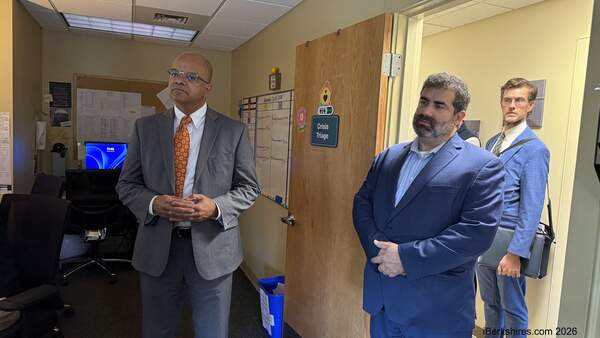
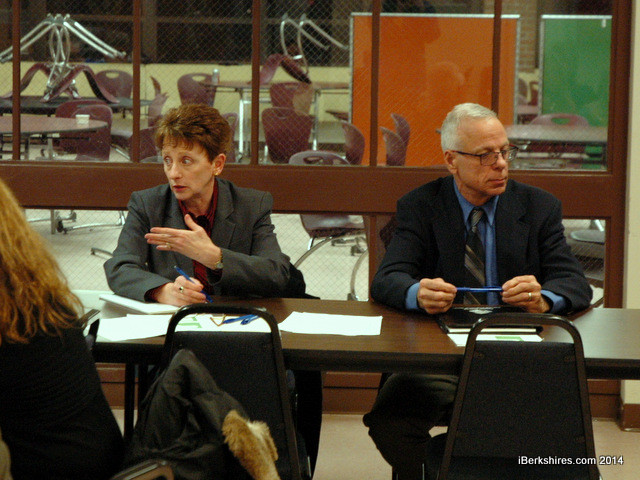 Douglas Clark and Bonnie Galant from the Office of Community Development took input at the first of two public meetings on Monday. Douglas Clark and Bonnie Galant from the Office of Community Development took input at the first of two public meetings on Monday. |
PITTSFIELD, Mass. — Community Development officials are taking public input on how to spend $1.1 million in federal Community Development Block Grants for the next fiscal year.
This year's award to Pittsfield of $1,178,937 is about $20,000 less than that for the current fiscal year, which represented a 4 percent increase from the previous year after two larger cuts in FY13 (18 percent) and FY12 (16 percent) totaling over half a million.
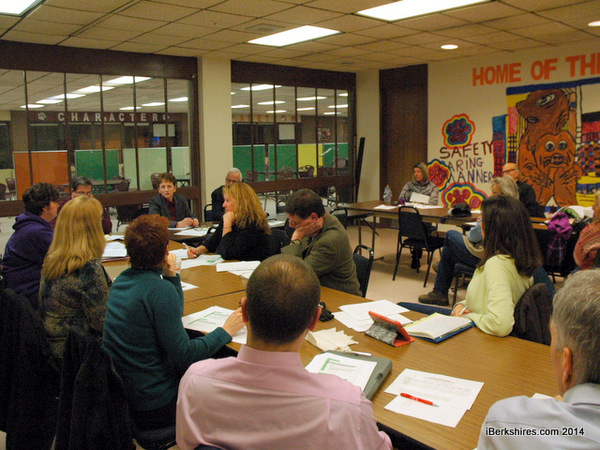
"It could have been much worse," Douglas Clark, director of community development told attendees of a meeting at Morningside Community School early this week, the first of two required hearings to gather public input in developing an annual action plan for dispersal of the money.
This is the 40th year that the city has received these CDBG funds from the U.S. Department of Housing and Urban Development, though the amount received has been severely reduced in recent years, and this coming year's allocation will be the second lowest in its four-decade history.
Congress has approved at national appropriation of $49 million for fiscal 2015, a decrease of 1.6 percent.
CDBG allocations are specifically designated for funding projects addressing community needs, at least 70 percent of which must benefit low to moderate income residents, or about 53 percent of Pittsfield households by HUD's standards. Eligible activities are strictly limited to certain kinds of housing, urban renewal, and public services projects, as well as some types of economic development and community planning initiatives.
With a followup meeting scheduled for later this month on Pittsfield's West Side, public input at Morningside on Monday centered largely on issues affecting that neighborhood and surrounding portions of the city, which contains the largest concentration of low-income households in Pittsfield.
Tyler Street Business Group President Dianne Marcella urged officials to consider a variety of Morningside neighborhood projects, including the proposed community greenhouse on First Street, as well as improved lighting in key areas of this densely populated area.
"There is a big lighting issue throughout the whole Morningside neighborhood," Marcella told community development officials. "We really need more lighting, to get the crime issue served a little better."
She also suggested that the city consider projects related to the historic former fire station on Tyler Street. The city has twice put out requests for proposals of reuse for this building over the past few months, but response has been lackluster because of the building's condition and estimated cost of renovation.
"You're getting to the point with that building where it's become a hazard, or at least a blight," Marcella said. "If we can't get the RFP going, we're either going to have to decide to level it, or do something to make it so that somebody could take it over."
Under the category of planning activity, former Councilors Michael Ward and Peter White advocated for the city's involvement in improving pedestrian and bicycle access in the Coltsville commercial sector, including working with the property owners in developing a foot bridge between the Berkshire Crossing and T.J. Maxx shopping plazas.
"For years I have observed people climb over the guard rail on Dalton Ave. and walk along the river bank to Hubbard Ave. to get to Walmart or somewhere in Berkshire Crossing. When the snow gets deep they just walk in the road along that dodgy no-shoulder four-lane section of Dalton Ave.," Ward elaborated to iBerkshires following the meeting.
"I think the city should act as project manager, and should engage the owners of Berkshire Crossing and the TJ Maxx plaza to help pay for construction (perhaps with other funding sources) and also keep it clear in the winter," Ward suggested. "The city is uniquely qualified to oversee a project with multiple land owners and a Conservation Commission jurisdiction.
"Improved pedestrian conditions in Coltsville would benefit lower-income residents. Many of the people who work and shop in the Coltsville business district would benefit greatly," agreed White. "We could also hopefully avoid accidents like the city is seeing near Big Y.
"Sidewalks and better lighting should also continue to be a priority throughout the CDBG eligible area," added White.
Community Development staff will hold the second public input session on CDBG funding on Monday, Feb. 24 at 5:30 p.m. at Conte Community School.
"I think the city's been able to do a lot of good things that have been made possible because of these funds," said Clark. "So I hope they continue."
Tags: CDBG,