Pittsfield Resident Denied Backyard Chickens Permit
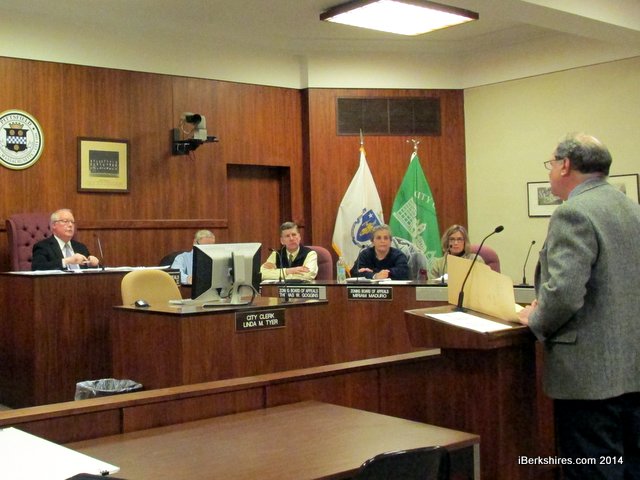 Attorney Albert Cimini represented seven neighbors who opposed the permit for keeping chickens. Attorney Albert Cimini represented seven neighbors who opposed the permit for keeping chickens. |
PITTSFIELD, Mass. — A Marlboro Drive household fell one vote short of being able to raise chickens in their back yard.
A special permit for Kristen Laney to raise up to six chickens was denied by the Zoning Board of Appeals despite the majority being in favor.
Laney needed four of the five members to vote to grant the permit but only three did.
"If we do grant this, it would destroy the harmony of the neighborhood," said John Fitzgerald, who along with Chairman Albert Ingegni voted against the permit.
Fitzgerald and Ingegni felt the biggest hold up in granting the permit was the requirement that the chickens would not be detrimental to the neighborhood.
Seven neighbors hired attorney Albert Cimini and wrote letters in opposition to the permit.
"I just believe it would be fitting a square peg in a round hole," Cimini told the board, citing that the application doesn't fit with the character of the community.
Cimini researched the deeds to both Laney's property and neighbors' and found that when the neighborhood was developed off Holmes Road, there was a restriction that livestock not be kept on the property. While those restrictions have expired, he said it shows the intent of the neighborhood.
"This is a planned residential neighborhood," he said.
The lots, at about 7,200 square feet, are too small for "urban farming" and the odors, noise, potential disease, the attraction of pests and property values are all concerns for the neighbors — despite a meeting Laney held with all of them trying to alleviate those concerns.
"This is just too tight of a neighborhood for this type of activity," Fitzgerald said, agreeing with Cimini.
Laney addressed each of those concerns when presenting to the board. Starting with smell, she said four to six chickens produce less manure than a small dog so if there is a smell, it would the the owners not taking care of them. She presented plans on how she would keep the coops clean.
Noise, as well, she compared to dogs, saying the hens are only active during the day and won't be any louder than traffic, children at play or barking dogs. Additionally, there is no evidence that chickens attract any pests nor carry any more disease than any other animal.
She said she spoke with the assessor's office and several realtors who said backyard chickens have no negative affects on neighboring property values.
"I believe fear of the unknown, of the new and of the different is not reasonable for denial," Laney said, adding that local, state and federal legislation has supported residents' rights to raise the animals in residential neighborhoods.
Christopher Laney followed her presentation, saying they trust their neighbors to take care of their pets so as not to carry diseases or produce smells so they should be granted the same opportunity.
Additionally, the couple likened chickens to growing a garden. Instead of supporting inhumane chicken companies, they feel that raising their own for food is healthier, more sustainable, more self sufficient and more humane. They are active with growing their own food in their back yard and this would add protein to their diet.
Kristin Laney said all of her neighbors have outbuildings, pets or gardens and her application is no different that any of those.
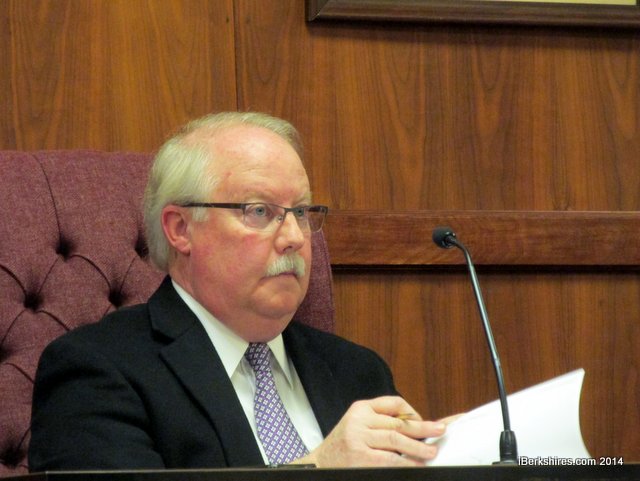 Chairman Albert Ingegni became the deciding vote on the permit. Chairman Albert Ingegni became the deciding vote on the permit. |
Neighbor Lucy Bruce called the Laneys a "breath of fresh air" for attempting to raise their own chickens. Bruce said it is more environmentally friendly than pesticides some others use on their lawns.
Neighbor Robin Bagley, too, joined the Laney's side. She had once raised a chicken for a summer and never had a problem with them.
ZBA member Miriam Maduro agreed with the applicants that they should have a chance to try it. Maduro said the permits can be revoked later due to complaints or unsanitary conditions.
"Urban farming isn't a bad thing. It's a good thing," Maduro said, adding that the application had plans for all of the physical concerns like smell and noise.
When she questioned Cimini about proof that property values would decline, he had none.
ZBA member Thomas Goggins said Laney had addressed all of the issues that would make it detrimental to the area, as did member Esther Bolen.
But, despite having Goggins, Maduro and Bolen on her side, Laney still needed one more vote to receive the permit so ultimately it was denied.
Ingegni became the deciding vote, saying he couldn't support the special permit because of the "consternation" it has caused with the neighbors.
Tags: chickens, livestock, special permit, ZBA,