Lanesborough Considering Water Line Expansion To Landfill
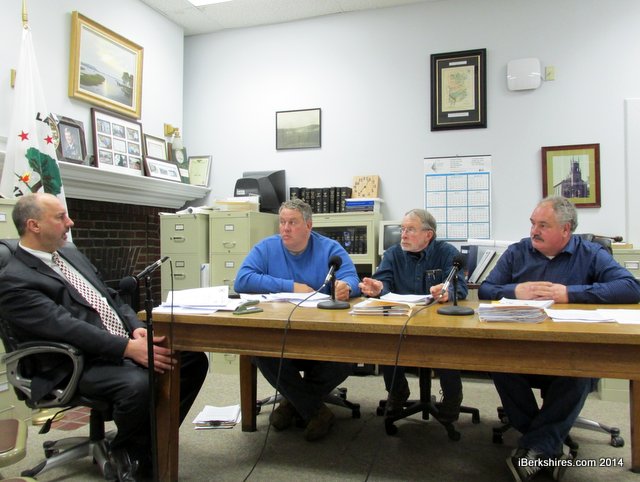 The Board of Selectmen discussed the idea of running a water line up Ore Bed Road in an attempt to slow the continual need for additional water testing. The Board of Selectmen discussed the idea of running a water line up Ore Bed Road in an attempt to slow the continual need for additional water testing. |
LANESBOROUGH, Mass. — After having to dip into reserves for the second time this fiscal year for additional water testing, the Board of Selectmen is considering extending a water line up Ore Bed Road.
On Wednesday, Town Administrator Paul Sieloff told the board that he is requesting $9,900 more from the reserve fund to pay for emergency water testing near the landfill.
The state Department of Environmental Protection had found a chemical that hadn't been seen in other tests and required more sampling done. Those results came back negative.
"We are kind of between a rock and a hard place," Sieloff said of the testing required by the state.
The area of the landfill has been the focus of intense DEP testing after trichloroethylene, a chemical used to clean grease off metal parts in industrial manufacturing, was found in the water supply for one family. The DEP required the town to filter the water in that area — where there are five to 10 homes — and are trying to find the source of the contamination.
But finding the source of contamination is becoming costly. The town budgeted $20,000 this year for the monitoring and has already spent more than double that. The town dipped into the reserves for $24,000 for additional required testing and now again is asking for nearly $10,000 more — adding up to $54,000 in this fiscal year.
Worried about the number of money transfers and not knowing when or how much will be required at a given time, the Selectmen suggested just running a water line up the third of a mile. The town would construct a line from the intersection of Balance Rock Road, where the current system is located, up to just past the landfill on Ore Bed Road.
The cost for the line is estimated near a quarter of a million dollars and the homes would be able to connect to the town's system. The result would be that the town would not longer have to pay for water testing at each individual home or the filtering costs. It would still have to some monitoring near the landfill, just not as much.
"I think the same thing. If we can come away with a way to do that without depleting budgets, it should be done and get rid of the whole problem," said Finance Committee member William Stevens.
Sieloff said the U.S. Department of Agriculture offers a low-interest loan program the town could tap into, which would spread the payments over 40 years. The annual cost would be fairly low, he said, and the project could begin at the start of the next fiscal year. Grant funding is also a possibility to offset some of the cost.
The other option is to continue monitoring the area as they have in hopes of finding the source and ultimately remediating it. Sieloff is already proposing to increase the monitoring budget to $40,000 in the next fiscal year. He also added that a $35,000 geological study would speed up determining the source of the contamination. The state has already identified some possibilities, including an electrical conduit that was improperly capped, Sieloff said.
"There is a light at the end of the tunnel," Sieloff said of the investigation into the source of the contamination.
The homes are near the landfill, so if the state determines the chemicals are seeping from there into the water supply from it and the town bears the blame, Lanesborough would be responsible for remediation efforts. Running a water line up Ore Bed could end up being a requirement.
 Finance Committee member Bill Stevens says if the town can get a loan so the entire cost doesn't hit the budget at once, the water line is worth the effort. Finance Committee member Bill Stevens says if the town can get a loan so the entire cost doesn't hit the budget at once, the water line is worth the effort. |
When Joseph Trybus' well was found contaminated, the town footed the bill to get the family bottled water until the filtration system was installed.
The state also upped the number of testing for inside the homes of about a half-dozen residents in that area. Air testing is also being done.
That continual testing for this year has drained the reserve funds.
"We don't know if it is actually the town's problem but we're spending the people's money to solve the problem," Chairman John Goerlach said. "The water seems like a part we can take care of and it's there if other people want to add onto it."
At this point, it is difficult to say which option will be more cost effective but the Selectmen seemed to be in favor of looking into a new water line to alleviate the uncertainty.
"We didn't see a long-term solution. We saw Band-Aids, requests for more money, more money," said Finance Committee member Ronald Tinkham.
Stevens added that the continual withdrawals also poses a transparency issue. While Finance Committee meetings are public, seldom does anyone attend, he said, so at town meeting, the committee has to try to explain where the reserves went.
Sieloff said either option has his support.
"I recognize the water is an issue and am supportive of it," said Sieloff, who also says "there are a number of benefits" of a water line.
Sieloff is now further looking into the water line option and will bring back more information to the board for the next meeting. The Selectmen could then decide.
Tags: contamination, MassDEP, testing, water line,