Pittsfield Commission Endorses Mosquito Spraying in Parks
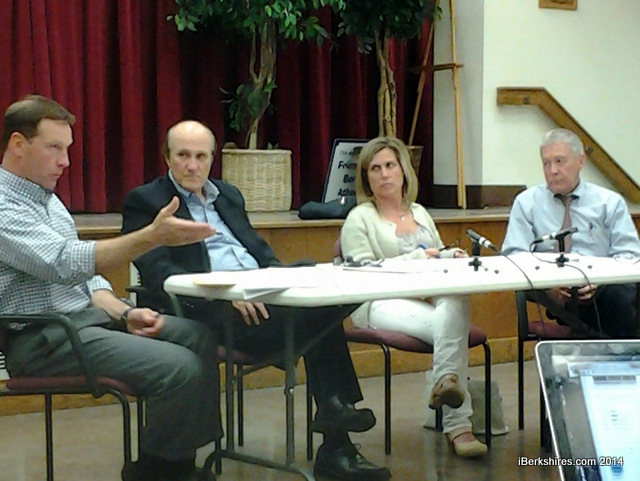 The Parks Commission approved spraying for mosquitoes in the city's parks but acknowledged growing concern over the use of the adulticide. The Parks Commission approved spraying for mosquitoes in the city's parks but acknowledged growing concern over the use of the adulticide. |
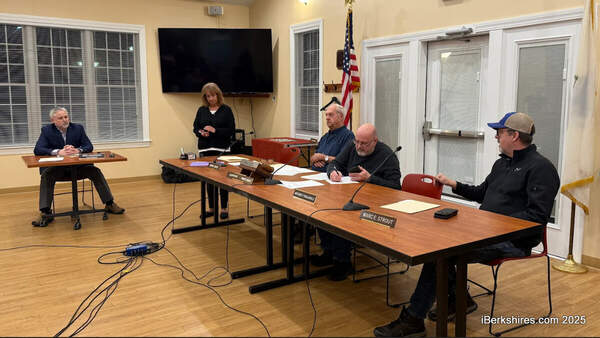
Director of Public Health Gina Armstrong and Chris Horton, director of the Berkshire County Mosquito Control Project, told the board it anticipates conducting adulticide spraying this summer at locations including Clapp, Kirvin, Wahconah, Springside, Burbank, Marchisio and Brattlebrook and Fred Garner parks.
"If we identify mosquito-borne disease — West Nile virus or eastern equine encephalitis — in mosquito populations, we intervene within areas effected to eliminate the vector mosquitoes," Horton told the board.
Infected mosquitoes samples are not a prerequisite for spraying, however; last summer, the city's Board of Health approved three separate rounds of spraying in parks and residential areas prior to any infected samples.
According to BCMCP's 2013 annual report, adulticide spraying constituted approximately 30 percent of its manpower during its peak season, and involved 136 gallons of Duet pesticides in 69 spray missions over 27,792 acres throughout six of the seven Berkshire County municipalities participating in the program (the town of Clarksburg participates in BCMCP, but opted out of adulticide spraying in 2005).
Horton said that as with spraying in residential efforts, notifications will be made to residents via the CodeRed notification system, as well as the city's website and in local media.
"Spraying of course, is our last resort," said Armstrong.
Horton highlighted several other aspects of what is referred to as "integrated pest control," which includes surveillance, bacterial larvicide to kill mosquitoes before they reach maturity, and attempts to eliminate or modify environments that promote higher mosquito populations.
"I think a lot of people don't understand that," said Chairman Dr. John Herman "It's a much more extensive program."
"We each got about five hundred emails asking us not to do this," added Commissioner Clifford Nilan.
Spraying was also challenged at a Board of Health meeting earlier this month, during which the board approved BCMCP's annual plan, though it must still approve of each round of spray efforts.
Among the feedback received by the Parks Commission was a letter citing 12 studies regarding the safety and efficacy of spraying efforts, backed by an online petition signed by more than 250 area residents.
"I didn't see any scientific evidence to back up their thoughts," said Herman.
"Mosquito spraying is always a contentious issue," said Horton. "We're always a target for people to criticize what we do, or disagree with what we do, or ask us to change our methods, but it's all science based."
"I assume there is going to be more consideration of this in the future," said Herman.
The city had dropped out of mosquito control programs for 20 years, but impetus to rejoin the program was prompted by a spike in mosquito populations in 2009, and Pittsfield is currently in the third year of a three-year term with BCMCP, after which time Horton said the city can decide if it wants to do it on a yearly basis, if at all.
"After that time they can adjust the program, or decide if they want to continue to do the program," Horton told the commissioners.
"Certainly this year was the first year that I've been involved that there was a lot of public input to us," said Commissioner Anthony DiMartino, who suggested that making the public more aware that the program needs to be renewed might help alleviate some concerns.
"There's a benefit and risk with treatment of anything," said Herman. "The benefit outweighs the risk, it's that simple."
Last summer in Berkshire County, 15 samples of mosquitoes tested positive for West Nile, and four pools of mosquitoes tested positive for EEE. Statewide, one human case of EEE was recorded in 2013, in Norfolk County. In total there have been 23 cases in Massachusetts in the past decade, with nearly a third of them fatal, particularly those patients who were above the age of 60.
Public health records indicate there were six recorded cases of West Nile virus infection in Massachusetts in 2013, all in more populous eastern counties with more robust mosquito control programs, though Berkshire County had one non-fatal case in 2012.
Pittsfield Parks Commissioner Responds to Mosquito Spraying Petition by Joe Durwin
Tags: mosquito spraying, parks commission, public parks,