EPA Presents Cleanup Plan For Housatonic River To Public
|
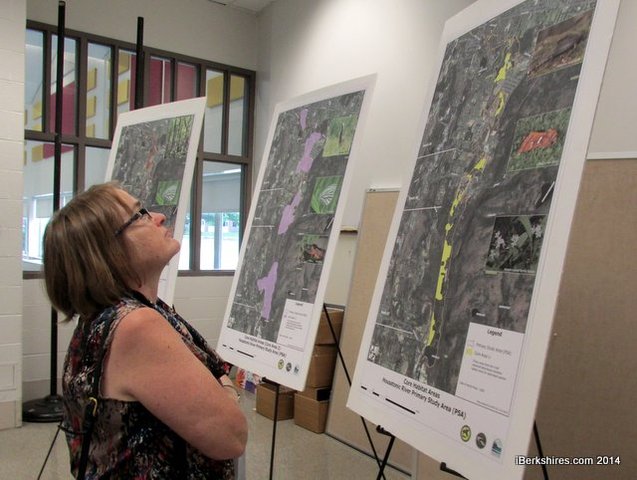
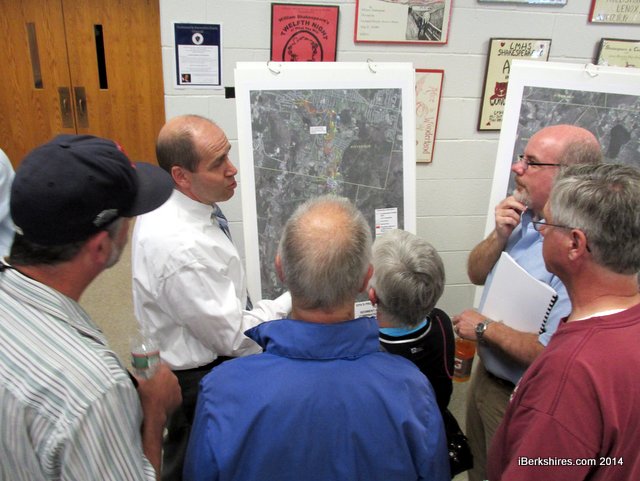
Residents were able to see the plan and maps and talk with EPA officials about the proposed cleanup on Tuesday, |
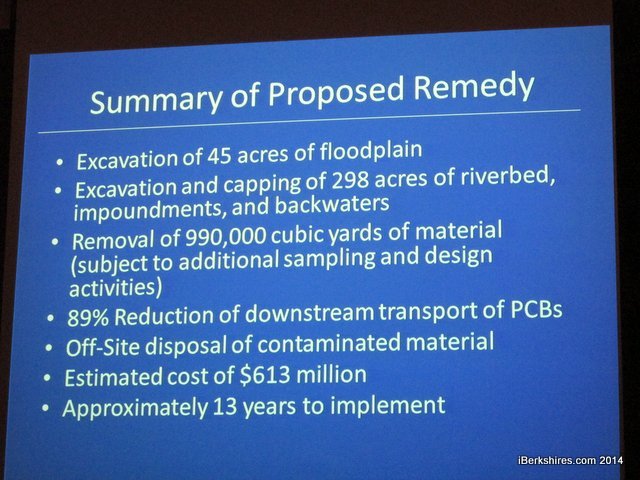
The EPA presented the $613 million plan for General Electric to clean up 300 acres of the river and wetlands from Pittsfield into Connecticut.
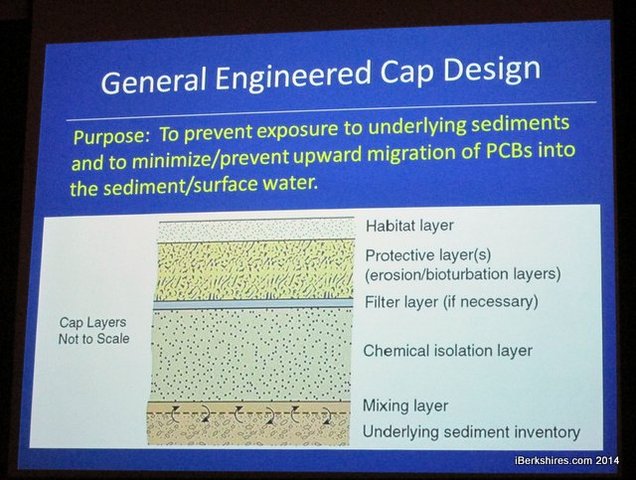
The plan centers mostly on excavating 45 acres of land, placing bio-engineered caps over the remaining contaminated sediment, using new technology to counteract the pollutants in the wetlands, and rebuilding and securing 30 percent of the riverbanks.
The plan is estimated to reduce polychlorinated biphenyls levels by nearly 90 percent, according to EPA officials.
At Lenox Memorial Middle and High School on Wednesday night, Dean Tagliaferro, Jim Murphy and Robert Cianciarulo outlined the plan to a full auditorium. The EPA's plan will now go through a public comment period, revised and then issued to General Electric. General Electric can then appeal it, and ultimately a final remediation plan will be agreed upon.
"This is by no means the final cleanup plan," Tagliaferro said, later saying any work is at least five years away.
EPA is focusing mostly on the area from Pittsfield to Woods Pond, where most of the remaining PCBs are located. Pittsfield's General Electric Plants had dumped the chemical into the waterways for years. Since the 1990s two cleanups have been done in Pittsfield to remediate the pollution.
"A large area of focus is what we call Reach 5," Tagliaferro said. "Obviously that is a key area. That is where the bulk of the PCBs are."
In the last few years the EPA has been working with the state and General Electric to work through a process of planning the cleanup for the rest of the river. Of particular note is the state's Division of Fisheries and Wildlife, which delineated areas of endangered species habitats. In those areas the plan calls for doing the minimal amount of work needed to alleviate human health concerns. Some of those areas won't be touched unless PCB concentration levels are significantly high.
Outside of those areas, the plan calls for excavating at various depths and then capping it to contain the pollutants. The sediment is then to be hauled away to an outside landfill via train so as to limit truck traffic.
The focus would be to bring the PCB levels down to 1 parts per million or less. The river has given readings as high as 800 parts per million and have gone as deep as 7 feet.
"PCBs in the fish themselves were over 100 parts per million," Tagliaferro said to give those numbers context.
The EPA's plan is what they called reaching a balance of cleaning the river while minimizing the affects the cleanup has. The agency could have demanded the entire river be cleaned up at a cost in the billions over the course of 52 years.
But, that is 52 years of perpetual truck traffic over the roads, all of the riverbanks being destroyed and rebuilt, and whole riverbeds being torn up.
Tagliaferro said the EPA looked at everything from the maximum to doing absolutely nothing and compared it to a nine-point criteria to develop their choice in remedies.
"The goal is to have a wide range of options to compare to the criteria," he said.
But the EPA's plan isn't satisfying many of the people who attended Tuesday's meeting, which Murphy said was organized to "give you an idea of what is in the plan." Residents will have from June 25 until Aug. 8 to submit comments to be incorporated in a revised plan.
Residents got a jump start on their comments Tuesday as well as received answers to an array of questions. Groups supporting various levels of cleanup and strategies advocated for their preferred methods.
Pittsfield City Councilor Christopher Connell represents residents from opposing factions. Some want all of the PCBs gone and others want minimal impacts on the ecosystem. He asked the EPA to consider looking at new technologies that can do both.
"In the next five years, what technologies are being explored to remove all of the PCBs and protect the river?" Connell asked.
The plan does not preclude making changes or any types of technology, the EPA officials responded.
Pittsfield Mayor Daniel Bianchi questioned what role GE has in fixing the roads that would be damaged because of truck traffic.
|
Jim Murphy of the EPA explained the history of the rest of the river agreement and cleanup. |
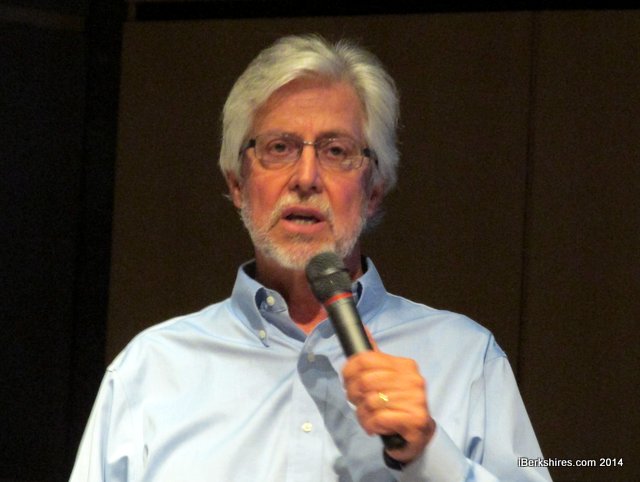
"There is going to be risks that it can fail at some point," Tagliaferro said, but there is a timeless clause in the plan that keeps General Electric responsible for repairs if that should happen.
Tagliaferro added that the EPA didn't want to completely redesign the entire river and banks into an industrial-type structure.
"There is going to be some movement in the riverbanks and the river. ... We don't want to overdesign and over protect the river to take away from its natural course," he said.
Some areas will have stronger caps than in other areas.
Lauren Garrity told the EPA that "I want to make sure we have them on the hook forever" just in case something does happen. EPA officials added that there are even clauses in the consent decree that gives the government the right to recoup money in the case the company goes bankrupt.
"There is no end date on any of that work," Cianciarulo assured.
As for questions, the EPA answered many of the technical questions regarding the various determinations. However, many people wanted to know about staging areas and truck routes, which have not been determined.
"We cannot tell you right now the exact footprint," Tagliaferro said, adding that even the depths and areas eyed for excavation aren't set in stone without more testing. "We didn't want to tie their hands in telling them exactly how to do the work."
The timeline is to start with the areas closer to Pittsfield and move south. After Woods Pond, the levels of work become less and less. However, the company will still be required to be part of any dam removals proposed.