Taconic Architect: Building New Better Than Renovating
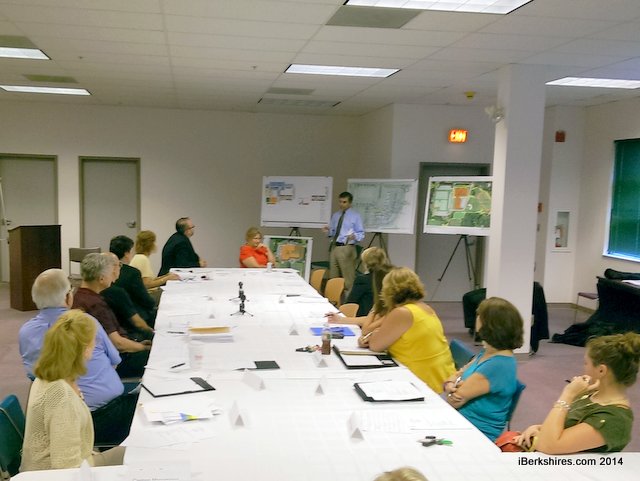 Carl Franceschi presented the options to the School Building Needs Commission on Monday. Carl Franceschi presented the options to the School Building Needs Commission on Monday. |
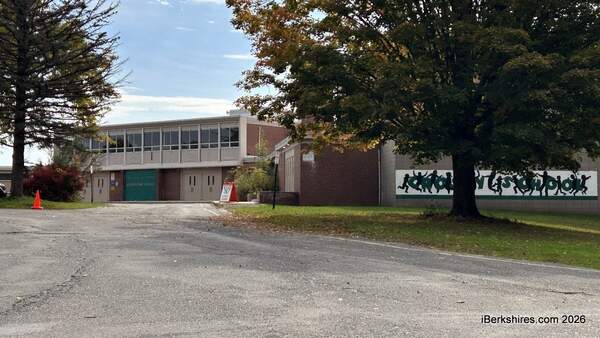
Drumney Rosane & Anderson Architects Inc. is consulting on the process of building or renovating Taconic High School. After developing three possible options — renovation, build new or a combination — the group is now evaluating the options.
"Right now it is looking like new construction is making more sense than either of the other two options," said Carl Franceschi of DRA.
Last month, Franceschi presented a criteria matrix featuring about 20 aspects of construction, to which the architects have since applied scores.
Of the criteria, the new school option was superior in all but five aspects, Franceschi said.
"Without weighting them, new construction is favored in all but five categories," he said. "It is coming out ahead on the scorecard before we've applied weight to them."
That includes added multipliers for the aspects they feel are more important, Franceschi said.
The aspects of a new build that were less superior were overall cost, net cost to Pittsfield, size of the gym and auditorium, ability to expand and environmental impacts. The cost figures are still tentative as the architects further vet the options.
"We do think new construction will be more expensive than renovation," he said, including both the total price tag and the ultimate payout the city will have to make.
The enrollment numbers do not support the size of the current auditorium or gym, so those would be shrunk in a new school. The new school is also proposed to take a smaller footprint, but be compacted around playing fields, parking lots and the roadway, so expansion in the future is more difficult.
"We do have to acknowledge hat there would be some environmental impact," Franceschi concluded, outlining that some wetlands would be affected during construction and then replaced with the new option, which wouldn't happen in either of the other two.
The architects are hoping to make a recommendation by the end of the month on which option to present to the state. The next step is to add in weights from the board to help finalize the proposal; then the School Building Needs Commission will decide. The goal is to have a proposal to the state in August so the city can be on the Massachusetts School Building Authority's September meeting.
However, Franceschi said that deadline might not be met. The MSBA hasn't responded to the previous submission and the architects can't finalize everything until they incorporate any MSBA concerns into the presentation.
"There is a potential that it may delay our next submission," he said. "The fact that we haven't gotten their comments back means we can't respond. ... We're coming up against a point where it might jeopardize that scheduled date."
Though he hasn't heard formally, Franceschi said he was told there may be questions about the enrollment figures submitted in the preliminary design and the vocational education plan. The MSBA may call a meeting in Boston to get more details on those areas, he said.
"There may some issues with the enrollment or there may be some issues with the educational program," he said. "It is possible that the response may require a meeting in Boston to talk. It could be that kind of level of discussion."
Franceschi said typically the municipalities receive comments on the preliminary design in three to four weeks. The School Building Needs Commission submitted its plan in early June.
Tags: MSBA, school building committee, Taconic High,