Early Closing Restrictions Lifted for Pittsfield Bar
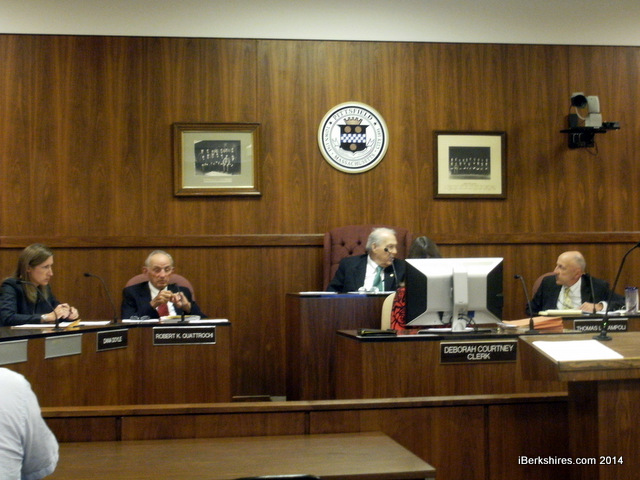 The Licensing Board cautiously voted to lift the early closing time for Johnny's Beach Club. The Licensing Board cautiously voted to lift the early closing time for Johnny's Beach Club. |
PITTSFIELD, Mass. — The city's Licensing Board has voted 3-1 to lift sanctions for a Wahconah Street nightclub imposed after a mass disturbance that occurred there in March.
Johnny's Beach Club, formerly long known as Pepe's, will be allowed to resume a closing time of 2 a.m. despite some level of wariness expressed by members of the board on Monday.
The board voted to allow the resumed early-morning closing following testimony from Sgt. Michael Grady, who said owner John Giardina had cooperated with Pittsfield Police to implement recommended changes and had been in good standing since resuming business after a seven-day suspension earlier this year.
"Everything we've requested he's complied with and we haven't had any issues since," said Grady, who noted that the department had responded to "five or six" calls for the bar since the suspension, but none in which the tavern was judged responsible for any negligence.
Improvements were attributed to the increased presence of owner and manager Giardina at the establishment.
"Clearly when the owner is present there are fewer, if any, altercations," said Chairman Carmen C. Massimiano Jr.
Massimiano suggested that the board should acknowledge the improvements made by Giardina, but defended the severity of the board's censure.
"That was a melee that went on, those were riotous conditions," Massimiano told Giardina of the March incident. "I think what we did was right."
"It's all about overserving, that's what it stems from," agreed board member Thomas Campoli.
"I feel like you're singling me out," Giardina told the board, saying the few times he'd been punished was not a large percentage given "three or four thousand" patrons served over his 20 years in business at that address.
"The dynamics of the city have changed," said Giardina, who expressed the opinion that overserving has not been the issue. "I will have to be a lot more vigilant."
"It's not the few bad people that caused a problem that night, it's the culture of what has been allowed to happen for years," said board member Dana Doyle.
"It just couldn't have turned into that explosive event if there wasn't overserving," agreed Massimiano.
"It's just the compiled history of your place that makes me hesitant," said Robert Quattrochi, who voted to oppose lifting the time restriction.
"The reality is that what happened in March was unprecedented. Obviously we have taken that very seriously," said Campoli, who motioned to allow the resumption of 2 a.m. closing, but said the board would be "tuned in closely" to what is happening at the establishment.
Tags: alochol licenses, license board,