BRPC Wants Language Holding GE Responsible For All Pollutants
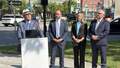
 BRPC's executive committee approved the draft letter to the EPA about the Rest of the River project. BRPC's executive committee approved the draft letter to the EPA about the Rest of the River project. |
Updated Friday, October 10 at 9:30 a.m. with clarification comments from PEDA Executive Director Corydon Thurston.
PITTSFIELD, Mass. — The Berkshire Regional Planning Commission wants to make sure General Electric is responsible for all of the pollutants it left behind.
According to Executive Director Nathaniel Karns, PCBs were found in recent years in the stormwater system near the original Pittsfield plant in an area that was supposedly cleaned up.
But the U.S. Environmental Protection Agency is considering holding the Pittsfield Economic Development Agency, which now owns the land, responsible for bringing the water system up to its standards.
"In the original consent degree, GE felt they were able to walk away from contamination that continued to come off the site," Karns told BRPC's executive committee on Thursday.
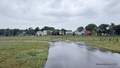
Specifically, Karns said the chemicals are flowing into a retention pond that was built during the cleanup.
On Friday morning, PEDA Executive Director Corydon Thurston said small particles of PCBs are in the dust and soil throughout the city and water runs from the Morningside neighborhood through a PEDA parcel and into a retention pond.
"The reality is, there are PCBs everywhere," Thurston said.
The U.S. EPA signed off on the property being clean to their standards even with those particles, Thurston said. But, with the Silver Lake now clean, that runoff has become a concern to some who are fearful more PCBs will end up in Silver Lake, he said.
Thurston said the runoff isn't really and issue at this point and that the bigger concern is that the state or federal government will change the water quality standards to that above that which the EPA had already signed off on. In that case, PEDA owns the property and would be responsible for further cleanup.
"There is some suggestion that the EPA is considering those. It is certainly a concern to the city and a concern for me," he said.
BRPC's executive committee approved of including language that would specifically hold GE responsible for all of the contamination in its comments regarding the next cleanup — the proposed 15-year capping and dredging of the Housatonic River south of Pittsfield.
"Given this history, and given the likelihood of new discoveries of contamination in the large and complex Rest of River area, BRPC respectfully requests that the permit make clear that there is a real possibility that additional contamination will be discovered and that GE will be responsible for responding to it," BRPC's letter to the EPA reads.
Further, it is difficult to tie those PCBs running into the PEDA property to GE so in Karn's comments on the Rest of the River project, he asks EPA to require the company to prove any found contamination didn't come from them.
The letter supports some aspect of EPA's proposed cleanup but states the project should remove much more pollutants. The letter says the regional planning organization supports the clause requiring soil to be disposed of out of state, more testing to determine levels of contamination be conducted prior to the work, the use of adaptive strategies and new technology in parts of the project, the requirement to work with dam owners to repair or remove dams and that GE pays for that, and the organization supports the EPA's requirement that GE offers compensation for private property owners who grant easements.
BRPC is also asking for a "more clearly defined role" of how the municipal governments play into the cleanup. And the organization believes the towns and property owners should have financial guarantees in case there are financial losses during to the cleanup.
But the most criticism is in the level of cleanup. The EPA's proposal asks for GE to cleanup only 25 percent of the polychlorinated biphenyls in the river with the rest being capped.
"We find it unacceptable that the cleanup proposed by the permit and statement of basis allows such significant amounts of post-cleanup PCB contamination to remain behind in such a dynamic river system, especially given the projected increase in the number, severity and recurrence of times of storm events due to climate change," it reads and later claiming the plan would "be leaving a legacy of contamination in the environment that we pass on to our children and grandchildren."
If the cleanup isn't expanded, BRPC is hoping the EPA will look at engineering caps on river banks that have potential to erode and that any temporary store of soils and sediment in the area be solely limited to that pulled from the river.
The PAWA Law Group, which represents a coalition of the six towns who will be impacted by the cleanup, also found a state law requiring GE to negotiate with host communities for compensation for any hazardous waste facilities.
"This handles temporary storage and dewatering facilities," Karns said. "This little find you can attribute to having competent legal representation."
The comments are due by Oct. 27 as the U.S. EPA crafts its final cleanup orders.
Tags: BRPC, EPA, GE, PCBs, Rest of the River,