BArT Students Get Lesson in Chocolate, Child Labor
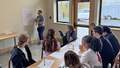
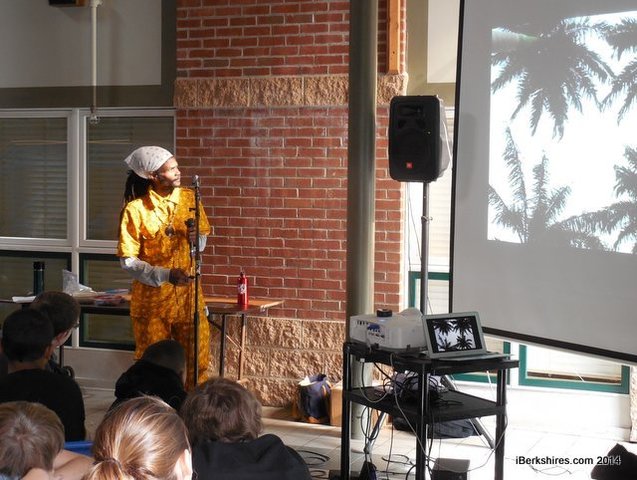
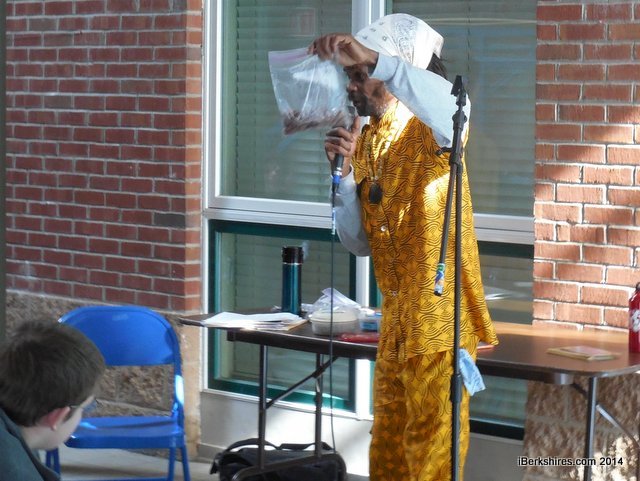 Grenada Chocolate Co. co-founder Edmond Brown explains the making of organic chocolate at BArT on Monday. The students are selling the chocolate to raise funds for activities. Grenada Chocolate Co. co-founder Edmond Brown explains the making of organic chocolate at BArT on Monday. The students are selling the chocolate to raise funds for activities. |
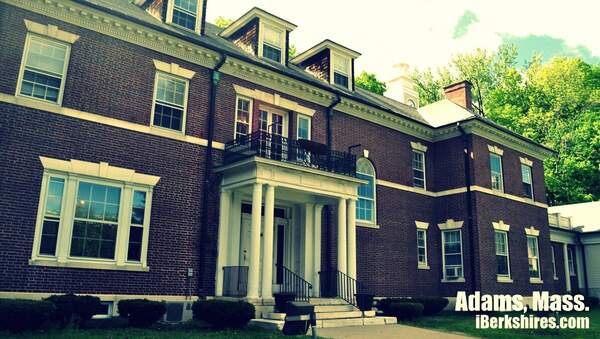
ADAMS, Mass. — Berkshire Arts & Technology Public Charter School will sell Grenadian-produced chocolate to raise funds for special school events and to spread a message against child labor.
The organic "tree-to-bar" chocolate is produced by the Grenada Chocolate Co., a small company that fights against the child labor many of the other cocoa harvesters implement.
Edmond Brown, master chocolate maker and co-founder of the Grenada Chocolate Co., visited the school on Monday morning to show the students clips from a documentary made about the company called "Nothing Like Chocolate."
The company was founded in 1999 with the goal to "revolutionize" the connection between cocoa farmers and the finished product and to create chocolate that was the "furthest away from child slave labor."
The documentary reported that between the 1970s and 1980s, 15,000 children were taken from surrounding West African countries and put into slave labor on the Ivory Coast to harvest cocoa. It remains a prominent problem in the industry.
More than half the world's cocoa supply comes from Ghana and the Ivory Coast, but the company's beans are grown by farmers cooperatives on the island of Grenada in the Caribbean and the chocolate is produced there as well.
After the presentation, seventh-grader Natalie Ellis said she does not take the freedoms she has in America for granted.
"We take advantage of being Americans," she said. "We get free education, and we don't have to work until we are 15 or 16 or even older if we don't want to."
Natalie is excited to sell chocolate with such a worthy cause.
"I think that is amazing that they are trying to get rid of child labor," she said. "I am totally against that ... and I want to buy it because of that."
The Grenada Chocolate Co. fights a two-front battle and to not only speak out against child labor, but also non-organic farming and food production. The chocolate is 100 percent organic and they practice sustainable production in their solar-powered factory.
Also to cut down on the carbon footprint, much of the chocolate is shipped by sail boat.
Brown handed out samples of his chocolate to the students as well as raw cocoa beans.
Eighth-grader Dalton Haskins was impressed by the flavor of the organic chocolate.
"I really want to move to Grenada," Haskins said. "I think a lot of people over here take advantage of cheap stuff that's not good for them."
In addition to the documentary, Brown also brought the students through the process of making chocolate.
The cocoa beans are purchased from local harvesters who have to retrieve them from tall trees with long bamboo rods. Once cut down, the beans are sorted into groups.
"There are three types of cocoa which we use for the chocolate, and it all blends together so we have a good flavor chocolate," Brown said.
He said the cocoa beans must be extracted from the fruit that grows on cacao tree.
"The cocoa is fluffy on the outside and very sweet so we have to harvest it before the monkeys get to it," he said. "Monkeys love cocoa."
Once the cocoa is purchased from the farmers, Brown said it must be refined. This process starts with a six-day fermenting process followed by sun-drying the beans.
The beans are then roasted and shelled, and a machine cracks them into bits and separates them by size. A roller machine grinds the beans for 24 hours and refines them.
Brown said the refined beans are then tempered and put into a plastic mold and allowed to cool.
Funds from the holiday fundraiser will go toward special events for the students such as dances.
Tags: BArT, chocolate, fundraiser, organic,