Pittsfield Weighs Construction Manager Model For New Taconic
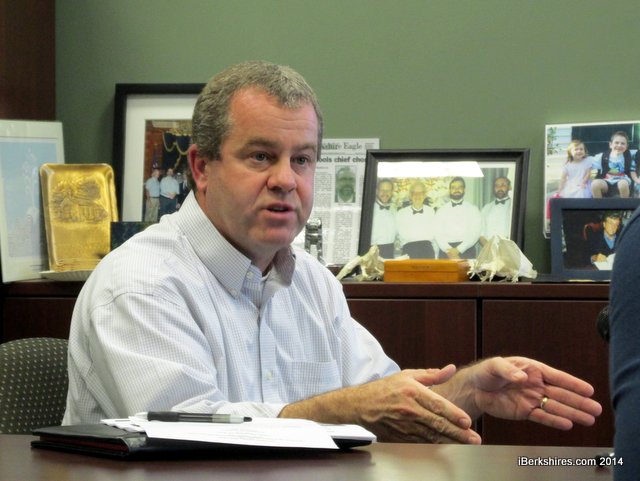 Dale Caldwell of Skanska outlined the two construction models for a School Building Needs Commission subcommittee Friday afternoon. Dale Caldwell of Skanska outlined the two construction models for a School Building Needs Commission subcommittee Friday afternoon. |
On Friday, a subcommittee of the School Buildings Needs Commission met to examine the options on construction.
Essentially, there are two processes the city could go with soliciting the construction contracts — the most well-known "design, bid and build" process or hiring a construction manager at risk.
According to Dale Caldwell of Skanska USA, the consultants on the project, neither option significantly outweighs the the other and the company is current working with both models.
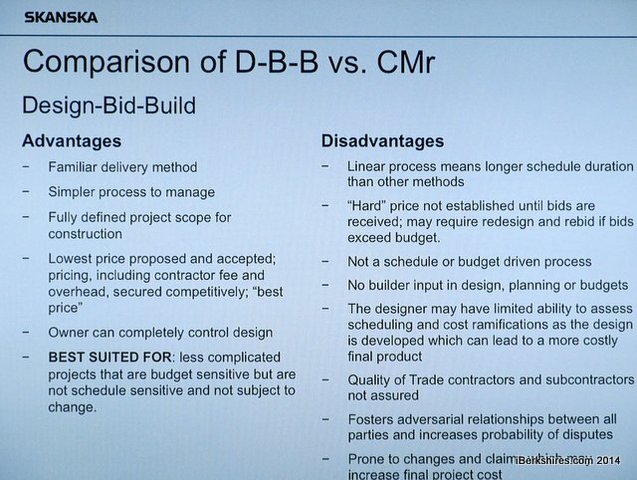
The bid model is a process in which the architects — Drumney Rosane & Anderson Architects Inc. — designs each aspect of the project to 100 percent and then each subcontract is bid separately and the lowest bidders win the contract.
However, Caldwell said that does pose some risks with costs, schedule and quality. In that process, there is a higher likelihood for change orders that add to each contract's cost and delays the schedule. If there is a detail missing in DRA's plans, that could cause additional costs to be added to the project at the end of the particular contract.
"It is for less complicated projects," Caldwell said.
He added that those involved in the project have no idea who the contractors bidding on the project are until the contract is awarded.
"It is a crap shoot with all of the subcontractors," he said.
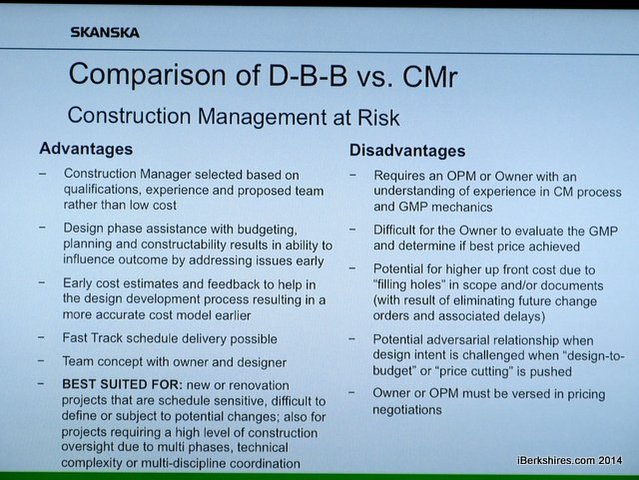
The CM at risk model brings on a managing company to oversee all of the subcontracts to keep the project on budget and on time. The manager comes on at the 60 percent design phase and ensures there are fewer change orders needed, can project material costs and order as needed, and helps works through the "pre-qualification" process to ensure the companies bidding on the project produce the best work. The subcontracts will still be bid but qualifications must be met.
"All of that is done on the front end. The fee, we cannot touch the fee," Caldwell said. "They'll come in an analyze everything."
Caldwell says bringing on the manager early does cost more up front, but is often paid for by finding other savings and keeping the project on time. Additionally, the Massachusetts School Building Authority helps with the additional costs for a manager through an extra reimbursement percentage point.
The CM model also allows the city to interview for the management company so they'll know the "team" working on the project ahead of time — rather than bidding a general contractor and individual subcontracts.
"The beauty of a CM is that you get to interview the physical people who will be on the job," Caldwell said.
That also helps alleviate any problems companies may have with each other while working on jobs together.
"There are a lot of advantages to a construction manager," Caldwell said. "In our opinion, the front-end value is unbelievable."
Even coordinating the subcontractor's access to the site and the ordering of materials is handled by the manager. As Superintendent Jason McCandless put it, "These guys really are managers, not contractors being hired to manage."
While Caldwell presented mostly about the CM at risk model, he did so because it is newer. It was only adopted into practice by the state a decade ago as another option for projects. Caldwell says of the six projects the company is working on currently, half of them are using construction managers and the other half are using the bidding process.
School Building Needs Commission member Kathleen Amuso said she hopes the subcommittee will be able to talk with the full commission and then make a decision next month.
"I think it would be a good idea to touch base with the School Building Needs Commission on this," she said.
Tags: school building committee, school project, Taconic High,