Former Williams President to Serve as Interim Director of Clark Art Institute
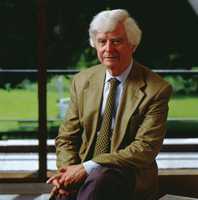 |
WILLIAMSTOWN, Mass. — The Board of Trustees of the Clark Art Institute has tapped Francis Oakley to serve as the interim director of the Institute following the Aug. 31 retirement of director Michael Conforti.
Oakley, the former president of Williams College, is a long-time member of the Clark’s Board of Trustees and served as the board’s president from 1998–2005. Oakley is currently a senior fellow at the Oakley Center for the Humanities and Social Sciences at Williams and is the college’s Edward Dorr Griffin Professor emeritus of the History of Ideas.
“Frank Oakley’s long experience with the Clark’s board, his close working relationship with many of the members of our staff, and his deep understanding of the Institute’s history and its operations make him the logical choice to fill the role,” said Andreas Halvorsen, board chair. “We feel fortunate that Frank is willing to serve the Clark in such an important role during this time of transition. With a strong interim director in place, the board has the luxury of knowing that we will be able to devote sufficient time to conduct a thorough and deliberate search for our next director.”
A committee comprised of Clark board members, led by Halvorsen and vice chairman Robert G. Scott, will be formed and will select an international search firm to assist in the process of identifying and interviewing candidates for the position.
“I deeply appreciate the trust that my colleagues on the Clark board have placed in me and I look forward to working closely with the Clark's fine staff to sustain the Institute’s splendid momentum,” Oakley said.
Oakley is a distinguished scholar and leader with a long history of involvement in the Williamstown community. He joined the Williams College faculty in 1961, and served in a variety of administrative roles throughout his tenure. Oakley served as president of the college from 1985–1994 and retired from the Williams faculty in 2002 as Edward Dorr Griffin Professor emeritus of the History of Ideas.
In addition to his work at Williams, Oakley played leadership roles in a number of arts and cultural organizations in the region, including the Massachusetts Museum of Contemporary Art (MASS MoCA), the Williamstown Theatre Festival, and the Williamstown Art Conservation Center. Nationally, he has served as chairman of the boards of the National Humanities Center, North Carolina, and of the American Council of Learned Societies, New York.
Tags: Clark Art, Williams College,